Medicare Multi-Cancer Early Detection Screening Coverage Act of 2021 This bill provides for Medicare coverage and payment for multi-cancer early detection screening tests that are approved by the Food and Drug Administration and that are used to screen for cancer across many cancer types.
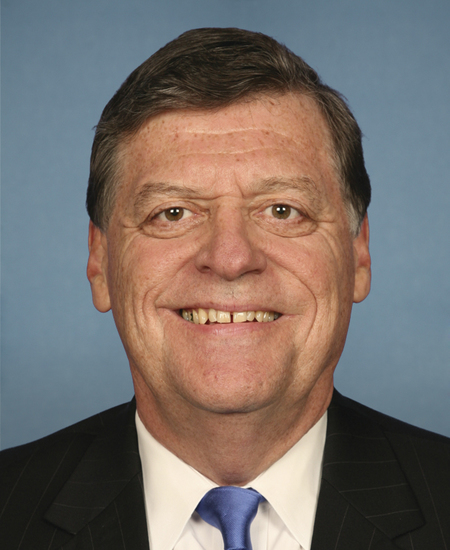
Rep. Tom Cole
Sponsored bills
This bill directs the Speaker of the House and the President pro tempore of the Senate to arrange for the award of three Congressional Gold Medals to the U.S. Capitol Police (USCP) and other law enforcement agencies that protected the U.S. Capitol on January 6, 2021. Following the award of these medals, one medal shall be given to the USCP, one medal shall be given to the Metropolitan Police Department of the District of Columbia, and one medal shall be given to the Smithsonian Institution and displayed with a plaque listing all law enforcement agencies that participated in protecting the Capitol on January 6, 2021.
Global War on Terrorism Memorial Location Act This bill authorizes the establishment of a National Global War on Terrorism Memorial in the area of the National Mall.
Improving Access to Indian Health Services Act This bill permanently extends certain Medicaid flexibilities relating to Indian health care providers. Specifically, the bill permanently expands coverage to include clinical services that are furnished outside of a clinic by an Indian Health Service (IHS) facility, a tribe or tribal organization, or an Urban Indian Organization (UIO). Current guidance from the Centers for Medicare & Medicaid Services allows IHS and tribal facilities to receive payment for clinical services provided outside of clinics through October 31, 2021; facilities are expected to work with their state Medicaid programs to transition to other, more permanent payment options for these services. The bill also permanently establishes a 100% federal matching rate, also known as the Federal Medical Assistance Percentage (FMAP), for UIO services. Current law provides a 100% FMAP for UIO services during the eight fiscal quarters after March 11, 2021.
Civics Secures Democracy Act of 2021 This bill provides resources to expand educational programs in American civics and history, including by establishing grant and fellowship programs and reauthorizing various programs. First, the bill authorizes the Department of Education (ED) to award grants to states, qualified nonprofit organizations, institutions of higher education (IHEs), and qualified researchers to support and expand access to civics and history education. Next, the bill establishes a fellowship program to diversify the civics and history education workforce. In addition, the bill reauthorizes through FY2027 and revises the American History for Freedom grant program. The bill renames the program as the American Civics Education Program. The bill revises the grant program to authorize ED to award grants to IHEs once every three years to establish or strengthen academic programs to promote American political thought and history; the history, achievements, and impact of American representative democracy and constitutional democracies globally; and the means of participation in political and civic life. IHEs may use grants to support additional activities, such as collaborating with federal or state humanities programs and using open educational resources. Further, the bill reauthorizes through FY2022 and revises the Harry S. Truman Memorial Scholarship Trust Fund and the James Madison Memorial Fellowship Trust Fund. Finally, the bill requires the National Assessment of Educational Progress in civics and history to be administered every two years to certain grade levels.

Developing Responsible Individuals for a Vibrant Economy Act or the DRIVE-SAFE Act This bill directs the Department of Transportation to promulgate regulations to implement an apprenticeship program for licensed commercial motor vehicle drivers under the age of 21. Under the program, an apprentice must complete two probationary periods that total 400 hours of on-duty time, of which at least 240 hours must be driving time in a commercial motor vehicle. Additionally, the apprentice must be accompanied in the cab of the commercial motor vehicle by an experienced driver. Further, the bill requires all commercial motor vehicles used in the program for training to be equipped with safety technology such as active braking collision mitigation systems and video event capturing systems. An employer shall not knowingly allow, require, permit, or authorize a driver under the age of 21 to operate a commercial motor vehicle unless the driver is participating in, or has completed, an apprenticeship program that meets the requirements set forth in this bill.
Speeding Therapy Access Today Act of 2021 This bill requires and authorizes various actions to accelerate the development of therapies for rare diseases. The Food and Drug Administration (FDA) shall establish the Intercenter Institute on Rare Diseases and Conditions. The institute shall (1) coordinate engagement with relevant stakeholders, (2) build the FDA's expertise in the review of medical products to treat rare diseases, (3) coordinate regulatory science initiatives related to rare diseases, (4) establish and implement a program to make recommendations to address challenges associated with developing medical products to treat rare diseases in an individual or in very small populations, (5) convene a stakeholder meeting to consider potential amendments to labels for medical products to treat rare diseases, and (6) establish and carry out a program to facilitate voluntary communication between the sponsors of such medical products and third-party payers (e.g., insurance companies). The bill also authorizes the FDA to make grants to assist in developing practices related to the development and production of individualized therapies or therapies to treat very small populations. The bill also establishes an advisory committee to advise the FDA on issues related to the development of therapies to treat rare diseases.
Reviewing Urban and Rural Adjustments to Level Hospital Expenses and Lopsided Payments Act of 2021 or the RURAL HELP Act of 2021 This bill requires the Centers for Medicare & Medicaid Services to determine whether costs incurred by rural hospitals exceed costs incurred by urban hospitals under the Medicare inpatient prospective payment system and to adjust payments accordingly.
TRICARE Reserve Select Improvement Act This bill expands TRICARE Reserve Select eligibility to include members of the Selected Reserve who are enrolled or eligible to enroll in the Federal Employees Health Benefits Program.
Rural Hospital Closure Relief Act of 2021 This bill allows additional hospitals to qualify as critical access hospitals (CAHs) that receive special payment under Medicare. Currently, in order to qualify as a CAH under Medicare, a hospital must either (1) be located more than 35 miles (or 15 miles in mountainous regions or areas with only secondary roads) from another hospital, or (2) have been certified prior to January 1, 2006, by the state as a necessary provider of services in the area. The bill allows a hospital to also qualify if the hospital is a small, rural hospital that (1) serves a health professional shortage area, or a high number of low-income individuals or Medicare or Medicaid beneficiaries; (2) has experienced financial losses for two consecutive years; and (3) attests to having a strategic plan to address financial solvency. In addition, the Center for Medicare and Medicaid Innovation must test a new delivery and payment model for rural hospitals that promotes financially sustainable access to care and must establish a corresponding transition process for CAHs.