Protecting Military Families with Disabilities Act This bill prohibits a landlord who provides housing for Department of Defense installations from collecting a supplemental payment in addition to rent to modify or upgrade a unit to facilitate occupancy by a disabled individual and comply with the Americans with Disabilities Act of 1990.
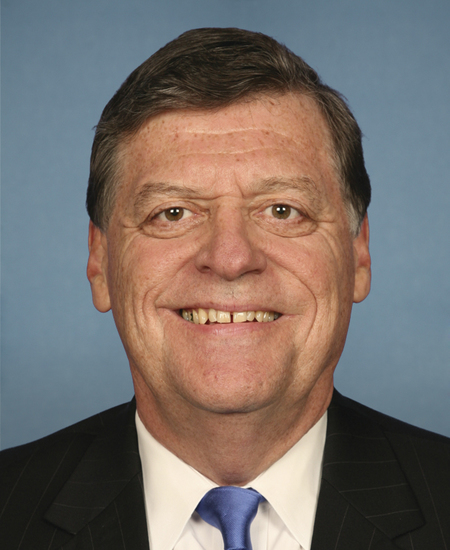
Rep. Tom Cole
Sponsored bills
Excellence in Recovery Housing Act This bill tasks the Substance Abuse and Mental Health Services Administration (SAMHSA) with various activities to promote the availability of high-quality recovery housing for individuals with substance use disorders. Recovery housing refers to shared living environments free from alcohol and illicit drug use and centered on peer support and connection to services that promote sustained recovery from substance use disorders. Specifically, SAMHSA must develop and publish on its website standards and guidelines for recovery housing; award grants to states, tribal nations, territories, and localities to implement such standards and guidelines; convene an interagency working group to coordinate federal activities related to recovery housing; and arrange for research on the supply, quality, and effectiveness of recovery housing.
This resolution condemns Iranian state-sponsored terrorist attacks against U.S. citizens and officials and Iranian dissidents and expresses support for the people of Iran who are engaged in legitimate and peaceful protests against the Iranian regime.
Military Hunger Prevention Act This bill requires the Department of Defense (DOD) to pay a basic needs allowance to certain low-income members of the Armed Forces. Specifically, those eligible for the basic needs allowance are members who (1) have completed initial entry training, (2) have a gross household income that did not exceed an amount equal to 130% of the federal poverty guidelines of the Department of Health and Human Services (HHS), and (3) do not elect to decline the allowance. In situations where a household contains two or more eligible members, the bill specifies that only one allowance may be paid per year to one member they jointly elect. The amount of the allowance must be the aggregate amount equal to 130% of the HHS federal poverty guidelines minus the gross household income of the covered member during the preceding year divided by 12. The Defense Finance and Accounting Service (DFAS) of DOD must notify, in writing, individuals determined to be eligible for the allowance. The notice must include information regarding financial management and assistance programs administered by DOD for which the individuals are also eligible. Individuals who seek to receive the allowance must submit specified information to DFAS.

Resident Physician Shortage Reduction Act of 2021 This bill increases the number of residency positions eligible for graduate medical education payments under Medicare for qualifying hospitals, including hospitals in rural areas and health professional shortage areas. Current law provides for an increase of up to 200 positions per fiscal year beginning in FY2023, with a total increase of 1,000 positions; each hospital may receive up to 25 additional positions. The bill provides for an additional increase of 2,000 positions per fiscal year from FY2023-FY2029; during this period, each hospital may receive up to 75 additional positions in total under the bill and current law. Additionally, one-third of the positions that are made available under the bill must be allocated to hospitals that are already operating above applicable resident limits. The bill also requires the Government Accountability Office to report on strategies to increase the diversity of the health professional workforce, including with respect to representation from rural, low-income, and minority communities.
Reinforcing Utility Restoration After Losses (RURAL) Act This bill provides authority and funding for the Department of Agriculture to establish a loan program for certain rural utility service providers (e.g., electric, telecommunications, or waste disposal service providers) to replace specified losses during a federally declared disaster or emergency. During such a disaster or emergency, interest on the loan shall not accrue, and repayment of principal shall not be required. Borrowers may qualify for partial loan forgiveness if certain requirements are met. The bill also establishes and provides funding for a Rural Utility Bridge Loan Fund to implement the program.
Willie O'Ree Congressional Gold Medal Act This bill provides for the award of a Congressional Gold Medal to Willie O'Ree or, if unavailable, to a member of his family, in recognition of his contributions and commitment to hockey, inclusion, and recreational opportunity.
Emmett Till and Mamie Till-Mobley Congressional Gold Medal Act of 2021 This bill provides for the posthumous presentation of a Congressional Gold Medal in commemoration of Emmett Till and Mamie Till-Mobley. After the award the medal shall be given to the National Museum of African American History and Culture.
This bill directs the Department of State to include additional information in its annual reports concerning Taiwan's participation at the World Health Organization's World Health Assembly (WHA) as an observer. The report shall describe changes and improvements to the State Department's plan to support Taiwan's observer status at the WHA, following any meetings at which Taiwan did not participate under such status. (China has opposed Taiwan's participation in the WHA.)
Ensuring Parity in MA and PACE for Audio-Only Telehealth Act of 2021 This bill allows audio-only diagnoses that are made via telehealth to be used for purposes of determining risk adjustments to payments under Medicare Advantage. Additionally, the bill requires payments for Medicare telehealth services that are furnished during the public health emergency relating to COVID-19 (i.e., coronavirus disease 2019) to be made in the same amounts as those for in-person services.