

Processing Revival and Intrastate Meat Exemption Act or the PRIME Act This bill expands the exemption of custom slaughtering of animals from federal inspection requirements. Under current law, the exemption applies if the meat is slaughtered for personal, household, guest, and employee uses. The bill expands the exemption to include meat that is slaughtered and prepared at a custom slaughter facility in accordance with the laws of the state where the facility is located; and prepared exclusively for distribution to household consumers in the state or restaurants, hotels, boarding houses, grocery stores, or other establishments in the state that either prepare meals served directly to consumers or offer meat and food products for sale directly to consumers in the state. The bill does not preempt any state law concerning (1) the slaughter of animals or the preparation of carcasses, parts thereof, meat and meat food products at a custom slaughter facility; or (2) the sale of meat or meat food products.
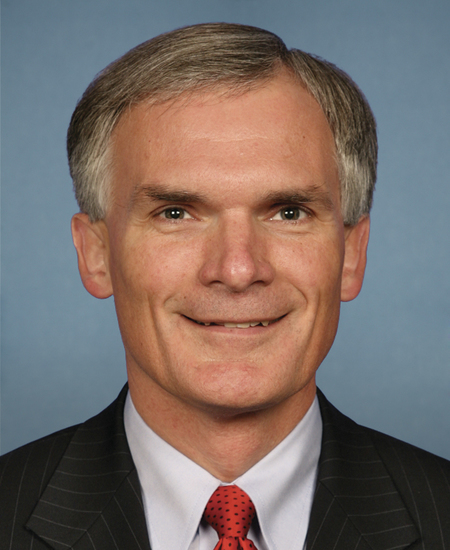
Rep. Robert E. Latta
Sponsored bills
Make PPE in America Act This bill requires procurement contracts for personal protective equipment (PPE) to be long-term and for domestically manufactured PPE. Specifically, contracts entered into by the Departments of Homeland Security, Health and Human Services, Defense, Education, or Veterans Affairs for the procurement of PPE must be for a duration of at least three years, including a base period and all option periods, to incentivize investment in the production of PPE, and materials and components of PPE, in the United States. The bill provides exceptions (1) where a nonavailability determination has been made, (2) where a sufficient quantity of a satisfactory quality cannot be procured as and when needed at U.S. market prices, and (3) where the department certifies every 120 days that it is necessary to procure PPE under alternate procedures to respond to the immediate needs of a public health emergency. Such departments may transfer to the Strategic National Stockpile any excess PPE acquired under a contract.
SFC Heath Robinson Burn Pit Transparency Act This bill implements reporting requirements and policies related to the treatment and documentation of veterans who have been exposed to open burn pits. A burn pit is an area used for burning solid waste in open air without equipment. First, the bill requires the Department of Veterans Affairs (VA) to submit quarterly reports on veterans' burn pit exposure The bill also requires the VA to collaborate with the Department of Defense to submit an annual report detailing specified information about veterans who have been exposed to open burn pits, such as the number of claims for disability compensation approved and denied (including the rationale for denials). The bill authorizes the survivor of a deceased veteran to report a veteran's exposure to toxic substances from an open burn pit in the Airborne Hazards and Open Burn Pit Registry, even if the veteran was not included prior to their death. VA medical professionals must inform veterans of the registry if they present at a medical facility for treatment related to exposure to toxic chemicals by open burn pits. Finally, the Government Accountability Office must report on the effectiveness of any memorandum of understanding entered into by the VA with respect to the processing of reported cases of burn pit exposure and the coordination of care and provision of health care related to such cases at VA and non-VA facilities.
This resolution recognizes and expresses support for the efforts of democracy and human rights activists in Cuba.
American Broadband Act This bill addresses broadband and other communications services. The bill limits applicable state and local regulatory authority. Limitations include setting (and providing statutory authority for) deadlines for reviews and decisions related to personal wireless and other telecommunication service facilities, as well as cable franchises and services. Further, a state or locality may not provide broadband services in areas with more than one other commercial provider. The bill exempts certain telecommunications infrastructure projects from environmental and historic preservation reviews, including projects carried out after a declared disaster or emergency (e.g., a wildfire). The bill also establishes a rebuttable presumption that a request for a review of the effects of deploying wireless service on historically, culturally, or religiously significant tribal or Native Hawaiian land is complete if the tribe or Native Hawaiian organization receives certain forms. The bill enhances criminal penalties for willful or malicious destruction of a communication facility. Furthermore, the General Services Administration must establish a common fee schedule for deploying wireless facilities that affect federal property. Additionally, the National Telecommunications and Information Administration must award grants for expanding high-speed broadband access, facilitate through an interagency strike force timely reviews of telecommunications-related requests that affect federal property (e.g., a request for an easement or right-of-way), and report on certain requests concerning communications facilities on federal real property. The bill also requires collaboration among federal agencies that support broadband deployment.
Presumptive Benefits for War Fighters Exposed to Burn Pits and Other Toxins Act of 2021 This bill establishes a presumption of service-connection for specified diseases associated with exposure to burn pits (an area used for burning solid waste in open air without equipment) and other toxins by veterans who were awarded specified medals on or after August 2, 1990. Under a presumption of service-connection, specific conditions diagnosed in certain veterans are presumed to have been caused by the circumstances of their military service. Health care benefits and disability compensation may then be awarded. Under the bill, if the Department of Veterans Affairs (VA) receives a written petition to add a disease to the list, the VA must request a determination by the National Academies of Sciences, Engineering, and Medicine with respect to whether there is a positive association between the exposure of humans to a covered toxin and the occurrence of the disease in humans. The bill makes disability or death of certain employees from specified diseases compensable as a work injury. Specifically, such employees are those who were employees of the Department of State, the Department of Defense, or an element of the intelligence community on or after August 2, 1990, and carried out job responsibilities for at least 30 days during a contingency operation.
Reopening to address Every COmplete Record request for Devoted Servicemembers Act of 2021 or the RECORDS Act of 2021 This bill directs the Office of the Archivist of the United States to take specified steps to address record request backlogs. Specifically, the office must take actions to ensure that (1) the number of individuals employed by the National Personnel Records Center is equal to or exceeds the number of such individuals employed on March 2, 2020, and (2) the percentage of such individuals regularly reporting to work in person is equal to or exceeds the percentage of such individuals regularly reporting to work in person on that date. The office shall submit to specified congressional committees a report that provides a comprehensive plan to address the record request backlog of the National Personnel Records Center and improve the efficiency and responsiveness of operations at the center, identifies measurable goals with respect to the comprehensive plan and metrics for tracking progress toward such goals, and describes strategies to prevent future record request backlogs.
Trillion Trees Act This bills establishes a variety of requirements and incentives to plant trees and conduct other land management practices for the purposes of capturing and storing carbon in domestic and international trees and forests. Additionally, the bill provides incentives to research or develop other carbon sequestration tools. Specifically, the bill directs the Department of Agriculture (USDA) to set targets to increase forest carbon stock through January 1, 2100, for the purposes of sequestering and storing carbon in U.S. forests. It also establishes and provides funding for the Trillion Trees Challenge Fund to provide grants to nonfederal entities for activities related to reforestation efforts on public or private lands. In addition, it raises the cap on the Reforestation Trust Fund to enhance forest health in the National Forest System and requires the USDA to establish a Tree City USA Grant Program. The bill also allows the U.S. Agency for International Development to enter into an agreement with a nonprofit organization to establish an International Forest Foundation to promote reforestation and prevent deforestation. Additionally, it establishes requirements and incentives to address seedling shortages and support nurseries. Finally, the bill provides market incentives to research or develop other carbon sequestration tools relating to biochar, sustainable building practices, biochemical and bioplastic products, and biomass energy.
Flexible Financing for Rural America Act This bill allows rural utility service providers to submit to the Department of Agriculture (USDA) a request to adjust the interest rate or modify the terms of certain loans. The request shall include a report summarizing how the adjustment or modification will assist the borrower in providing critical utility services to a rural community. Specifically, on receipt of a request, USDA or the Department of the Treasury (in the case of a loan owned by the Federal Financing Bank) must adjust the interest rate on the loan to match certain interest rates for obligations of comparable maturity to the term remaining on the loan (or a higher rate requested by the borrower), and make modifications to the loan terms as necessary to address changes in the financial position of the borrower due to the COVID-19 public health emergency and to promote the financial sustainability of the borrower. In carrying out the adjustments or modifications, USDA or Treasury shall not impose or collect any fee from, or impose any penalty on, a borrower. The bill also provides funding to implement the adjustments and modifications and for the liquidation of residual intragovernmental amounts owed by the Federal Financing Bank in connection with certain loans.
Pipeline and LNG Facility Cybersecurity Preparedness Act This bill requires the Department of Energy to implement a program to ensure the security, resiliency, and survivability of natural gas pipelines, hazardous liquid pipelines, and liquefied natural gas facilities.