

Health Care for Burn Pit Veterans Act This bill updates policies and procedures related to Department of Veterans Affairs (VA) health care and benefits for veterans who have been exposed to toxic substances. Specifically, the bill extends the eligibility period for VA hospital care, medical services, and nursing home care for combat veterans who served after September 11, 2001, and were exposed to toxic substances, radiation, or other conditions, including those who did not enroll to receive VA care during the eligibility period. The VA must incorporate into its existing health care screening a screening to help determine potential exposures to toxic substances during military service. Among other requirements, the VA must also provide annual training to health care and benefits personnel with respect to veterans who were exposed to toxic substances; analyze total and respiratory disease mortality in veterans who served in specified locations on specified dates; conduct an epidemiological study on the health trends of veterans who served in the Armed Forces after September 11, 2001; conduct a study to determine trends in the rates of the incidence of cancer in veterans; publish a list of VA resources for veterans who were exposed to toxic substances, families and caregivers of such veterans, and survivors of such veterans who are receiving death benefits; and report on the data quality of the Individual Longitudinal Exposure Record and its usefulness in supporting veterans in receiving VA health care and benefits.
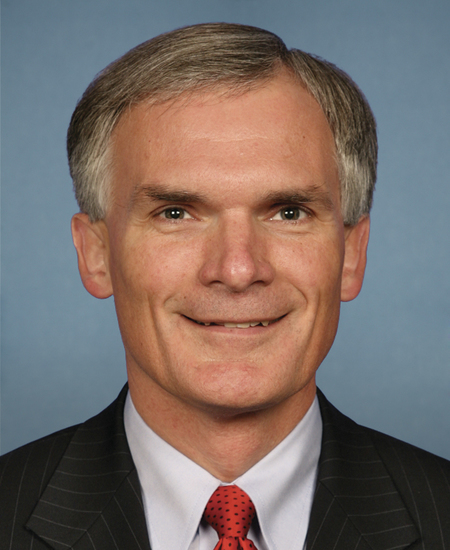
Rep. Robert E. Latta
Sponsored bills
Protecting Family and Small Business Tax Cuts Act of 2022 This bill makes permanent provisions affecting individual and business taxpayers that were enacted in 2017 by the Tax Cuts and Jobs Act and are scheduled to expire at the end of 2025. The bill makes permanent provisions that reduce individual and capital gain tax rates. The bill increases the standard tax deduction for individual taxpayers. It also increases and modifies the child tax credit and raises the contribution base for the tax deduction of charitable contributions. The bill allows additional contributions to ABLE accounts (tax-exempt accounts designed to enable individuals with disabilities to save and pay for disability-related expenses). It exempts from taxation combat zone benefits of members of the Armed Forces serving in the Sinai Peninsula of Egypt and the moving expenses of servicemembers. Additionally, the bill lowers to $750,000 the amount of mortgage debt eligible for an interest expense tax deduction; excludes from the gross income of student borrowers income attributable to the discharge after 2025 of loan debt due to death or disability; makes permanent the limitation on the tax deduction for state and local taxes and denies a deduction for foreign real property taxes; makes permanent the tax deduction of the income of certain pass-through business entities; repeals the tax deduction for personal tax exemptions and the exclusion of employer-provided bicycle commuter fringe benefits; terminates certain miscellaneous itemized tax deductions; doubles the estate and gift tax exemption amount; and makes permanent the increase of the alternative minimum tax exemption amount for individual taxpayers.
Stop Arduous Vaccine Enforcement Act of 2022 or the SAVE Act of 2022 This bill prohibits transplant centers from discriminating against an individual on the basis of COVID-19 vaccination status for purposes of determining eligibility or assigning priority for organ transplants.
This resolution supports the goals of National Catholic Schools Week, an event cosponsored by the National Catholic Educational Association and the U.S. Conference of Catholic Bishops and established to recognize the contributions of Catholic elementary and secondary schools in the United States.
Crime Doesn't Fly Act of 2022 This bill prohibits the use of warrants for the arrest, removal, or deportation of an alien as proof of identity at an airport security checkpoint unless the alien is being removed from the United States pursuant to immigration laws.
Protecting International Pipelines for Energy Security Act This bill requires the President to obtain the approval of Congress before revoking a permit or other authorization required under executive orders for constructing, connecting, operating, or maintaining an oil or natural gas pipeline, an electric transmission facility, or a border-crossing facility.
This bill posthumously provides for the award of a Congressional Gold Medal in commemoration of the 13 service members who died on August 26, 2021, while stationed at Hamid Karzai International Airport in Afghanistan.
Strategic Production Response Act This bill limits the drawdown of petroleum in the Strategic Petroleum Reserve until the Department of Energy develops a plan to increase the percentage of federal lands leased for oil and gas production.
Ocean Shipping Reform Act of 2021 This bill revises provisions related to ocean shipping policies and is designed to support the growth and development of U.S. exports and promote reciprocal trade in the common carriage of goods by water in the foreign commerce of the United States. Among other provisions, the bill sets forth requirements for operating a shipping exchange involving ocean transportation in the foreign commerce of the United States; requires ocean common carriers to report to the Federal Maritime Commission (FMC) each calendar quarter on total import and export tonnage and the total loaded and empty 20-foot equivalent units per vessel that makes port in the United States; requires the FMC to publish and annually update all its findings of false certifications by ocean common carriers or marine terminal operators and all penalties assessed against such carriers or operators; revises annual reporting requirements for the FMC on foreign laws and practices to include practices by ocean common carriers; prohibits ocean common carriers and marine terminal operators from retaliating or discriminating against shippers because such shippers have patronized another carrier, or filed a complaint; directs the FMC to establish rules prohibiting ocean common carriers and marine terminal operators from adopting and applying unjust and unreasonable demurrage and detention fees; authorizes the FMC to initiate investigations of an ocean common carrier's fees or charges and apply enforcement measures, as appropriate; directs the Department of Transportation to seek to enter into an agreement with the National Academy of Sciences to study the U.S. supply chain industry, including data constraints that impede the flow of maritime cargo and add to supply chain inefficiencies; and provides authority for the FMC to issue an emergency order requiring ocean common carriers or marine terminal operators to share directly with relevant shippers, rail carriers, or motor carriers information relating to cargo throughput and availability.
Conscience Protection Act of 2021 This bill provides statutory authority for certain protections for health care providers that refuse to participate in abortions based on religious beliefs or other convictions. Health care providers include individual professionals, medical facilities, health insurance organizations, and social services providers that refer clients to health care services. The federal government and entities that receive federal funding for health-related activities, including state and local governments, may not discriminate against a health care provider that refuses to be involved in, or provide coverage for, abortions. Currently, similar requirements apply to various related activities, including certain employment or personnel decisions (the Church Amendments), abortion services training (the Coats-Snowe Amendment), qualified health plans offered through health insurance exchanges, and annual appropriations bills for the Department of Health and Human Services (HHS) and other federal agencies (the Weldon Amendment). The HHS Office for Civil Rights must investigate complaints of this kind of discrimination. Furthermore, HHS may terminate or reduce HHS funding for health-related activities if a person or entity fails to comply with nondiscrimination requirements. Additionally, the Department of Justice or any entity adversely affected by such discrimination may bring a civil action to obtain appropriate relief. A plaintiff does not need to seek or exhaust administrative remedies before bringing the action. A plaintiff may also bring an action, including one for money damages, against a governmental entity. In many cases, principles of sovereign immunity shield states and some localities from these kinds of actions.