

Promoting Cross-b order Energy Infrastructure Act This bill establishes a new process for approving the construction and operation of energy infrastructure across an international border of the United States and replaces the existing process established under specified executive orders. Specifically, this bill requires a person to obtain a certificate of crossing before constructing, connecting, operating, or maintaining a border-crossing facility for the import or export of oil, natural gas, or electricity across an international border. A certificate must be obtained from the Federal Energy Regulatory Commission (FERC) for a facility consisting of oil or natural gas pipelines or the Department of Energy (DOE) for an electric transmission facility. As a condition of issuing a certificate, DOE must require that an electric transmission facility be constructed, connected, operated, or maintained consistent with specified policies and standards. FERC and DOE must meet a deadline for issuing a certificate as set forth by this bill. The bill also requires FERC to meet a deadline for approving applications to import or export natural gas to or from Canada or Mexico.
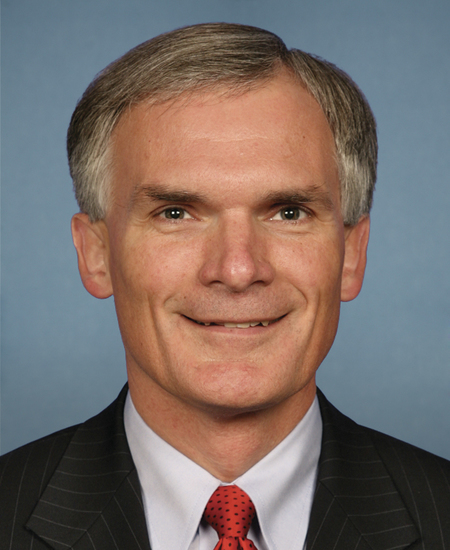
Rep. Robert E. Latta
Sponsored bills
Securing Our Students Act This bill authorizes local educational agencies and nonpublic schools to use certain COVID-19 emergency relief funds, services, or assistance for school safety uses, that is improving school conditions for student learning by planning and designing school buildings and facilities, installing infrastructure, providing safety education, and implementing technology or other measures that strengthen security on school premises.
This resolution recognizes domestically produced natural gas as affordable, green , and necessary for energy independence while asserting that the United States should take a broad approach to meet energy needs.
Preventing Racism in Medicare Act of 2022 This bill prohibits the Centers for Medicare & Medicaid Services from including the development of anti-racism plans (i.e., plans to address systemic racism in health care) as a qualifying clinical practice improvement activity under the Merit-based Incentive Payment System (MIPS), as described in a November 2021 rule. (MIPS is an incentive program under Medicare that allows health care professionals to receive payment adjustments based on certain performance measures.)
Babies Need More Formula Now Act of 2022 This bill addresses the regulation of infant formula, including by authorizing the Food and Drug Administration (FDA) to waive certain requirements related to importation. The FDA may waive labeling requirements related to the importation (or distribution or sale) of infant formula from a country with requirements that provide a similar assurance of safety as U.S. requirements. The FDA must, when appropriate, enter into arrangements to harmonize U.S. regulatory requirements pertaining to infant formula with the requirements of other nations. The bill imposes time lines for the FDA to respond to submissions for market approval for new infant formula. The FDA must also issue guidance as to what types of changes in the ingredients of infant formula, if any, may not require a new growth study to meet FDA requirements. The bill also authorizes a person to import, without prior notice to the FDA, up to a three-month supply of infant formula for personal use from a country with formula safety standards similar to U.S. standards, such as Canada. Before recommending or requiring a recall of infant formula due exclusively to a labeling deficiency, the FDA must ensure that the recall will not negatively affect the supply of formula in the United States. The bill also requires the FDA to (1) notify Congress no later than 24 hours after initiating a formula recall, and (2) provide certain information to formula manufacturers about restarting production after an inspection of a manufacturing facility impacted by a recall.
This resolution condemns the unauthorized leak of a draft Supreme Court opinion concerning abortion and the related violence, property damage, and attempted intimidation of Supreme Court Justices by activists. It also encourages the enforcement of federal criminal laws that prohibit protests and picketing outside of the homes of federal judges, jurors, witnesses, and others involved in the U.S. court system.
Robocall Trace Back Enhancement Act This bill provides liability protection for specified information-sharing activities undertaken to trace the origins of unlawful robocalls. Specifically, the bill protects a designated consortium that conducts private-led efforts to trace unlawful robocalls from liability for receiving, sharing, or publishing information about illegal calls, including their origin or source. The bill also applies liability protection to a voice service provider (i.e., a provider of any service that enables real-time, two-way voice communications) or other entity or person that shares information with the consortium.
Protection of Women and Girls in Sports Act of 2021 This bill makes it a violation of federal law for a recipient of federal funds who operates, sponsors, or facilitates athletic programs or activities to permit a person whose sex is male to participate in an athletic program or activity that is designated for women or girls. The bill specifies that sex shall be recognized based solely on a person's reproductive biology and genetics at birth.
National Opportunity to Restore Uranium Supply Services In America Act of 2022 or the NO RUSSIA Act of 2022 This bill provides statutory authority (and reallocates funding) for the Office of Nuclear Energy to establish a strategic reserve of uranium to ensure the availability of domestic supplies of uranium. The bill also requires the office to establish another program to support domestic production, conversion, and enrichment of uranium for nuclear reactors and eliminate reliance on Russian uranium. The office may not source uranium for the reserve or the program from companies that are controlled by, owned by, or otherwise affiliated with China or Russia.
Supply Chain Disruptions Relief Act This bill modifies the treatment of liquidations of new motor vehicle inventory as qualified LIFO (last in first out accounting method) inventory. It allows new motor vehicle dealers to elect to wait until the end of 2025 to replace their inventory for purposes of determining income attributable to the sale of such inventory during 2020 and 2021.