

Improving Seniors' Timely Access to Care Act of 2022 This bill establishes several requirements and standards relating to prior authorization processes under Medicare Advantage (MA) plans. Specifically, MA plans must (1) establish an electronic prior authorization program that meets specified standards, including the ability to provide real-time decisions in response to requests for items and services that are routinely approved; (2) annually publish specified prior authorization information, including the percentage of requests approved and the average response time; and (3) meet other standards, as set by the Centers for Medicare & Medicaid Services, relating to the quality and timeliness of prior authorization determinations.
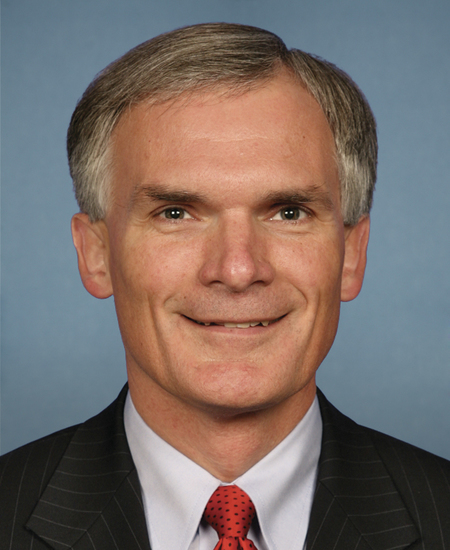
Rep. Robert E. Latta
Sponsored bills
Harriet Tubman Bicentennial Commemorative Coin Act This bill directs the Department of the Treasury to mint and issue 50,000 $5 gold coins, 400,000 $1 silver coins, and 750,000 half-dollar clad coins emblematic of the legacy of Harriet Tubman as an abolitionist. The Secretary may issue coins under this bill only during the period of January 1, 2024, through December 31, 2024. All surcharges received by Treasury from the sale of such coins must be paid equally to the National Underground Railroad Freedom Center in Cincinnati, Ohio, and The Harriet Tubman Home, Inc. in Auburn, New York, for the purpose of accomplishing and advancing their missions.
National World War II Memorial Commemorative Coin Act This bill directs the Department of the Treasury to mint and issue up to 50,000 $5 coins, 400,000 $1 silver coins, and 750,000 half-dollar clad coins in commemoration of the National World War II Memorial in the District of Columbia. The design of the coins shall be emblematic of the memorial and the service and sacrifice of American soldiers and civilians during World War II. All surcharges received from the sale of such coins shall be paid to the Friends of the National World War II Memorial to support the National Park Service in maintaining and repairing the memorial, and for educational and commemorative programs.
Spectrum Innovation Act of 2022 This bill addresses auctions of, and other matters related to, portions of the electromagnetic spectrum allocated for federal use. The bill also establishes grants for and otherwise modifies provisions concerning next generation 9-1-1 systems (i.e., interoperable Internet Protocol-based systems for receiving 9-1-1 calls). The bill extends to March 31, 2024, the authority of the Federal Communications Commission (FCC) to auction and license electromagnetic spectrum. (Under current law, the authority expires on September 30, 2022.) Additionally, the bill establishes a process for auctioning specified parts of the spectrum currently allocated for federal use. The Office of Management and Budget must transfer certain funding to federal entities for planning activities related to reallocating and auctioning spectrum while the National Telecommunications and Information Administration (NTIA) and the Executive Office of the President must oversee the planning. The Department of Commerce must, informed by the planning, identify the spectrum to auction. Further, the bill addresses shared use of spectrum bands by federal and nonfederal users. For example, the NTIA must implement an incumbent informing capability system to manage harmful interference when nonfederal users and incumbent federal entities share spectrum. The bill also establishes the Public Safety and Secure Networks Fund and directs a portion of spectrum auction proceeds to the fund for, among other purposes, reimbursing telecommunications providers for replacing equipment that poses risks to national security and safety.
Advancing Nuclear Regulatory Oversight Act This bill requires the Nuclear Regulatory Commission to report to Congress about changes to its regulation of nuclear reactors and materials during the COVID-19 public health emergency and actions (e.g., the use of risk-informed, performance-based procedures) that may be implemented to enhance the efficiency of oversight and inspection programs. Additionally, the Government Accountability Office must conduct a review of the commission's office and other facility space requirements and recommend ways to reduce office and facility costs.
Great Lakes Restoration Semipostal Stamp Act of 2022 This bill directs the U.S. Postal Service to issue a semipostal stamp (a stamp sold at a premium to raise funds for a cause of national public interest) to contribute to funding operations supported by the Great Lakes Restoration Initiative.
This joint resolution nullifies the final rule issued by the Council on Environmental Quality titled National Environmental Policy Act Implementing Regulations Revisions and published on April 20, 2022. The rule restores regulatory provisions issued under the National Environmental Policy Act of 1969 (NEPA) that were in effect before being modified in 2020 by the Update to the Regulations Implementing the Procedural Provisions of the National Environmental Policy Act rule.
Maddy summaryHRES 1216 is a non-binding House resolution expressing support for designating June as "Month of Life." It does not create new laws or programs but formally recognizes the value of human life from conception to birth, citing the Declaration of Independence, opposition to abortion access (including reference to the Dobbs decision overturning Roe v. Wade), and promoting life-affirming alternatives like adoption and pregnancy support services. The resolution encourages communities to provide resources for mothers and families during this observance. As a symbolic gesture, it directly affects House members who co-sponsored it but has no legal effect on policy or funding.
This resolution expresses that the House of Representatives recognizes the support that the Great Lakes Restoration Initiative provides to demonstration farm networks and its subsequent contributions to improving water quality and soil health, encourages and applauds the efforts and commitment of partners involved in demonstration farm networks, and promotes the role of demonstration farm networks in expanding the adoption of conservation farming practices that improve the health of watersheds and agricultural lands.
This joint resolution prospectively nullifies the rule proposed by the Securities and Exchange Commission titled The Enhancement and Standardization of Climate-Related Disclosures for Investors on April 11, 2022. The proposed rule requires registrants to disclose their climate-related risks.