

Maddy summaryHR 3998, the Firearms Congressional Notification Modernization Act, raises the financial threshold requiring congressional notification for certain firearm exports. It modifies the Arms Export Control Act to increase the notice requirement from $1 million to $4 million for defense articles classified as Category I firearms under the U.S. Munitions List. This change directly affects firearm exporters by reducing the number of transactions needing prior congressional review. The bill makes a specific procedural update to the existing notification process without altering export regulations or policy.
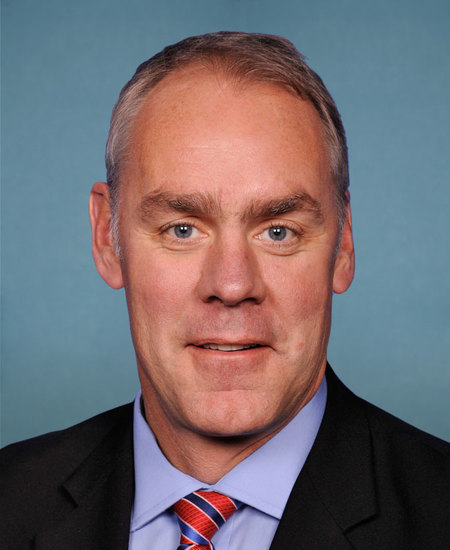
Rep. Ryan K. Zinke
Sponsored bills
Maddy summaryHR 3860, the "No Passports for Terrorists and Traffickers Act," denies or revokes U.S. passports for individuals charged with or convicted of providing material support to terrorism under federal law (18 U.S.C. §§2339A/B) or determined by the Secretary of State to have aided designated foreign terrorist organizations. It directly affects people meeting these criteria by preventing passport issuance or requiring passport cancellation, though limited exceptions allow return travel to the U.S. or humanitarian travel. Key mechanisms include the Secretary of State’s authority to act, a 60-day appeal process for affected individuals, and mandatory reports to Congress on each denial or revocation. The bill explicitly excludes medicine and religious materials from its definition of "material support," which covers items like money, training, transportation, or weapons. This law changes passport policy for specific terrorism-related cases without altering broader constitutional rights.
Maddy summaryThis bill would require the Attorney General to annually identify state or local governments that fail to comply with federal immigration cooperation laws, such as sharing immigration status information or honoring detainer requests. Jurisdictions found non-compliant would lose eligibility for all federal financial assistance (including grants and programs) for at least one year. The law mandates annual reports to Congress and allows any member of Congress to request compliance reports on specific jurisdictions. It directly affects cities, counties, and states that do not follow federal immigration enforcement directives.
Maddy summaryHR 3870, the COAL POWER Act, repeals a specific Environmental Protection Agency (EPA) rule issued on May 7, 2024, which set emission standards for coal- and oil-fired power plants. This bill directly affects coal and oil-fired electric utilities by removing their requirement to comply with that particular EPA regulation (89 Fed. Reg. 38508). The key mechanism is a straightforward repeal, treating the rule as if it never took effect. The bill does not create new rules or alter existing environmental standards beyond this specific EPA action.
Maddy summaryThis bill would make non-citizens deportable if they incite or participate in riots during civil unrest involving assaults on law enforcement or military personnel, or destruction of public property, and who were unlawfully present, had DACA, or were lawful permanent residents at the time of the offense. It permanently bars such individuals from reentering the U.S. or accessing any relief from deportation, including asylum, cancellation of removal, or future DACA benefits. During declared emergencies (such as national disasters or state emergencies), the law mandates expedited removal and mandatory detention for those covered, with no discretion for enforcement.
Maddy summaryHR 1948 authorizes the International Boundary and Water Commission (IBWC) to accept funds from federal or non-federal entities - including grants or agreements - to study, design, construct, operate, or maintain wastewater treatment facilities, water conservation projects, and flood control works along the U.S.-Mexico border. The bill requires these funds to be deposited into a specific U.S. Treasury account and imposes a $5 million annual limit on reimbursing non-federal partners for project costs. It also prohibits accepting funds from entities tied to "foreign countries of concern" (as defined in other law) and mandates annual reports to Congress detailing how funds were used. This bill directly affects the IBWC’s funding mechanisms and entities providing financial support for border water infrastructure projects.
Maddy summaryHR 3773 (PROTECT Act of 2025) amends federal law to recognize tribal courts as having authority equivalent to state courts for certain electronic evidence cases. It requires that warrants for electronic communications stored 180 days or less must follow procedures from the Indian Civil Rights Act (25 U.S.C. 1302(a)(2)) when issued by tribal courts. The bill also expands tribal jurisdiction over controlled substance offenses (like drug trafficking or possession) and firearms offenses (such as possession by domestic violence offenders) by defining these terms for tribal courts. This directly affects tribal courts and tribal law enforcement by standardizing legal procedures for evidence handling and broadening their authority under federal law. The changes align tribal court processes with federal and state standards for digital evidence and criminal jurisdiction.
Maddy summaryHR 3598, the Deescalation Drone Pilot Program Act of 2025, establishes a federal pilot program to test nonlethal drones for law enforcement during active shooter events. The program, managed by the FAA, will review nonlethal devices (like sound emitters or cameras) for drones, develop training and safety protocols, and assess effectiveness in indoor scenarios to increase officer safety. It requires drones to be manufactured in the U.S. and mandates a report to Congress within 3 months of the pilot's conclusion, followed by rulemaking to create a formal approval process for law enforcement use. The bill directly affects Federal, State, local, and Tribal law enforcement agencies responding to active shooter events as defined by the legislation.
This bill authorizes coal to be mined on approximately 800 acres of federal land in Musselshell County, Montana. Specifically, it allows all federal coal reserves in such federal land and leased under Federal Coal Lease MTM 97988 to be mined in accordance with the 2020 Bull Mountains Mining Plan Modification. The Bull Mountains Mine is operated by Signal Peak Energy. This bill directs the Department of the Interior, without modification or delay, to approve the Bull Mountains Mining Plan Modification to the extent necessary to mine such land.
Maddy summaryThis bill amends the Fair Labor Standards Act to exempt certain employees in the outdoor recreation industry from overtime pay requirements. It specifically applies to employees primarily engaged in outdoor recreational outfitting (like equipment rentals) or guiding services, but only if their business meets one of two seasonal criteria: operating for fewer than seven months annually, or having average receipts for six months that don't exceed 33 1/3% of receipts during the other six months. The exemption applies to wages and overtime compensation for workweeks starting after the bill's enactment date. This change directly affects small seasonal outdoor recreation businesses and their employees who meet the specified operational thresholds.