

Maddy summaryThis bill, known as the Stopping Harmful and Outrageous Torts Act, expands legal protections for firearm manufacturers and sellers by strengthening their immunity from civil lawsuits. It requires courts to immediately dismiss any pending cases against these companies that are based on the criminal or unlawful misuse of a gun by a third party, while also clarifying that sellers are not liable for negligence in entrusting products to others. The legislation further restricts who can file such suits by prohibiting foreign governments from bringing these claims and adding a specific exception for victims under the age of 17, though it maintains immunity for cases involving design or manufacturing defects. Additionally, the bill allows companies to move these cases to federal court and grants them the right to appeal dismissal orders immediately, along with the ability to recover legal fees if they win. Finally, it preempts state and local laws that attempt to impose liability on these entities for the same types of misuse-related harms.
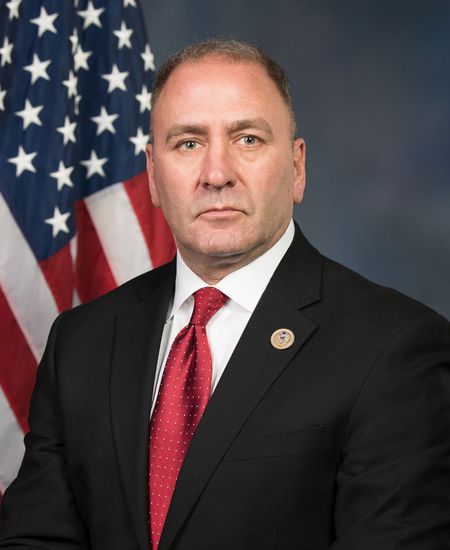
Rep. Clay Higgins
Sponsored bills
Maddy summaryThis bill extends the expiration date for certain surveillance authorities under the Foreign Intelligence Surveillance Act from 2026 to 2029 and adds new restrictions on how the FBI can use data collected from non-U.S. persons. It prohibits the FBI from using this data to investigate U.S. citizens unless there is probable cause that the person is a foreign power or agent, and it requires regular court reviews and a GAO audit to ensure compliance. The legislation also introduces stricter criminal penalties for unauthorized access to such data and includes a separate provision that bans the Federal Reserve from issuing a central bank digital currency.
Maddy summaryThe Offshore Parity Act of 2026 grants the states of Louisiana, Mississippi, and Alabama greater control over offshore resources by expanding their jurisdiction to three marine leagues in the Gulf of Mexico. Under this bill, the Secretary of the Interior would delegate authority to these states to manage oil, gas, and other energy activities on the newly included lands, provided the states demonstrate they have the resources and administrative capacity to do so. The legislation also allows these states to set their own rental rates and royalties for new leases while retaining federal oversight for endangered species and national security matters. Additionally, the act extends state management powers to fisheries in the same expanded area, enabling local oversight of fishing resources within these new boundaries.
Maddy summaryThe Merit Restoration Act prohibits federal research agencies and grant recipients from using specific diversity, equity, and inclusion practices in their work. This law targets requirements that mandate employees or researchers sign statements or complete training asserting that certain races, sexes, or national origins are inherently superior or inferior. If a recipient is found to have violated these rules, the agency must freeze their funding and may require them to repay any money used during the violation. The restrictions apply to grants awarded on or after the bill becomes law, affecting scientific and medical research funded by the federal government.
Maddy summaryHR 1041, the Veterans 2nd Amendment Protection Act, prevents the Department of Veterans Affairs (VA) from automatically sending veterans' personal information to the national background check system (NICS) solely because a court has appointed a fiduciary (like a guardian) to manage their benefits. This directly affects veterans who have a fiduciary appointed due to mental health or cognitive challenges but are not deemed a danger to themselves or others. The bill requires a court order finding the veteran poses a danger before any such information can be shared with the NICS. It changes VA procedures to block unnecessary barriers to firearm ownership for veterans who qualify for fiduciary support without a judicial determination of danger.
Medal of Sacrifice Act of 2025 This act directs the President to issue a medal of sacrifice for eligible law enforcement officers and first responders who are killed in the line of duty. The act also directs the President to establish a commission on the medal of sacrifice and appoint its members. The act sets forth responsibilities of the commission, including to advise on the design of the medal and determine how the medal will be presented. Under the act, eligible law enforcement officers and first responders include federal, state, local, tribal, or territorial law enforcement officers or first responders who are not subject to an official act of wrongdoing (e.g., a determination that the officer or first responder acted outside the scope of their duties or in a manner that was not in accordance with official policies or procedures). A law enforcement officer or first responder who is subject to an official act of wrongdoing is generally not eligible for the medal of sacrifice. However, in the case of such an officer or first responder, the act requires the commission to investigate the circumstances surrounding the officer or first responder's cause of death and issue a final determination on their eligibility.
Maddy summaryThis bill expands the ability for active-duty military personnel to carry concealed firearms across state lines by adding them to the list of individuals covered under existing federal reciprocity rules. To qualify, a service member must be on active duty and have completed a military firearms qualification within the last 12 months, using their Department of Defense ID card and proof of training as identification. The legislation amends Title 18 of the U.S. Code to clarify that these armed forces members can carry concealed weapons in states that allow it for qualified law enforcement officers. This change directly affects active-duty military service members who wish to travel while carrying a firearm, aligning their rights with those of certain law enforcement officers.
This resolution expresses support for police officers and other law enforcement personnel. The resolution further recognizes law enforcement officers across the United States in the pursuit of preserving safe and secure communities; the need to ensure that such officers have the equipment, training, and resources necessary to protect their health and safety while they are protecting the public; and the law enforcement community for acts of sacrifice and heroism. The resolution expresses condolences and appreciation to the loved ones of each law enforcement officer who has made the ultimate sacrifice in the line of duty.
Maddy summaryThis bill would amend federal law to strengthen penalties for organized retail crime by expanding definitions of theft to include digital goods, gift cards, and setting a $5,000 aggregate value threshold for charges over a 12-month period. It would establish a new "Organized Retail and Supply Chain Crime Coordination Center" under Homeland Security to coordinate Federal, State, local, and Tribal law enforcement efforts against cross-jurisdictional theft groups. The Center would share information with retailers, transportation companies, and law enforcement agencies, track crime trends, and produce annual reports on organized retail crime. This legislation directly affects retailers, supply chain businesses, and law enforcement agencies, while targeting organized crime groups responsible for a 93% increase in larceny incidents and rising safety concerns for retail employees. The bill aims to address significant financial losses and supply chain disruptions noted in the National Retail Federation's 2023 data.
Save Our Shrimpers Act This bill prohibits federal funds from being made available to international financial institutions (e.g., the International Monetary Fund) for financing activities related to foreign shrimp farms. The bill also requires an annual report on compliance by U.S. leadership of international financial institutions with policies to oppose financing for certain commodities or minerals. Specifically, the bill requires the Department of the Treasury to condition any provision of federal funds to an international financial institution on the requirement that the funds not be used to finance any activity related to shrimp farming, shrimp processing, or the export of shrimp in any foreign country. Under current law, Treasury must instruct U.S. leadership of international financial institutions to oppose providing financial assistance for the production or extraction of any commodity or mineral for export if (1) the commodity or mineral is in surplus on world markets, and (2) the export of such commodity or mineral will cause substantial injury to U.S. producers of a competing commodity or mineral (or of the same or a similar commodity or mineral). This bill requires the Government Accountability Office to investigate and annually report to Congress on the extent to which U.S. leadership at these institutions have carried out Treasury's instructions.