

Maddy summaryThis bill extends the expiration date for a provision allowing certain vehicles to use High Occupancy Vehicle (HOV) lanes without meeting standard occupancy requirements. Specifically, it amends federal law to change the deadline from September 30, 2025, to September 30, 2031. The change directly affects drivers and vehicle operators who currently qualify for this exemption under existing rules. It is a procedural reauthorization, not a policy change, maintaining the current HOV lane exemption rules for an additional six years.
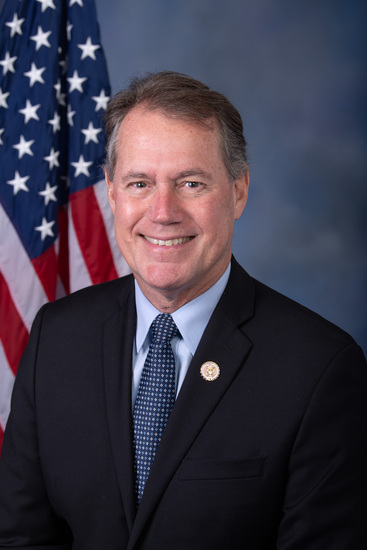
Rep. Ed Case
Sponsored bills
Maddy summaryThe CLEAN Pacific Act of 2025 establishes a U.S. program to assist 16 Pacific Island nations - including Fiji, Palau, and Samoa - in combating drug trafficking by improving their capacity to seize, destroy, and manage chemicals used in illicit drug production and related hazardous waste. The program requires the U.S. Secretary of State to create a 5-year implementation plan for each country, including specific goals for clearing chemical backlogs, preventing re-entry into drug production, and reducing environmental harm, with annual progress reports to Congress. It mandates funding from existing foreign aid budgets to support law enforcement training, shared equipment, and infrastructure upgrades in beneficiary countries. The initiative directly affects U.S. agencies (State, Defense, Justice) and the listed Pacific nations through concrete policy actions focused on counternarcotics operations and environmental safety.
Maddy summaryHRES 637 is a non-binding House resolution commemorating the 69th anniversary of the Mauna Loa Observatory's (MLO) continuous operations since 1956. It recognizes the MLO's role as a premier global site for monitoring atmospheric carbon dioxide and other climate-relevant data, which has contributed to U.S. leadership in atmospheric science. The resolution also affirms support for the MLO's ongoing operations across its four Hawaii Island sites and acknowledges Mauna Loa's cultural significance to Native Hawaiians. As a ceremonial resolution, it does not create new policies or affect any specific group.
Maddy summaryHR 4917, the Expanding the VOTE Act, amends the Voting Rights Act to increase language access for voters. It expands the definition of "voting materials" to include digital formats and requires states to provide language assistance (both written and oral) for minority language groups, with special provisions for American Indian and Alaska Native languages when written translations aren't feasible. The bill creates grants to help jurisdictions provide voting materials in languages that don't currently trigger Section 203 coverage, and mandates a study on lowering population thresholds for language assistance requirements. This directly affects states, local election jurisdictions, and voters who speak minority languages, including those in communities not currently covered by existing language access rules.
Maddy summaryThe Election Mail Act (HR 4915) establishes new standards for handling voting-by-mail materials in Federal elections. It requires the Postal Service to process absentee ballots the same day received, add postmarks showing mailing dates, and treat election mail as first-class with free postage for completed ballots. States must provide ballot return envelopes with tracking barcodes and accept mailed ballots postmarked on election day if received within 7 days. These provisions apply to Federal elections starting in 2026, with some requirements taking effect sooner.
Maddy summaryThe SWIFT VOTE Act provides $120 million in grants to state and local election offices to fund digital check-in systems (e-pollbooks) and real-time wait time reporting at voting locations for federal elections. It requires jurisdictions to publish hourly wait times for short polling locations or four daily intervals for longer ones on official websites, plus post-election summary reports. The bill mandates that funds supplement, not replace, existing election funding and requires training for election officials on accessibility for voters with disabilities and limited English proficiency. This directly affects state and local election administrators by creating new reporting obligations and funding for technology to reduce voter wait times.
Maddy summaryThe Time Off to Vote Act requires employers with 25 or more employees to provide two hours of paid leave for federal elections. Employees can use this leave to vote in person, return mail-in ballots, or perform other voting activities during open polling hours. Employers may set the specific two-hour window (excluding lunch breaks) but cannot deny the leave, retaliate against employees who take it, or cause loss of accrued benefits. Violations could result in civil penalties up to $10,000 per violation, enforced by the Department of Labor.
Maddy summaryHR 4909 requires federally assisted housing providers and mortgage lenders to include a uniform voter registration information statement with key documents. It mandates that public housing agencies, rental voucher programs, and multifamily housing owners provide this statement to tenants when signing leases or submitting income forms. Mortgage lenders must include it in writing within 5 business days of a loan application. The statement, developed by the Consumer Financial Protection Bureau and available in English and 10 common languages, explains voter registration options but does not require individuals to register. This affects renters in federally assisted housing and mortgage applicants.
Maddy summaryThe Merchant Marine Allies Partnership Act establishes a "Foreign Ally Shipping Registry" to allow vessels from designated U.S. allies to engage in U.S. coastwise trade (transporting goods between U.S. ports). Vessels must be wholly owned by nationals or governments of registry countries (including NATO members by default) and flagged in the U.S. or a registry country, with the Secretary of Transportation authorizing trade for up to five years per vessel. The bill exempts these vessels from U.S. crewing requirements (like citizenship rules) and waives duties on repairs made in shipyards of registry countries for documented vessels. Removal of a country from the registry requires congressional notice and a 30-day delay, except during declared war.
Maddy summaryThis bill creates a temporary waiver allowing vessels to bypass standard navigation and vessel-inspection laws when delivering disaster relief cargo to or from specific U.S. territories and states not connected to the mainland. It directly affects shipping companies transporting aid to Puerto Rico, the U.S. Virgin Islands, Guam, American Samoa, the Northern Mariana Islands, Hawaii, or Alaska after a presidential disaster declaration under the Stafford Act. The waiver lasts up to 10 days initially, extendable by another 10 days (with a 45-day maximum total per disaster), and requires agencies to notify relevant congressional committees within 48 hours of issuing or extending a waiver. The law does not change existing disaster relief procedures but streamlines shipping logistics during emergencies in these noncontiguous areas.