

Maddy summaryThe HBCU Research Capacity Act establishes a Federal Clearinghouse within the Department of Education, in coordination with several other federal agencies, to provide Historically Black Colleges and Universities (HBCUs) with comprehensive information on federal grant opportunities. This Clearinghouse will identify grants supporting research and development and institutional capacity building at HBCUs, while also sharing best practices for securing federal funding. The Department of Education will notify HBCUs and Congress about the Clearinghouse and offer quarterly updates to participating institutions. Additionally, several federal agencies, including Defense, Energy, and the National Science Foundation, are mandated to review their grant programs to align with the Clearinghouse's recommendations and report any identified funding gaps to Congress annually.
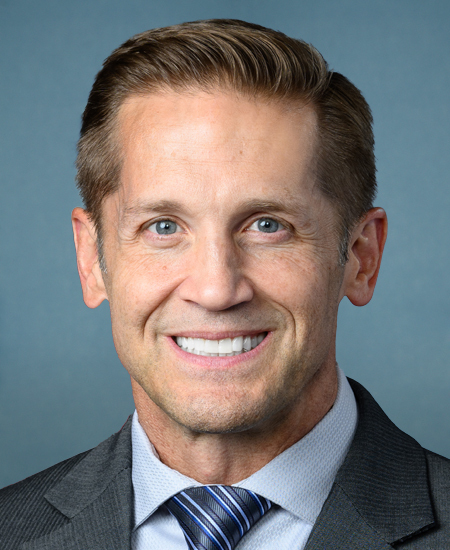
Rep. Richard McCormick
Sponsored bills
Maddy summaryThe FETCH Act of 2026 expands funding from federal Byrne grants to support police dog programs across the United States. This legislation allows law enforcement agencies to use these funds for acquiring, training, and caring for police dogs, including expenses for veterinary care, medications, food, equipment, and housing. The bill also permits funding for retired service dogs, covering post-service medical needs and administrative costs. Directly affected entities are police departments that operate K9 units and seek financial assistance for canine-related operational expenses. The act amends existing federal crime control statutes to explicitly include police dog programs as eligible uses of Byrne grant money.
Maddy summaryThis bill expresses support for designating March 26, 2026, as National Science Appreciation Day to recognize scientific achievements and encourage future STEM engagement. The resolution highlights the economic and societal contributions of science, technology, engineering, and mathematics across various government agencies and industries. It does not create new laws or funding but serves as a symbolic gesture to celebrate the role of science in improving daily life and national progress. The measure is non-binding and does not require further legislative action to implement.
Maddy summaryHR 7649, the Humanitarian Theft Enforcement Act, holds foreign individuals or entities liable for unauthorized diversion or destruction of U.S. humanitarian aid, including aid provided through international organizations. The Secretary of State determines responsibility and can recover the aid's value from the responsible party, with recovered funds credited to the State Department or transferred to other agencies if the aid was originally funded by them. The Secretary may also waive liability if deemed in the national interest. This bill creates a direct mechanism for the U.S. government to seek reimbursement for diverted humanitarian assistance.
Maddy summaryThis resolution formally recognizes the 100th anniversary of the Sporting Arms and Ammunition Manufacturers' Institute (SAAMI), a trade organization founded in 1926. The bill commends SAAMI for developing industry standards that ensure firearms and ammunition are safe, reliable, and interchangeable. It acknowledges the organization's work in coordinating with government bodies, international standards groups, and industry stakeholders to maintain consistent safety practices. This measure is a ceremonial resolution that does not change any laws or regulations but serves to honor SAAMI's century of leadership in the firearms industry.
Maddy summaryThis bill would change how the Department of Veterans Affairs pays healthcare providers under its Community Care Program by requiring payment rates to be based on the specific location where care is delivered rather than the provider's main headquarters. It mandates that the VA establish separate payment rates for different types of care sites, including hospital outpatient departments, ambulatory surgical centers, and physician offices, starting in 2027. The legislation also requires each care site to have a unique National Provider Identifier and ensures that claims for payment include this identifier to track where services were provided. Additionally, it clarifies how off-campus outpatient departments affiliated with larger providers should be treated and billed separately.
Deporting Fraudsters Act of 2026 This bill makes certain acts related to public benefits fraud grounds for (1) barring a non-U.S. national ( alien under federal law) from admission into the United States, or (2) deporting the individual. The bill also makes such an individual ineligible for immigration enforcement relief, including relief for an individual in danger of subjection to torture. Specifically, this bill applies to individuals who have been convicted of, admit to having committed, or admit to acts which constitute certain offenses. Offenses covered by this bill include (1) fraud involving Supplemental Nutrition Assistance Program (SNAP) benefits, (2) fraud involving Social Security benefits, (3) fraud involving programs that receive federal funds, and (4) the production of fraudulent identification documents.
Maddy summaryHR 5688, the Non-Domiciled CDL Integrity Act, changes rules for issuing commercial driver's licenses (CDLs) to people who don't live in the state where the license is issued. It allows states to issue CDLs to foreign nationals with lawful U.S. immigration status and work-related visas (valid for up to one year or until their stay ends), requiring states to verify status before issuing and keep records for two years. For residents of U.S. territories like Puerto Rico, it requires proof of U.S. citizenship or permanent residency before issuing CDLs, with similar verification and record-keeping rules. The bill directly affects commercial drivers from foreign countries and U.S. territories seeking CDLs in states where they are not residents.
Enhanced Iran Sanctions Act of 2025 This bill imposes sanctions on certain foreign persons (individuals and entities) that are involved in Iran's petroleum sector as well as certain associated persons. The bill also requires or authorizes actions to facilitate the enforcement of sanctions on Iran. Specifically, the bill requires the President to impose visa- and property-blocking sanctions on any foreign person that, after the bill's enactment, knowingly engages in any transaction related to the processing, export, or sale of oil, condensates, gas, liquefied natural gas, or other petrochemical products in whole or in part from Iran. The President must also impose sanctions on certain foreign persons associated with a sanctioned individual or entity. For example, the President must sanction the subsidiaries and corporate officers of a sanctioned business. The bill provides certain exceptions to these sanctions, including specifying that sanctions do not apply to the importation of goods or to conducting or facilitating transactions for humanitarian assistance. The Department of State must establish an interagency working group that shall seek to establish a multilateral contact group to coordinate international efforts to enforce sanctions on Iran. The bill expands the State Department rewards program to authorize a reward payment to any individual who furnishes information leading to the identification of a person (1) subject to sanctions under this bill, or (2) that has attempted or is attempting to evade sanctions under this bill.
Maddy summaryThis bill creates a federal loan forgiveness program to encourage mental health professionals to work in areas with shortages of care providers. It directly affects students and graduates enrolled in mental health training programs at minority-serving institutions who agree to work full-time in underserved communities for at least five years. Under the program, eligible individuals would receive loan deferment during their service period, and after completing five years of employment, the government would repay up to $200,000 of their outstanding student loans. The bill defines qualified mental health providers to include psychiatrists, psychologists, social workers, and other licensed professionals specializing in mental and behavioral health care.