

Maddy summaryThis bill, the PAPA Act of 2025, restricts how aircraft tracking data (ADS-B) can be used and regulates fees on general aviation aircraft. It prohibits using ADS-B data to identify aircraft for revenue purposes without owner consent, allows its use only for air traffic safety by controllers, and extends this restriction to all government officials. For airport fees, it requires public disclosure of cost-saving efforts, alternative revenue sources, fee impact assessments, and specific safety project costs before imposing landing/takeoff fees on general aviation aircraft. All fees collected must be used exclusively for airside safety projects, not other airport expenses. The bill defines general aviation aircraft as those used for personal, recreational, training, or non-commercial purposes (excluding scheduled airlines and military flights).
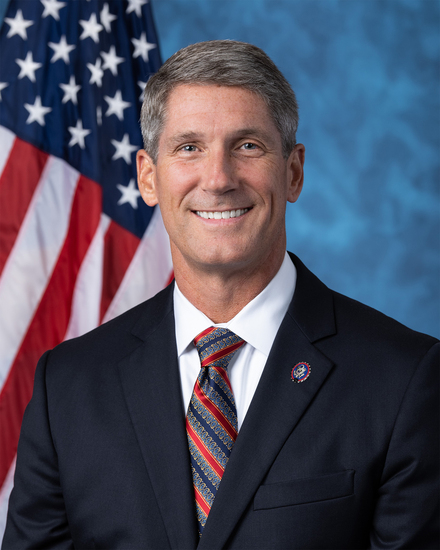
Rep. Scott Franklin
Sponsored bills
Maddy summaryThis bill makes technical corrections to the Camp Lejeune Justice Act of 2022 to streamline claims for individuals harmed by water contamination at Camp Lejeune. It clarifies the evidence required (30+ days at the base plus a link between contaminants and health harm), specifies that cases must be handled in North Carolina courts (with limited transfer options), and sets attorney fee caps (20% before suit, 25% after). These changes directly affect veterans and civilians who lived at Camp Lejeune and filed claims under the 2022 law. The bill does not create new eligibility but aims to improve the legal process for existing cases.
Maddy summaryThe LEDGER Act (HR 4091) requires the Treasury Department to create a system tracking every government payment within 180 days of enactment. It mandates that all federal departments, agencies, and branches (executive, legislative, judicial) must report disbursements from every funding source, including how long funds remain available for spending. This system will detail each payment's origin, recipient, and timing across all government accounts. The bill directly affects all federal spending entities by standardizing expenditure tracking previously handled inconsistently.
Maddy summaryThe Fire Weather Development Act of 2025 establishes a National Oceanic and Atmospheric Administration (NOAA) program to improve wildfire forecasting, detection, and communication systems. The program will develop better tools for predicting wildfire spread, smoke dispersion, and fire behavior through collaboration with federal agencies, state and local emergency officials, and stakeholders. It authorizes $5 million for fiscal year 2026 to fund research on new technologies like unmanned aircraft systems, advanced satellite detection, and improved communication systems. The bill also creates an Interagency Coordinating Committee on Wildfires and a National Advisory Committee to coordinate wildfire response efforts and provide recommendations to enhance preparedness and response capabilities.
Maddy summaryThis bill requires the United States Postal Service (USPS) to notify postal customers and specific government officials when a post office temporarily suspends operations. It mandates detailed advance notice (60 days for planned closures) including reasons, expected dates, and plans for replacement services, with shorter notices (14 days) for unplanned closures. USPS must provide replacement retail services - such as selling packaging, handling mail for post office boxes, and processing address changes - within 10 days and maintain them until operations resume. The law applies only to closures starting after enactment and targets USPS operations affecting local communities and their federal/state representatives.
Maddy summaryHR 3946, the FIGHT Act of 2025, amends the Animal Welfare Act to specifically prohibit gambling on animal fighting events and restrict the interstate transport of roosters used in such ventures. It defines "rooster" as male chickens over six months old and makes it unlawful to sponsor, exhibit, attend (for those under 16), or gamble on animal fighting events - whether in-person or broadcast. The bill creates a civil enforcement mechanism allowing any person to file a lawsuit to stop violations after providing 60 days' notice to authorities, with potential fines up to $5,000 per violation. It also establishes seizure of property used to facilitate violations and clarifies that state laws on animal fighting remain in effect unless directly conflicting with federal provisions.
Maddy summaryThis bill requires the Department of Veterans Affairs (VA) to continue personnel investigations into misconduct or performance issues even if an employee resigns, retires, or leaves before the investigation concludes. Once completed, the VA must permanently note the findings in the employee’s official personnel file, while ensuring the employee receives written notice within 5 days, 30 days to respond with evidence, and the right to appeal to the Merit Systems Protection Board. It directly affects VA employees in competitive, excepted, or senior executive service roles who are subject to such investigations. The policy change mandates transparency and due process for employees during separation, preventing investigations from being abandoned upon departure.
Maddy summary# Summary of the Proposed Legislative Document This document outlines a comprehensive legislative proposal that amends and reauthorizes various environmental, weather, climate, and health-related programs. Key elements include: 1. **National Integrated Heat Health Information System (NIHHIS)**: Establishes a new system within NOAA to reduce heat-related health risks, with a 5-year strategic plan and $5 million annual funding (2026-2030) for implementation. 2. **National Landslide Preparedness Act Reauthorization**: - Updates definitions to include "atmospheric river" and "extreme precipitation event" - Increases funding from $25 million to $35 million annually (with at least $10 million for landslide early warning systems) - Establishes regional partnerships with eligible organizations and institutions of higher education - Requires assessment of risks from atmospheric river flooding and extreme precipitation events 3. **Harmful Algal Bloom and Hypoxia Program**: - Creates a National-Level Incubator Program to develop new strategies for preventing, mitigating, and controlling harmful algal blooms - Increases funding for NOAA ($19.5 million annually) and EPA ($8 million annually) - Establishes an Action Strategy for harmful algal blooms to be updated every five years 4. **Other Key Provisions**: - Amends the Flood Level Observation, Operations, and Decision Support Act - Establishes an interagency committee to coordinate heat health activities across multiple federal departments - Creates an "unfunded priorities list" for Congress to identify critical needs not included in the budget - Includes provisions for meteorological observations in the Arctic region - Authorizes technical assistance for Pacific Island nations The legislation represents a significant expansion of NOAA's role in climate and weather-related research, public health protection, and disaster preparedness, with emphasis on cross-agency coordination, updated terminology reflecting current scientific understanding, and increased funding for critical programs.
Maddy summaryHR 649, the Whole Milk for Healthy Kids Act of 2025, amends the National School Lunch Act to allow schools participating in the program to offer students both organic and non-organic whole milk, in addition to reduced-fat, low-fat, and fat-free options. Key provisions include clarifying that milk fat in whole milk should not count toward saturated fat limits for meal compliance, prohibiting schools from purchasing milk from Chinese state-owned enterprises, and ensuring schools cannot be barred from offering the full range of milk types listed. The bill directly affects public and private schools serving the National School Lunch Program by expanding their milk options for students. It focuses on concrete policy changes to dietary offerings and sourcing restrictions within the school nutrition program.
Maddy summaryHR 3694, the VALID Act of 2025, requires lenders to include specific information about VA loans in mortgage disclosures. It amends the National Housing Act to mandate that disclosures state the loan-to-value ratio and clarify that VA loans are available under Chapter 37 of Title 38 (veterans' benefits law), assuming prevailing interest rates. The bill also requires the Federal Housing Finance Agency to add a military service question to the Uniform Residential Loan Application form, placing it above the signature line within six months of enactment. This directly affects veterans and active-duty service members applying for VA-guaranteed mortgages, as well as the lenders processing those applications.