

Essential Caregivers Act of 2025 This bill prohibits certain health care facilities from limiting the access of essential caregivers to residents of those facilities, including during designated emergency periods. Specifically, the bill generally prohibits Medicare skilled nursing facilities, Medicaid nursing facilities, Medicaid intermediate care facilities, and associated inpatient rehabilitation facilities from restricting the access of essential caregivers to residents of the facilities, including during emergency periods in which visitation rights are otherwise restricted. During emergency periods, facilities may restrict access for an initial period of up to seven days and for one additional maximum seven-day period (if the additional period is approved by the state health department). Facilities may restrict access for a total of 7 days (or 14 days with the approval of the state health department) during an emergency period. Essential caregivers must agree to comply with any safety protocols set by the facility, which may be no more stringent for caregivers compared to those for staff. Caregivers who fail to comply with these requirements may be denied access, subject to an appeals process.
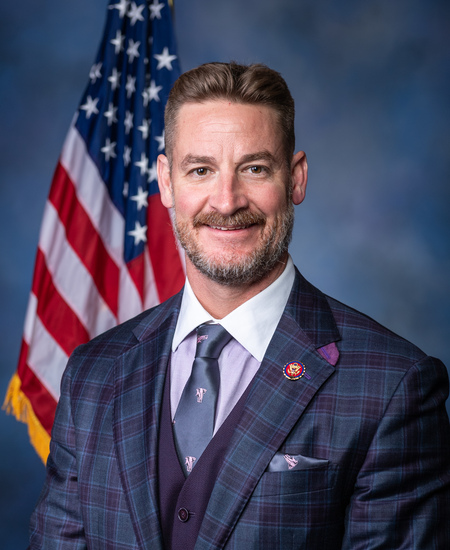
Rep. W. Gregory Steube
Sponsored bills
Maddy summaryThis bill, the Protecting Ballot Measures From Foreign Influence Act of 2025, bans foreign nationals from contributing money to state and local ballot initiatives and referendums. It amends the Federal Election Campaign Act to explicitly include these state and local voting measures under the existing prohibition on foreign contributions for federal elections. The key provision requires that contributions to ballot measures - like state-level policy votes - must not come from foreign individuals or entities. The law would apply to all contributions made after its enactment date.
Miracle on Ice Congressional Gold Medal Act This act provides for the award of Congressional Gold Medals to the members of the 1980 U.S. Olympic men's ice hockey team in recognition of the team's achievement at the 1980 Winter Olympic Games.
Maddy summaryThe HOMEFRONT Act of 2025 exempts military housing for single service members and families (under the Department of Defense) from the National Historic Preservation Act, meaning these facilities won’t need to meet historic preservation standards. It allows the Secretary of Defense to temporarily exclude up to 0.1% of such housing units from the exemption, but excludes any historic sites listed on the National Register as of January 20, 2025. The bill also prohibits landlords of privatized military housing from requiring tenants to sign nondisclosure agreements related to leases or housing services, applying retroactively to all existing agreements. These changes directly affect military housing residents and the Department of Defense’s management of housing facilities.
Maddy summaryHR 1623 (the SCREEN Act) requires online platforms that profit from hosting pornographic content to implement age verification technology, preventing minors from accessing such material. Covered platforms must publicly disclose their verification process and securely handle age data collected through these systems. The law applies specifically to platforms where pornographic content is a regular business activity, not all websites. It mandates that only adults can access pornographic content on these platforms, without banning the content itself.
Maddy summaryThis bill renames a specific plaza in Washington D.C. (the area between H and K Streets on 16th Street Northwest) from "Black Lives Matter Plaza" to "Charlie Kirk Freedom of Speech Plaza." It requires the District of Columbia to install two standard street signs with the new name at the plaza's intersections within 90 days of enactment. The bill only affects the plaza's official designation and signage, with no substantive policy changes or new regulations. It directly impacts how the location is referenced in official documents and public signage.
Maddy summaryThis bill establishes the President’s Council on Sports, Fitness, and Nutrition to advise the President on reestablishing the Presidential Fitness Test as the primary assessment tool for a Presidential Fitness Award in U.S. schools. The Council, appointed by the President, would develop school-based fitness programs, promote physical activity through community partnerships, and address childhood obesity as a national security concern. It directs the Secretary of Health and Human Services to fund the Council and its initiatives, with the Council terminating two years after enactment unless extended. The bill specifically aims to impact K-12 schools by integrating the fitness test into physical education programs.
Maddy summaryHR 6466, the Forced Abortion Prevention and Accountability Act, prohibits non-consensual administration of abortion drugs (like mifepristone or misoprostol) to pregnant women without their informed consent. It criminalizes this act with penalties up to 25 years in prison and allows victims to sue for triple damages, psychological/physical injury compensation, and attorney fees. The bill directly affects pregnant women who might face coerced procedures and medical providers or others who administer such drugs without consent. Key provisions include criminal penalties for the act itself, enhanced penalties for serious injury or death, and a civil remedy framework for victims seeking compensation.
Maddy summaryThe Hire Student Veterans Act expands the Work Opportunity Tax Credit to include veterans enrolled in school using educational benefits from VA or military programs (such as the GI Bill). Employers hiring these veterans can claim a tax credit, making it easier to recruit students using benefits under specific VA or military education programs. The bill modifies the minimum employment requirement for these veterans, excluding them from standard work duration rules that apply to other credit-eligible hires. These changes take effect for veterans hired after the bill becomes law.
Give Kids a Chance Act of 2025 This bill expands the Food and Drug Administration’s (FDA’s) authority with respect to research on rare pediatric diseases, including by permitting the FDA to take enforcement action against drug sponsors that fail to satisfy pediatric study requirements and by reauthorizing programs that support pediatric research. Specifically, the bill modifies requirements relating to molecularly targeted pediatric cancer investigations to permit research on new drugs in combination with active ingredients that have already been approved, provided certain conditions are met; permits the FDA to take enforcement action against drug sponsors that fail to comply with pediatric study requirements, if such sponsors demonstrated a lack of due diligence in satisfying the requirement; renews the FDA’s authority to award priority review vouchers to sponsors of new products intended to treat rare pediatric diseases through September 30, 2029; and reauthorizes through FY2027 certain funding for the National Institutes of Health to support priority pediatric research. The bill also provides statutory authority for the FDA’s interpretation of the orphan drug exclusivity period. The bill specifies, consistent with FDA regulations, that the seven-year market exclusivity period for drugs for rare diseases or conditions (i.e., orphan drugs) prohibits the approval of the same drug for the same approved use or indication with respect to the disease or condition. (In Catalyst Pharmaceuticals, Inc. v. Becerra , a court rejected the FDA’s interpretation and held that orphan drug exclusivity extends to all uses or indications for the disease or condition.)