

Success for Rural Students and Communities Act of 2021 This bill establishes a grant program through which the Department of Education may award funds to eligible partnerships to support rural postsecondary education and economic growth and development in rural communities. A grant recipient must be a partnership whose members represent at least three designated types of organizations, specifically (1) a local educational agency or educational service agency serving a rural area, (2) an institution of higher education (IHE), (3) a regional economic development entity, or (4) a rural community-serving organization with demonstrated success supporting rural students in accessing higher education and attaining degrees. A grant recipient must use awarded funds to carry out no fewer than two specified activities, namely (1) improving postsecondary enrollment rates for rural secondary school students, (2) increasing enrollment and completion rates of rural nontraditional students in degree programs at IHEs, (3) creating or strengthening academic programs at rural-serving IHEs to prepare graduates to enter into high-need occupations in the regional and local economies, or (4) generating local and regional economic development that creates employment opportunities for rural students with postsecondary degrees.
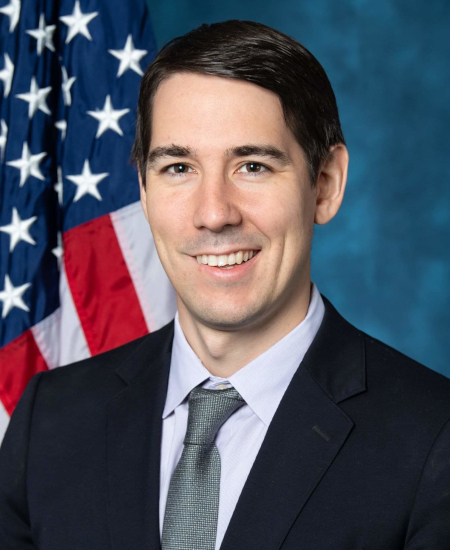
Rep. Josh Harder
Sponsored bills
Farm Workforce Modernization Act of 2021 This bill contains provisions related to alien farmworkers, including provisions establishing a certified agricultural worker (CAW) status and changing the H-2A temporary worker program. The Department of Homeland Security (DHS) may grant CAW status to an applying alien who (1) performed at least 1,035 hours of agricultural labor during the two-year period prior to March 8, 2021; (2) on that date was inadmissible, deportable, or under a grant of deferred enforced departure or temporary protected status; and (3) has been continuously present in the United States from that date until receiving CAW status. The bill imposes additional crime-related inadmissibility grounds on CAW applicants and makes some other grounds inapplicable. CAW status shall be valid for 5.5 years and may be extended. DHS may grant dependent status to the spouse or children of a principal alien. An alien with a pending application may not be detained or removed by DHS and shall be authorized for employment until DHS makes a final decision on the application. A CAW alien (and dependents) may apply for lawful permanent resident status after meeting various requirements, including performing a certain amount of agricultural labor for a number of years. DHS shall create an electronic platform for (1) filing H-2A petitions, (2) facilitating the processing of H-2A cases, and (3) providing agencies a single tool for obtaining H-2A-related case information. The bill makes various changes to the H-2A program, such as (1) modifying the method for calculating and making adjustments to the H-2A worker minimum wage, (2) specifying how an employer may satisfy requirements that it attempted to recruit U.S. workers, (3) requiring H-2A employers to guarantee certain minimum work hours, (4) making the program available for agricultural work that is not temporary or seasonal, and (5) reserving a visa allocation for the dairy industry. DHS shall establish a pilot program allowing certain H-2A workers to apply for portable status, which gives the worker 60 days after leaving a position to secure new employment with a registered H-2A employer. DHS shall establish an electronic system patterned on the E-Verify Program for employers to verify an individual's identity and employment authorization. Employers hiring individuals for agricultural employment must use the system. This bill permanently establishes the Housing Preservation and Revitalization Program, which provides financing assistance for rural rental housing and off-farm labor housing and rental assistance for qualified tenants of such housing. It also authorizes the Department of Agriculture to provide various assistance, including funding for insuring loans and grants for new farmworker housing.
Puppies Assisting Wounded Servicemembers Act of 2021 or the PAWS Act of 2021 This bill requires the Department of Veterans Affairs (VA) to implement a grant program for the purpose of pairing service dogs with eligible veterans. Organizations that receive grants must provide veterinary health insurance coverage, hardware, and travel expenses for each service dog and veteran participating in the program. Eligible veterans are those who (1) are enrolled in the VA health care system, (2) have been evaluated and treated for post-traumatic stress disorder (PTSD) but remain diagnosed with PTSD, (3) may benefit from a service dog, and (4) agree to successfully complete training provided by an eligible organization. Veterans are required to see a VA health care provider at least once every six months to determine whether the veteran continues to benefit from a service dog. Eligible organizations are nonprofit organizations that provide service dogs to veterans with PTSD, meet publicly available standards set forth by the Association of Service Dog Providers for Military Veterans, have expertise in the needs of veterans with PTSD, agree to cover all costs in excess of the grant amount to guarantee the benefits of the program, agree to reaccept or replace a service dog provided to a veteran, and submit an application to the VA. Any improvement in PTSD symptoms as a result of the provision of a service dog shall not affect the veteran's eligibility for any other VA benefits. The Government Accountability Office must report on the grant program.
Ethan's Law This bill establishes a framework to regulate the storage of firearms on residential premises at the federal, state, and tribal levels. At the federal level, the bill establishes statutory requirements for firearms on residential premises to be safely stored if a minor is likely to gain access without permission or if a resident is ineligible to possess a firearm. An individual who violates the requirements is subject to criminal penalties. A firearm stored in violation of the requirements is subject to seizure and forfeiture. At the state and tribal levels, the bill requires the Department of Justice to award grants to implement functionally identical requirements for the safe storage of firearms.
Abby Honold Act This bill directs the Office on Violence Against Women within the Department of Justice to make competitive grants to law enforcement agencies and victim services organizations to implement evidence-based, trauma-informed approaches in responding to and investigating domestic violence, dating violence, sexual assault, or stalking.
Student Loan Disclosure Transparency Act of 2021 This bill requires lenders disbursing federal student loans to disclose additional information to borrowers and increase the frequency of such disclosures. Specifically, prior to disbursement, the lender making a loan must disclose (1) the principal amount, interest rate, and number of required monthly payments to be made on the loan; (2) the estimated balance owed by the borrower; and (3) the estimated aggregate amount the borrower will pay. Prior to repayment, the lender must disclose the projected total of interest charges that the borrower will pay on the loan, as well as projections of the borrower's monthly repayment amount. The bill also requires certain disclosures for the life of the loan. In particular, lenders must disclose information about loans on a monthly, rather than periodic, basis. Lenders must also provide borrowers who are not in a repayment status (e.g., a borrower who is in school or in a deferment period) with a monthly statement. The Department of Education must obtain feedback from borrowers and report on the usefulness and effectiveness of such disclosures.
Whole Milk for Healthy Kids Act of 2021 This bill revises requirements for milk provided by the National School Lunch Program of the Department of Agriculture (USDA). Currently, schools participating in the program must provide milk that is consistent with the most recent Dietary Guidelines for Americans; USDA regulations require milk to be fat-free or low-fat and allow only fat-free milk to be flavored. The bill removes these restrictions and instead permits schools to offer students whole, reduced-fat, low-fat, and fat-free flavored and unflavored milk.
Huntington's Disease Disability Insurance Access Act of 2021 This bill expedites payment of Social Security Disability Insurance (SSDI) benefits and eligibility for Medicare coverage for those with Huntington's disease. This is an inherited disorder that causes brain cells to die, including in areas of the brain that help to control voluntary movement. Specifically, the bill eliminates the 5-month waiting period for SSDI benefits and the subsequent 24-month waiting period for Medicare coverage for individuals with Huntington's disease. Under current law, individuals generally must wait five months after the onset of disability to begin receiving SSDI benefits and an additional 24 months to become eligible for Medicare.
Wise Investment in Children Act of 2021 or the WIC Act of 20 21 This bill expands eligibility for children to receive benefits under the Special Supplemental Nutrition Program for Women, Infants, and Children (WIC). The bill authorizes the Department of Agriculture to grant a waiver to a state, on request, that waives certification deadline requirements under the program if such state demonstrates there are unusual technological barriers to implementation, operational costs are not affordable within the nutrition services and administration grant of the state, or it is in the best interest of the program. If a waiver is granted, the bill extends eligibility for the program until the period that ends on the earlier of the sixth birthday of a child or when the child enters kindergarten; extends the certification period under the program for infants to up to two years, instead of the current one year; and increases the certification time under the program for postpartum women to a period of up to two years.
Federal Bird Safe Buildings Act of 2021 This bill requires the General Services Administration (GSA) to develop and implement strategies for reducing bird fatalities from collisions with public buildings. Specifically, the GSA must incorporate relevant features and strategies into public buildings that are newly constructed, acquired, or substantially altered so as to reduce bird fatalities. The GSA must also develop a related design guide and annually certify its active use. The bill's provisions do not apply to buildings and sites on the National Register of Historic Places, the White House and its grounds, the Supreme Court building and its grounds, or the U.S. Capitol and any buildings on its grounds.