

John R. Lewis Voting Rights Advancement Act of 2021 This bill establishes new criteria for determining which states and political subdivisions must obtain preclearance before changes to voting practices may take effect. Preclearance is the process of receiving preapproval from the Department of Justice (DOJ) or the U.S. District Court for the District of Columbia before making legal changes that would affect voting rights. A state and all of its political subdivisions shall be subject to preclearance of voting practice changes for a 10-year period if 15 or more voting rights violations occurred in the state during the previous 25 years; 10 or more violations occurred during the previous 25 years, at least 1 of which was committed by the state itself; or 3 or more violations occurred during the previous 25 years and the state administers the elections. A political subdivision as a separate unit shall also be subject to preclearance for a 10-year period if three or more voting rights violations occurred there during the previous 25 years. States and political subdivisions that meet certain thresholds regarding minority groups must preclear covered practices before implementation, such as changes to methods of election and redistricting. Further, states and political subdivisions must notify the public of changes to voting practices. Next, the bill authorizes DOJ to require states or political subdivisions to provide certain documents or answers to questions for enforcing voting rights. The bill also outlines factors courts must consider when hearing challenges to voting practices, such as the extent of any history of official voting discrimination in the state or political subdivision.
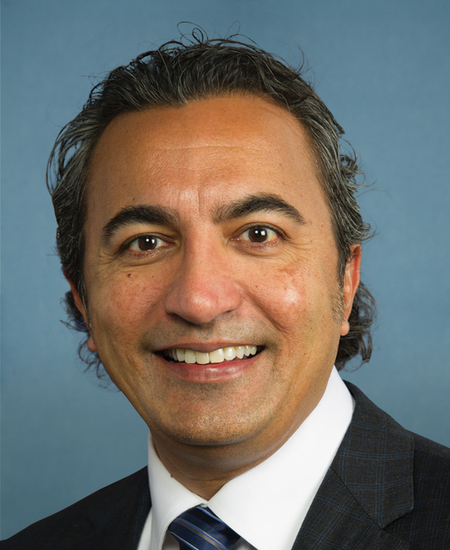
Rep. Ami Bera
Sponsored bills
Collaborate in an Orderly and Cohesive Manner Act This bill requires the Department of Health and Human Services (HHS) to award grants for implementing and evaluating specified models of care that integrate the delivery of behavioral health and primary care services. Specifically, HHS must award grants to primary care providers for the initial costs (e.g., hiring staff) of implementing such models. In awarding the grants, HHS must prioritize recipients that provide care to medically underserved populations and in areas where the prevalence of behavioral health conditions exceeds the national average. HHS must also provide additional incentive payments to recipients that use appropriate billing codes and quality measures for behavioral health services. In addition, HHS must award grants to national and regional organizations for providing technical assistance to health care providers and systems to improve implementation of integrated behavioral health and primary care models. Furthermore, HHS may direct its agencies to expand efforts to evaluate current and emerging integrated behavioral health and primary care models.
This resolution expresses the sense of the House of Representatives that the United States shall recognize kind actions in our country, encourage kindness, spread love, and foster a culture of being kind to one another.
Ensuring Access to General Surgery Act of 2021 This bill requires the Health Resources and Services Administration (HRSA) to study access by underserved populations to general surgeons. Specifically, HRSA must study (1) whether the health professional shortage area designation under the National Health Service Corps (NHSC) program accurately assesses adequacy of access to general surgeons, (2) whether another measure would be more accurate, and (3) potential methodologies for designating general surgery shortage areas. (The NHSC provides scholarships and student loan repayment awards to primary care, dental care, and mental health care providers who agree to work in areas that HRSA designates as having a shortage of those particular types of providers.) HRSA must also publish data comparing the availability and need of general surgery services in urban, suburban, and rural areas. On the basis of its study, HRSA may establish a methodology for designating general surgery shortage areas and make such designations. If any designations are made, HRSA must publish a list of general surgery shortage areas.
Prohibition of Medicaid Funding for Conversion Therapy Act This bill prohibits state Medicaid programs from covering conversion therapy. The bill defines conversion therapy as any practice or treatment that seeks to change a person's sexual orientation or gender identity in exchange for monetary compensation.
Harlem Hellfighters Congressional Gold Medal Act This bill provides for the award of a Congressional Gold Medal to the 369th Infantry Regiment, commonly known as the Harlem Hellfighters, in recognition of their bravery and outstanding service during World War I.
Housing for Afghan Allies Act of 2021 This bill allows state and local governments receiving emergency rental assistance funds for unemployed persons, persons with hardship related to the COVID-19 pandemic, and persons at risk of homelessness to use some of those funds to provide rent and utility assistance to certain individuals and families from Afghanistan. The funds may be used to provide such assistance to individuals and families who are citizens or nationals of Afghanistan, who are present within the United States, and who have been granted special immigrant status or have received priority 2 refugee designation. A special immigrant is an immigrant who qualifies for a permanent residence after meeting certain criteria. A priority 2 refugee designation grants U.S. Refugee Admissions Program access to certain immigrants, including Afghan immigrants who do not qualify as special immigrants but who may be at risk because of their U.S. affiliation.
Grid Security Research and Development Act This bill establishes programs and provisions to protect the electric grid and energy systems from cyberattacks, physical attacks, and natural disasters. For example, it requires the Department of Energy to develop a program to protect the electric grid and energy systems from cyber and physical attacks by increasing cyber and physical security capabilities of the energy sector and accelerating the development of relevant technologies and tools.
This resolution expresses respect for and solidarity with the families and friends of those killed, tortured, and imprisoned for participating in prodemocracy demonstrations during the spring of 1989 in Tiananmen Square. It also reaffirms support for those who continue to work for political reform, rule of law, and human rights in China.
This resolution supports the work of the United States African Development Foundation as it creates pathways to prosperity for underserved communities on the African continent through community-led development, and it commits to continue supporting the work of the foundation as an independent agency.