

Nurse Staffing Standards for Patient Safety and Quality Care Act of 2021 This bill requires hospitals to implement and submit to the Department of Health and Human Services (HHS) a staffing plan that complies with specified minimum nurse-to-patient ratios by unit. Hospitals must post a notice regarding nurse-to-patient ratios in each unit and maintain records of actual ratios for each shift in each unit. The bill also requires hospitals to follow certain procedures regarding how ratios are determined and other staff are prohibited from performing nurse functions unless specifically authorized within a state's scope of practice rules, among other requirements. HHS must adjust Medicare payments to hospitals to cover additional costs attributable to compliance with these ratios. Nurses may object to, or refuse to participate in, an assignment if it would violate minimum ratios or if they are not prepared by education or experience to fulfill the assignment without compromising the safety of a patient or jeopardizing their nurse's license. Hospitals may not (1) take adverse actions against a nurse based on the nurse's reasonable refusal to accept an assignment; or (2) discriminate against individuals for good faith complaints relating to the care, services, or conditions of the hospital or related facilities. HHS may impose civil monetary penalties on hospitals violating the ratio requirements and must publish the names of such hospitals. The bill provides stipends to the nurse workforce loan repayment and scholarship program and expands the nurse retention grant program to include nurse preceptorship and mentorship projects.
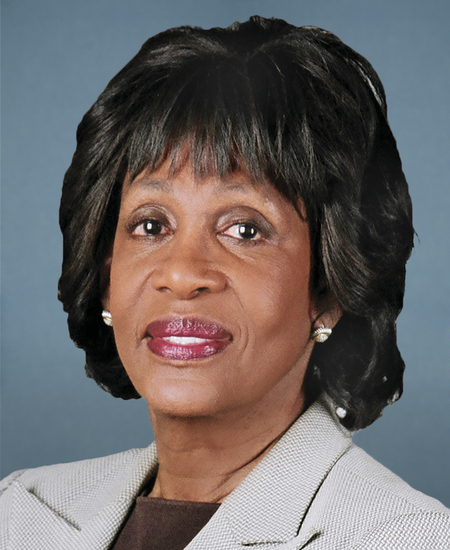
Rep. Maxine Waters
Sponsored bills
Enhance Access To SNAP Act of 2021 or the EATS Act of 20 21 This bill expands eligibility for the Supplemental Nutrition Assistance Program to students attending institutions of higher education.
Improving Access to Nutrition Act of 20 21 This bill repeals certain work requirements for the Supplemental Nutrition Assistance Program (SNAP, formerly known as the food stamp program). The requirements apply to able-bodied adults who are ages 18-49 and have no dependent children. Individuals who do not meet certain work requirements are generally prohibited from receiving more than 3 months of SNAP benefits over a 36-month period. Under current law, some of the work requirements under SNAP are temporarily suspended due to COVID-19 (i.e., coronavirus disease 2019).
Equity in Neuroscience and Alzheimer's Clinical Trials Act of 2021 or the ENACT Act of 2021 This bill sets out activities and requirements to increase the participation of underrepresented populations in research and clinical trials for Alzheimer's disease and related dementias. Specifically, the National Institute on Aging (NIA) must establish and provide technical assistance to Alzheimer's research centers located in areas with higher concentrations of minority groups. These centers must establish diagnostic and treatment clinics designed to serve minority, rural, and other underserved populations; operate clinical trials; and carry out public outreach to encourage members of minority populations to participate in clinical trials and research. Additionally, the NIA must disseminate information to members of minority populations about participating in clinical trials and take other actions to enhance diversity with respect to the Alzheimer's research that it conducts or supports. The bill also directs the NIA to increase diversity among Alzheimer's researchers by encouraging the participation of individuals who are from groups that are underrepresented in clinical, behavioral, and social sciences.
Servicemember Parental Leave Equity Act This bill modifies Department of Defense parental leave provisions for members of the Armed Forces. Specifically, the bill increases parental leave for primary caregivers to 18 weeks (currently 12) following the birth of a child and to 12 weeks (currently 6) following the adoption of a child. The bill increases parental leave for a secondary caregiver from 21 days to 12 weeks in connection with the birth or adoption of a child. Primary or secondary caregivers of a long-term foster child are authorized to take up to 12 weeks of leave in connection with such placement. Parental leave for a primary or secondary caregiver for a birth, adoption, or foster child placement may be taken in more than one increment. For primary caregivers, the leave must be utilized within one year of the event. The bill authorizes up to 12 weeks of leave to certain service members who would have been secondary caregivers but for a miscarriage, stillbirth, or infant death. The following activities required of an active-duty member within a 12-month postpartum period must have the approval of a health care provider and be at the election of the member or in the interest of national security: (1) an order of temporary duty overnight travel or to participate in physically demanding field training exercises, (2) meeting of body composition standards, or (3) passing a physical fitness test. The bill also reduces the service commitment required for participation in the Career Intermission Program.
Preventing Outages With Enhanced Resilience and Operations Nationwide Act of 2021 or the POWER ON Act of 2021 This bill provides incentives for enhancing the resilience of the electric power grid to natural disasters and strengthening the emergency response and management of the grid. Specifically, the bill requires the Department of Energy (DOE) to establish an electric grid resilience program. Under the program, DOE must provide grants to states and Indian tribes for projects that enhance the physical resilience of the electric grid to natural disasters. In addition, DOE must establish a research, development, demonstration, and commercial application program to enhance resilience and strengthen emergency response and management of the electric grid. Under the program, DOE must award grants to improve the resilience of the electric grid by developing technologies and capabilities to withstand and address the current and projected impact on electric grid infrastructure of natural disasters, such as wildfires.
This concurrent resolution (1) affirms, on the 400th anniversary of the arrival of the first slave ship, that the nation owes a debt of remembrance not only to those who lived through the injustices of slavery but also to their descendants; and (2) urges the establishment of a U.S. Commission on Truth, Racial Healing, and Transformation to properly acknowledge, memorialize, and be a catalyst for progress, including toward permanently eliminating persistent racial inequities.
This resolution condemns and denounces all forms of anti-Asian sentiment, including those related to COVID-19 (i.e., coronavirus disease 2019), and calls on federal law enforcement officials, working with state and local agencies, to take specified steps. The resolution calls on federal officials to expeditiously investigate and document all credible reports of hate crimes, harassment, bullying, and threats against the Asian American and Pacific Islander communities; the Attorney General to work with state and local agencies and Asian American and Pacific Islander community-based organizations to prevent discrimination and to expand culturally competent and linguistically appropriate education campaigns on public reporting of hate crimes; and the Department of Health and Human Services to issue guidance describing best practices to mitigate racially discriminatory language in describing the pandemic. The resolution recommits the United States to serving as a world leader in building more inclusive, diverse, and tolerant societies by (1) prioritizing language access and inclusivity in communication practices, and (2) combating misinformation and discrimination that put Asian Americans and Pacific Islanders at risk.
Universal Child Care and Early Learning Act This bill provides funds to the Department of Health and Human Services (HHS) for an affordable child care and early learning program. Children who are at least six weeks of age but not yet required to attend school may participate in the program regardless of family income, disability status, citizenship status, or employment of a family member. Under the program, HHS must support sponsors (e.g., states, local governments, tribal organizations, and nonprofit community organizations) that provide child care and early learning services for families. Families must pay a subsidized fee, based on their income, for the services. The fees are waived for children from families with incomes below 200% of the poverty line. The fees are capped at 7% of a family's income regardless of the family's income level.
Pandemic Heroes Compensation Act of 2021 This bill allows essential workers and their family members to file claims and receive compensation for harm or death suffered as a result of COVID-19 (i.e., coronavirus disease 2019). A Special Master appointed by the Department of Justice must review claims submitted and determine if a claimant is eligible for compensation, the extent of the harm to the claimant, and the amount of compensation to be awarded.