

Maddy summaryThis bill designates the United States Postal Service facility at 4640 Cass Street in San Diego, California, as the Mary Wilding Memorial Post Office Building. It directly affects the specific postal location by changing its official name to honor Mary Wilding. The key provision ensures that all future legal documents, maps, and records referring to this building will use the new memorial name. This is a commemorative measure that updates official records rather than changing operational policies or funding.
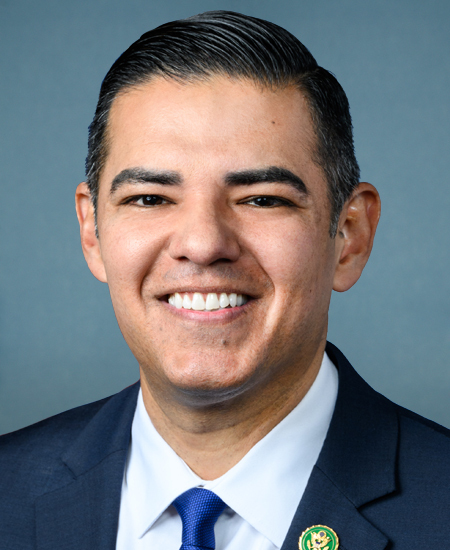
Rep. Robert Garcia
Sponsored bills
Maddy summaryThe Transportation for Reentry Act requires transit agencies receiving federal funding to offer free public transportation to individuals released from prison after serving at least one year. Under this bill, these agencies must provide the service for one year starting from the person's release date and cover costs related to program setup, staff training, and outreach. To receive federal grants, transit recipients must establish enrollment systems, track usage data, and ensure compliance with the program's duration requirements. The legislation authorizes $40 million annually from 2027 to 2031 to support these efforts and mandates a final report on the program's impact five years after enactment.
Maddy summaryThe Right to Learn Act of 2026 creates a grant program to help schools and community organizations support students and staff affected by immigration enforcement actions. Funds awarded by the Department of Education can be used to hire trauma-informed counselors, provide emergency assistance like food and legal referrals, and train educators on culturally responsive care. The bill strictly prohibits schools from collecting or sharing personal data about a student's immigration status and forbids denying services based on that status. Eligible recipients include public schools, early childhood programs, universities, and legal service providers, with a total funding authorization of $250 million over five years.
Maddy summaryHR 5578 expands whistleblower protections for employees and contractors working with the U.S. Department of Defense (DoD) and National Aeronautics and Space Administration (NASA). It broadens the definition of "protected individual" to include state/local governments, tribal organizations, and intelligence community personnel working under federal contracts. Key changes prohibit retaliation for reporting gross mismanagement, waste, safety dangers, or violations of law, ban forced arbitration waivers that would override these rights, and require disciplinary action against officials who request retaliation. This applies specifically to DoD/NASA contractors under Section 4701 and extends similar protections to all federal contractors under Section 4712 of U.S. Code.
Maddy summaryThe Save MEDICARE Act of 2026 aims to improve the Medicare Advantage program by starting in 2028 with several changes to how health plans are paid and monitored. It requires the government to exclude diagnoses from chart reviews when calculating payments to prevent plans from inflating costs based on questionable data. The bill also speeds up audits and appeals to ensure faster resolution of coding disputes and introduces a new penalty system to recover overpayments from plans. Additionally, the law allows states to enforce Medicare rules within their borders and bans financial incentives for doctors based on how they code patient records. Finally, it establishes a mechanism for the Department of Veterans Affairs to recover costs when Medicare Advantage plans cover care that should have been paid for by the VA.
Maddy summaryThis bill changes the official name of the District of Columbia tuition assistance grant program to the "Eleanor Holmes Norton District of Columbia Tuition Assistance Grant Program." The change directly affects the program established by the District of Columbia College Access Act of 1999, which provides financial aid to eligible students. By renaming the program, the legislation honors Eleanor Holmes Norton, a former representative from the District of Columbia, without altering the program's funding rules or eligibility requirements. All future legal documents and records referring to the program will use this new name to reflect the tribute.
Maddy summaryHR 4288 would rename the Department of Veterans Affairs community-based outpatient clinic in San Jose, California, as the "Corporal Patrick D. Tillman VA Clinic." The bill directly affects this specific VA facility, updating all official references to it. The key provision requires the clinic to be designated by this new name in all federal records, documents, and maps following the bill's enactment. This is a procedural naming bill honoring Corporal Tillman, a former NFL player and Army Ranger killed in action in Afghanistan in 2004.
Maddy summaryHR 3074, the Common Cents Act, eliminates the regular production of one-cent coins by the U.S. Treasury after one year of enactment, except for limited production to meet collector demand under specific cost-recovery rules. It requires businesses to round cash transaction amounts to the nearest nickel (e.g., $1.03 rounds up to $1.05, $1.07 rounds down to $1.05), with exceptions for transactions under $0.02 (rounded up to $0.05) and non-cash payments. The bill affects all businesses handling cash payments and collectors of pennies, while ensuring all coins remain legal tender. The rounding rules take effect one year after enactment.
Maddy summaryThe High Court Gift Ban Act prohibits federal judicial officers from accepting gifts from sources likely to appear before them, unless the gift is under $50, the total annual value from that source remains $100 or less, or it falls under specific exceptions like gifts from relatives or public events. The law defines a "gift" broadly to include items, services, and reimbursements, while allowing exceptions for personal hospitality within IRS limits and certain professional benefits available to the general public. Enforcement mechanisms include referrals to the Attorney General for violations, which can result in civil or criminal penalties similar to those for other federal ethics breaches. The bill requires the Supreme Court and the Judicial Conference to create implementing regulations within 180 days of enactment to ensure compliance.
Maddy summaryThis resolution commemorates the 250th anniversary of the United States by reaffirming the nation's historical commitment to separating church and state. It highlights key constitutional principles, such as the First Amendment and the prohibition of religious tests for public office, which protect individual religious freedom and prevent government endorsement of specific beliefs. The document cites historical figures like Thomas Jefferson and James Madison to underscore the importance of maintaining a secular government that safeguards religious pluralism. Ultimately, the measure serves as a formal statement of values rather than a law that changes existing policies or imposes new requirements.