

Maddy summaryHR 5408, the Faster Labor Contracts Act, requires employers to begin negotiating a first contract with a newly certified union within 10 days of written request. If no agreement is reached within 90 days, the parties must seek mediation, and if unresolved after 30 days of mediation, the dispute moves to binding arbitration by a three-member panel. The arbitration decision, based on factors like employer finances, industry standards, and cost of living, becomes binding for two years. This bill directly affects newly certified unions and their employers during initial contract negotiations, aiming to reduce delays that currently average 465 days.
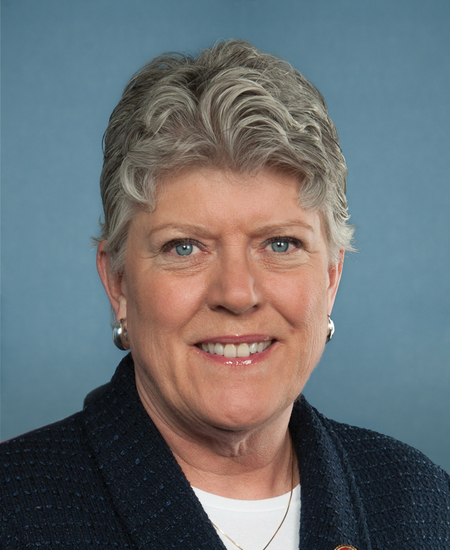
Rep. Julia Brownley
Sponsored bills
Maddy summaryThis resolution expresses support for designating June 5, 2026, as National Gun Violence Awareness Day and June 2026 as National Gun Violence Awareness Month. The bill calls on the public to wear orange on the designated day to honor victims and promote awareness of gun safety. It highlights statistics on gun-related deaths and injuries to underscore the need for community discussions on making neighborhoods safer.
Maddy summaryThis bill, titled the Ending Fossil Fuel Bailouts Act of 2026, modifies federal bankruptcy laws to specifically target oil, gas, and coal companies. It requires these companies to prioritize paying worker wages and environmental cleanup costs over other debts, including those owed to shareholders. The legislation also prevents fossil fuel firms from abandoning their assets during bankruptcy and extends the time period for investigating fraudulent financial transfers to ten years. Additionally, it prohibits the transfer of certain federal energy leases if the company holding them files for bankruptcy. These changes aim to ensure that environmental liabilities and employee compensation are addressed before other financial claims are settled.
Maddy summaryThis bill establishes new federal standards requiring oil and gas companies operating on the Outer Continental Shelf to be certified as "fit to operate" before they can obtain or maintain leases. To receive this certification, companies must demonstrate a clean safety and environmental record over the past decade, maintain an investment-grade credit rating, and prove they have sufficient funds to cover future decommissioning costs. The legislation also mandates that operators place a significant portion of estimated decommissioning costs into interest-bearing escrow accounts and limits the time a well can be temporarily abandoned to three years, with a possible one-time extension to five years. Additionally, the bill requires the Department of the Interior to conduct annual compliance checks and submit detailed reports to Congress regarding enforcement actions and escrow account balances.
Maddy summaryThis resolution formally recognizes the negative effects of menstrual stigma on women, girls, and other menstruating people and expresses support for designating May as National Menstrual Health Awareness Month. It highlights the importance of normalizing menstruation, improving access to products and sanitation facilities, and expanding education and clinical research on menstrual health conditions. The bill does not create new laws or funding but serves as a symbolic statement to promote awareness and gender equity regarding menstrual health.
Maddy summaryThis bill prevents the United States Postal Service from finalizing or enforcing a proposed rule that would allow the mailing of concealable firearms. Directly affecting the Postal Service, the legislation blocks the implementation of regulations scheduled for April 2, 2026, which would have changed how handguns are shipped through the mail. By prohibiting the enforcement of these specific rules, the bill ensures that the current mailing standards for firearms remain in place without the new restrictions or allowances proposed in the document.
Maddy summaryThis bill creates a new funding program to hire more school counselors, psychologists, and social workers at schools with high numbers of low-income students. It provides federal grants to states, which then distribute money to local school districts to help them meet recommended staffing ratios of 250 students per counselor and 500 students per psychologist. To receive these funds, states must contribute matching money and submit detailed plans showing how they will improve student-to-provider ratios in their highest-need schools. The program is designed to address rising mental health issues among youth by increasing access to professional support directly within the school environment.
Maddy summaryThis bill directs the U.S. Department of Education to encourage colleges and universities to create evidence-based plans for preventing suicide and improving mental health. The Department must coordinate these efforts with the Department of Health and Human Services and align them with existing federal suicide prevention programs. Additionally, the bill requires the Secretary of Education to submit reports to Congress on these initiatives within one year and three years of enactment. Crucially, the legislation explicitly states that it does not create new legal obligations for schools or grant the Department new regulatory authority.
Maddy summaryThis bill authorizes the U.S. Mint to produce commemorative $5 gold and $1 silver coins marking the 25th anniversary of the September 11, 2001, terrorist attacks. The coins must feature designs honoring victims and first responders (including the inscription "Never Forget") and will be sold only during 2027-2028. All surcharges ($35 per gold coin, $10 per silver coin) collected from sales will fund the National September 11 Memorial and Museum at the World Trade Center, with no net cost to the federal government. The coins are legal tender but primarily intended for collectors, not circulation.
Maddy summaryThe Smithsonian American Women’s History Museum Act authorizes the creation of a new Smithsonian museum dedicated to women’s history, to be located within the National Mall Reserve in Washington, D.C. If the site is managed by another federal agency, the bill requires that agency to transfer the land after notifying Congress and relevant committees. The museum must ensure exhibits and programs accurately represent diverse women’s experiences by consulting a broad range of experts and community voices. The Smithsonian will submit biennial reports to Congress detailing how the museum meets these representation standards.