

Maddy summaryHR 6532, the PATHS to Tutor Act of 2025, creates a federal grant program to fund high-quality tutoring in "hard-to-staff" and "high-need" schools - those with high teacher turnover or significant student disadvantage. The program requires local consortia (combining schools, educator programs, and community partners) to provide tutoring in small groups (max 1:4), aligned with school curriculum, with trained tutors (including students in education programs or recent graduates) who receive fair compensation. It authorizes $500 million, mandating 85% of funds directly support students (via stipends, materials, transportation) while prohibiting use to replace teachers. The bill also coordinates with the Corporation for National and Community Service to approve tutor positions and offer educational awards upon completion.
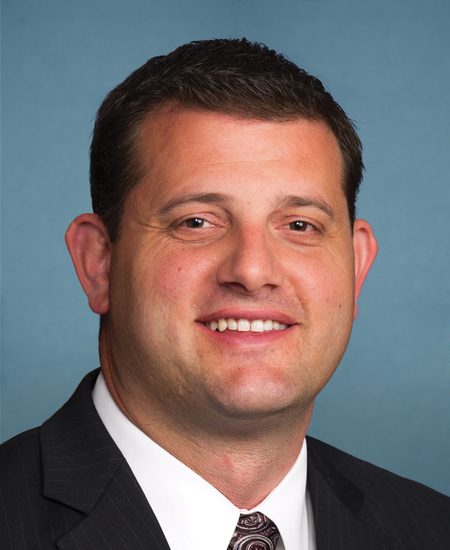
Rep. David G. Valadao
Sponsored bills
Maddy summaryThe Bipartisan Health Insurance Affordability Act extends and modifies premium tax credit rules to make health insurance more affordable for people with household incomes up to 700% of the poverty line, with specific provisions for different income tiers. The bill requires pharmacy benefit managers to pass through 100% of rebates to health plans, establishes transparency requirements for drug pricing, and creates mechanisms to prevent fraud in health insurance exchanges. It also extends the annual open enrollment period for 2026 and allows qualified Exchange enrollees to establish health savings accounts, with options to prepay annual premiums or direct part of their premium tax credit into a health savings account.
Maddy summaryHR 6041, the Rural Partnership and Prosperity Act, creates a new grant program to help rural communities coordinate federal, nonprofit, and private investments. It provides multiyear grants (2-5 years) to partnerships - including local governments, nonprofits, tribes, and institutions - that serve rural areas, with priority given to economically distressed regions, areas with high poverty, and communities historically underserved by federal programs. Grants require at least 25% non-Federal matching funds (with waivers available for tribes or high-poverty areas) and fund activities like reducing duplicate federal efforts, leveraging private investment, and developing strategic community plans. The bill also updates the Rural Partners Network to streamline federal coordination and improve access to funding for rural communities.
Maddy summaryThe Digital Skills for Today's Workforce Act establishes a new grant program to expand digital workplace skills training for workers, particularly those with barriers to employment such as low educational attainment, low earnings, or limited English proficiency. The program provides funding to states to award subgrants to eligible entities like community colleges and workforce organizations for training through classroom instruction, apprenticeships, and work-based learning. States must prioritize serving individuals with employment barriers and report on outcomes related to digital skills development. The bill aims to create "digitally resilient" systems and individuals who can adapt to changing technology demands in the workforce. This program is funded through appropriations for fiscal years 2026 through 2030.
Maddy summaryThis bill establishes a new interagency Task Force to dismantle foreign scam operations targeting Americans, particularly through "pig butchering" scams in Southeast Asia. The Task Force, chaired by the Secretary of State, will coordinate efforts across multiple agencies to shut down scam centers, impose sanctions on perpetrators, and support victims of trafficking. It requires a detailed strategy within 180 days and annual reports to Congress on progress, including sanctions imposed and funds recovered. The bill authorizes $30 million for these efforts in fiscal years 2026-2027, focusing on countries like Cambodia, Laos, and Burma where scam centers operate with forced labor.
Maddy summaryHRES 920 is a ceremonial resolution celebrating the 50th anniversary of the Individuals with Disabilities Education Act (IDEA) on November 29, 2025. It recognizes IDEA’s historical impact - establishing the right to free, appropriate public education in the least restrictive environment for children with disabilities - and notes how it transformed access to education after over 1 million children were previously excluded from schools. The resolution does not create new policy or funding; it solely commemorates IDEA’s legacy, honors the students and families it has served, and acknowledges educators and advocates who advanced its implementation. This is a symbolic gesture with no direct effect on current law or services.
Maddy summaryThe COWS Act of 2025 creates a new program to help livestock and dairy farmers adopt manure management practices that reduce greenhouse gas emissions, such as composting, pasture-based systems, and technologies avoiding wet storage. It provides financial incentives (up to 100% of costs for planning, equipment, and implementation) with at least 50% paid upfront, prioritizing small/mid-sized operations, beginning farmers, and socially disadvantaged producers. The bill requires the Secretary to develop evaluation criteria focused on maximizing carbon sequestration, emissions reductions, and environmental benefits like improved water quality, while offering technical assistance for implementation.
Maddy summaryThis bill suspends payment limits for agricultural subsidies for the 2025 crop year, removing caps on payments to farmers. It also establishes a new option for farmers to receive 50% of their expected 2025 crop payments as an advance by December 1, 2025, if they opt in. The remaining balance is paid later after the marketing year ends, with farmers required to repay any overpayment if the final amount exceeds the advance. The bill directly affects farmers growing covered commodities (like corn, soybeans) who choose to participate in the advance payment program.
Give Kids a Chance Act of 2025 This bill expands the Food and Drug Administration’s (FDA’s) authority with respect to research on rare pediatric diseases, including by permitting the FDA to take enforcement action against drug sponsors that fail to satisfy pediatric study requirements and by reauthorizing programs that support pediatric research. Specifically, the bill modifies requirements relating to molecularly targeted pediatric cancer investigations to permit research on new drugs in combination with active ingredients that have already been approved, provided certain conditions are met; permits the FDA to take enforcement action against drug sponsors that fail to comply with pediatric study requirements, if such sponsors demonstrated a lack of due diligence in satisfying the requirement; renews the FDA’s authority to award priority review vouchers to sponsors of new products intended to treat rare pediatric diseases through September 30, 2029; and reauthorizes through FY2027 certain funding for the National Institutes of Health to support priority pediatric research. The bill also provides statutory authority for the FDA’s interpretation of the orphan drug exclusivity period. The bill specifies, consistent with FDA regulations, that the seven-year market exclusivity period for drugs for rare diseases or conditions (i.e., orphan drugs) prohibits the approval of the same drug for the same approved use or indication with respect to the disease or condition. (In Catalyst Pharmaceuticals, Inc. v. Becerra , a court rejected the FDA’s interpretation and held that orphan drug exclusivity extends to all uses or indications for the disease or condition.)
Maddy summaryHR 5566, the Water Infrastructure Resilience and Sustainability Act, extends deadlines for three existing federal water infrastructure programs by five years. It amends the Clean Water Act to extend the deadline for the Clean Water Infrastructure Resiliency and Sustainability Program from 2026 to 2031, and updates the Safe Drinking Water Act to extend deadlines for both the general Drinking Water System Infrastructure Program and the Midsize/Large Drinking Water System Program from 2026 to 2031. These changes directly affect state and local governments administering these programs, giving them more time to complete eligible projects. The bill makes no new funding commitments or policy changes - only adjusts the timeline for existing program requirements.