

Maddy summaryHR 1301, the Death Tax Repeal Act, would eliminate the federal estate tax and generation-skipping transfer tax for estates of individuals dying on or after its enactment date. It directly affects individuals inheriting significant assets, as it removes taxes on estates exceeding $10 million (adjusted for inflation) and repeals taxes on large transfers between generations. The bill modifies the gift tax by establishing a $10 million lifetime exemption with annual inflation adjustments, replacing previous tax brackets. It applies to estates, gifts, and transfers occurring on or after the bill's effective date.
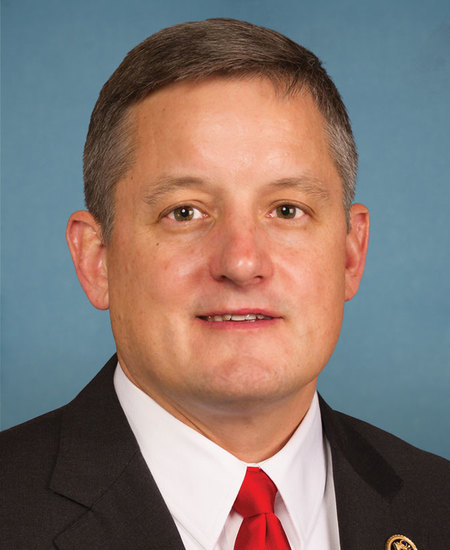
Rep. Bruce Westerman
Sponsored bills
Maddy summaryThis bill updates federal vehicle safety standards to permit pulsating light systems on high-mounted stop lamps, directly affecting vehicle manufacturers and safety regulators. It requires the Transportation Secretary to issue new regulations within 180 days establishing performance rules for these systems. The key provision defines a "pulsating light system" as one that emits rapid pulses (max 4 pulses within 1.2 seconds) when brakes are applied, then switches to steady light, with a mandatory 5-second lockout period before pulses can repeat after brake release. The bill amends Federal Motor Vehicle Safety Standard 108 to formally allow this technology under specific technical parameters.
Maddy summaryHR 1232, the National Right-to-Work Act, would make union membership voluntary for workers in most private-sector jobs by removing legal requirements for employees to join a union or pay dues as a condition of employment. It directly affects workers in unionized workplaces covered by the National Labor Relations Act (including most private employers) and railroad workers covered by the Railway Labor Act. The key change eliminates provisions that allowed "union security agreements" (requiring dues or membership), meaning workers could no longer be forced to pay union fees to keep their jobs. This bill does not change other labor rights or create new programs - it only modifies existing laws to allow workers to opt out of union membership and financial obligations.
Maddy summaryThe Focus on Learning Act requires the Surgeon General to study how personal mobile devices affect student learning, mental health, and school climate in elementary and secondary schools. It establishes a pilot program offering $5 million over five years to school districts that implement "device-free" environments - requiring secure storage for students' personal phones during school hours - while allowing exceptions for health needs, students with disabilities, or language translation. Schools in the pilot must obtain parental input, maintain staff communication systems, and detail their device policies before participating. The study and pilot aim to test whether reducing personal device use during school improves academic outcomes and school environment, with results to be reported to Congress.
Maddy summaryThis bill creates a 10% tax credit for businesses that modernize or replace freight railcars, directly affecting railcar owners and manufacturers. To qualify, railcars must meet an 8% improvement standard in capacity or fuel efficiency, be built or modernized after enactment, and replace two scrapped railcars. The credit is limited to 1,000 qualified railcars per business annually, with reporting requirements for the Treasury to track claimed credits, scrapped railcars, and new railcar production. The credit applies to railcars placed in service after December 2024, ending three years after enactment.
Maddy summaryThe HALT Fentanyl Act (HR 27) creates a new category of Schedule I controlled substances for "fentanyl-related substances" defined by specific chemical modifications to fentanyl. This law directly affects researchers, medical professionals, and law enforcement by expanding the legal definition of fentanyl-related substances to include many structurally similar compounds. Key provisions include streamlined registration processes for research on these substances, allowing researchers to conduct studies with expedited procedures if related to FDA-approved drug development or government-funded research. The bill requires the Attorney General to issue implementing rules within six months and includes penalties for violations involving these substances.
Maddy summaryHJRES 38 is a joint resolution seeking congressional disapproval of an Environmental Protection Agency (EPA) rule implementing the American Innovation and Manufacturing (AIM) Act. The rule manages the phasedown of hydrofluorocarbons (HFCs), potent greenhouse gases used in refrigeration and air conditioning, under the AIM Act of 2020. If approved, this resolution would block the EPA rule from taking effect, preventing its implementation of HFC management requirements. This is a procedural disapproval under the Congressional Review Act, not a new law, and directly affects the EPA’s regulatory authority over HFCs.
Maddy summaryThis bill expands 529 college savings account flexibility by allowing funds to cover costs for industry-recognized postsecondary credentials, not just traditional degrees. It defines "qualified expenses" to include tuition/fees for recognized credential programs (like certifications or apprenticeships), required testing fees, and continuing education needed to maintain credentials. To qualify, programs must meet specific criteria, such as appearing on state lists under the Workforce Innovation and Opportunity Act or being listed in VA or Defense directories. The change applies to 529 distributions made after the law's enactment, giving families more options to use these accounts for job-focused training.
Maddy summaryHR 1046, the Marc Fischer Memorial Act, requires the Bureau of Prisons to implement digital mail scanning technology at all federal prisons to detect fentanyl and other synthetic drugs in inmate mail. It mandates a strategy within 90 days of an evaluation, including 100% scanning of all mail, digital copies of mail to inmates within 24 hours, and physical mail delivery within 30 days for non-contaminated items. The bill directly affects federal prison staff, inmates, and the Bureau of Prisons by aiming to reduce drug-related overdoses and alleviate staff workload tied to mail processing. Implementation must be completed within three years, with annual reports tracking detected drugs and strategy efficiency. The legislation focuses on concrete technological and procedural changes to enhance safety, referencing a successful pilot program at two facilities.
Fair Access to Banking Act This bill places restrictions on certain banks, credit unions, and payment card networks if they refuse to do business with a person who complies with the law. Restrictions include prohibiting the use of electronic funds transfer systems and lending programs, termination of an institution's depository insurance, and specified civil penalties. Banks and other specified financial institutions are allowed to deny financial services to a person only if the denial is justified by a documented failure of that person to meet quantitative, impartial, risk-based standards established in advance by the institution. This justification may not be based upon reputational risks to the institution. The bill establishes the right for a person to bring a civil action for a violation of this bill.