

Maddy summaryHR 1551, the Protect and Serve Act of 2025, creates a new federal criminal offense for intentionally harming law enforcement officers under specific circumstances. It imposes harsher penalties, including up to 10 years in prison for serious injury or life imprisonment if death occurs, kidnapping is involved, or a firearm is used. The law applies when the crime crosses state lines, involves interstate weapons, occurs on federal property, or targets federal officers. Prosecutions require the Attorney General’s written certification, considering factors like prior state convictions and public safety impact. The bill directly affects law enforcement officers and federal prosecutors by expanding federal jurisdiction for certain violent crimes against them.
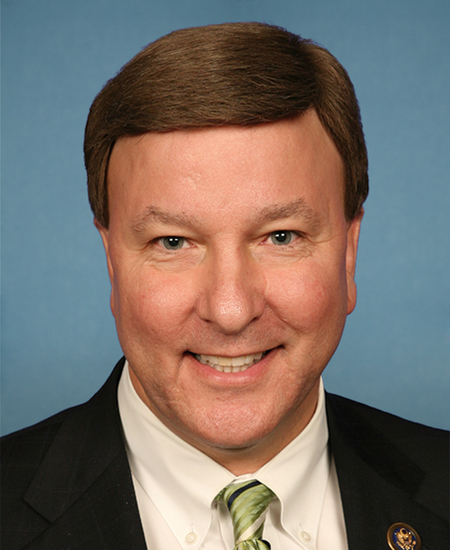
Rep. Mike Rogers
Sponsored bills
Maddy summaryHR 1580 requires businesses sending mail solicitations for goods or services to clearly label the mail as a "solicitation" (or an equivalent notice approved by the Postal Service) in conspicuous type. This applies to all commercial mail solicitations that would otherwise be legally mailable but must now display the required notice on the face of the item. The bill directly affects businesses and organizations that send unsolicited commercial mail, mandating this clear identification to help recipients recognize promotional material. The Postal Service will establish specific regulations for how the notice must appear.
Maddy summaryHR 1548, the "Leveling the Playing Field 2.0 Act," amends U.S. trade laws to strengthen enforcement of antidumping and countervailing duty regulations. The bill creates new rules for handling multiple investigations on the same merchandise (successive investigations), addresses market distortions in foreign countries that affect production costs, and improves mechanisms to prevent companies from circumventing existing duties. It also establishes procedures for investigating currency undervaluation as a form of subsidy and strengthens requirements for importers to certify compliance with trade laws. These changes primarily affect U.S. importers of foreign goods, foreign exporters, and the Department of Commerce, which administers these trade enforcement mechanisms.
Maddy summaryHR 1502 authorizes the creation of a Congressional Gold Medal to honor the volunteers and communities (primarily from Nebraska, Colorado, and Kansas) who supported the North Platte Canteen during World War II. The bill directs the Treasury Secretary to design and strike the medal, which will be presented to the individuals who contributed to the canteen’s operations and then permanently displayed at the Lincoln County Historical Museum in North Platte, Nebraska. It also permits the sale of bronze duplicates to cover production costs, with proceeds going to the U.S. Mint. This is a commemorative measure recognizing historical service, not a policy change affecting current laws or programs.
Maddy summaryThe DEFUND Act of 2025 would terminate U.S. membership in the United Nations and all its affiliated bodies, including the World Health Organization, by repealing the legal foundations for U.S. participation. It requires the closure of the U.S. Mission to the UN, withdrawal from UN headquarters agreements, and the cessation of all U.S. financial contributions to the UN (except for termination costs). The bill also mandates that UN entities vacate U.S. government properties, revokes diplomatic immunity for UN officials in the U.S., and prohibits U.S. involvement in UN peacekeeping operations. Future U.S. re-entry into the UN would require Senate approval and a reservation allowing for immediate withdrawal.
Maddy summaryHR 1438, the *Protecting America’s Agricultural Land from Foreign Harm Act of 2025*, prohibits foreign governments of Iran, North Korea, China, and Russia (and entities they control) from purchasing or leasing U.S. agricultural land, including both public land managed by federal agencies and private land. It also bans such entities from participating in most U.S. Department of Agriculture (USDA) programs if they own or lease agricultural land, with limited exceptions for food safety and health programs. The bill expands disclosure requirements under the Agricultural Foreign Investment Disclosure Act to include leases and security interests, and mandates public data sets showing foreign ownership details and land values. These changes aim to increase transparency around foreign ownership of U.S. farmland while targeting specific foreign governments deemed national security concerns.
Maddy summaryHR 1436, the ENABLE Act, makes permanent key tax provisions for ABLE accounts - tax-advantaged savings accounts for people with disabilities. It removes the 2026 expiration date for increased contribution limits to ABLE accounts and allows rollovers from 529 college savings plans into ABLE accounts without tax penalties. These changes directly affect individuals with disabilities who use ABLE accounts for qualified expenses like housing, education, and medical costs. The bill ensures these financial tools remain available long-term, streamlining access to savings without requiring new legislative action each year.
This concurrent resolution declares that Congress should not impose any new performance fee, tax, royalty, or other charge relating to the public performance of sound recordings on a local radio station for broadcasting sound recordings over the air, or on any business for such public performance of sound recordings.
Maddy summaryHRES 133 is a symbolic House resolution supporting the designation of February 15-22, 2025, as "National FFA Week." It recognizes the National FFA Organization’s role in developing student leadership through agricultural education and celebrates two milestones: the 90th anniversary of the New Farmers of America (which served Black students until merging with FFA in 1965) and the 75th anniversary of FFA’s federal charter (granted by Congress in 1950). The resolution has no policy impact or funding provisions - it simply expresses congressional support for these observances. It directly affects no individuals or entities, as it is a non-binding gesture honoring an educational organization.
Maddy summaryHR 1301, the Death Tax Repeal Act, would eliminate the federal estate tax and generation-skipping transfer tax for estates of individuals dying on or after its enactment date. It directly affects individuals inheriting significant assets, as it removes taxes on estates exceeding $10 million (adjusted for inflation) and repeals taxes on large transfers between generations. The bill modifies the gift tax by establishing a $10 million lifetime exemption with annual inflation adjustments, replacing previous tax brackets. It applies to estates, gifts, and transfers occurring on or after the bill's effective date.