

Issue · Criminal Justice
Criminal Justice
Every criminal justice bill, vote, and legislator stance in Tennessee, automatically classified by Maddy, our AI policy reader.
Total bills
693
114th Regular Session (2025-2026)
Top supporter
Johnny Shaw
77% support rate
Top opponent
Tim Rudd
19% support rate
Ranked legislators
10
5 support · 5 oppose
Key legislators
Who's moving criminal justice in Tennessee
| Legislator | Party | Stance | Support rate | Decisive votes |
|---|---|---|---|---|
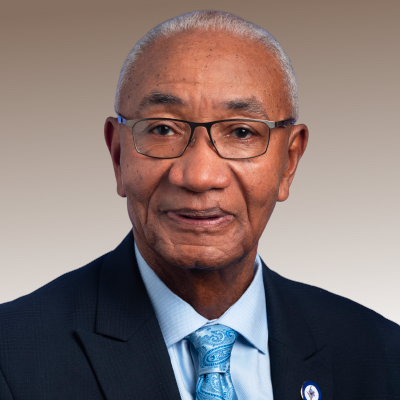
Johnny Shaw
House · District 80
|
D |
Support
|
77% | 56 |

John Clemmons
House · District 55
|
D |
Support
|
76% | 63 |

Harold Love
House · District 58
|
D |
Support
|
75% | 56 |

Bob Freeman
House · District 56
|
D |
Support
|
75% | 59 |
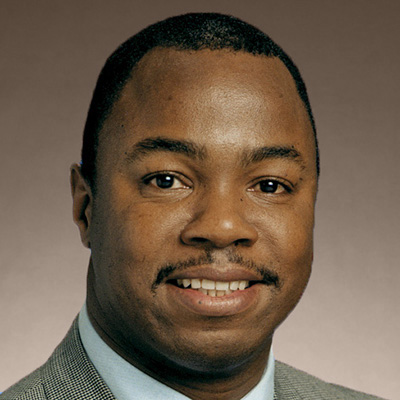
Joe Towns
House · District 84
|
D |
Support
|
74% | 73 |

Tim Rudd
House · District 34
|
R |
Strong −
|
19% | 59 |

Chris Todd
House · District 73
|
R |
Oppose
|
24% | 84 |

Johnny Garrett
House · District 45
|
R |
Oppose
|
24% | 75 |

Renea Jones
House · District 4
|
R |
Oppose
|
24% | 62 |

Dan Howell
House · District 22
|
R |
Oppose
|
25% | 71 |
Showing 441–450 of 693
bills
All criminal justice bills
HB 947: Firearms and Ammunition - As introduced, enacts "Akilah's Law," which creates the offense of selling, offering to sell, delivering, or transferring a firearm to a person knowing the person has been a patient in a mental institution at any time within the previous five years. - Amends TCA Title 33 and Title 39, Chapter 17, Part 13.
Sub-Topics
Firearms
SB 475: Sentencing - As introduced, reduces the percentage of sentence that a person convicted of first degree murder on or after July 1, 1995, and sentenced to life imprisonment is required to serve before becoming eligible for release from 100 percent of 60 years less sentence credits earned and retained to 60 percent of 60 years less sentence credits earned and retained; prohibits a defendant becoming eligible for parole before serving 25 years of the sentence, if the defendant was 25 years of age or younger at the time of the offense, or 30 years of the sentence, if the defendant was 26 years of age or older at the time of the offense. - Amends TCA Title 37; Title 39, Chapter 13, Part 2 and Title 40.
SB 505: Montgomery County - As enacted, permits a court to transfer, upon motion by the defendant, a criminal case to the veterans treatment court program in Montgomery County if the veterans treatment court program would have jurisdiction over the case if the offense had been committed in Montgomery County, the defendant files with the court a written waiver of the right to be tried by an impartial jury of the county in which the crime was committed, and the district attorney general for Montgomery County agrees to accept transfer of the case. - Amends TCA Title 16 and Title 40.
Topics
✓ Criminal JusticeSupports Criminal JusticeEnables veterans treatment court transfers to prioritize rehabilitation over traditional prosecution, aligning with reform goals to reduce recidivism and address underlying issues for veterans.
✓ VeteransSupports VeteransEnables veterans facing criminal charges to access specialized treatment courts focused on rehabilitation rather than traditional prosecution, addressing underlying issues through targeted support programs.
Sub-Topics
Courts
HB 94: State Inmates - As introduced, requires the state to pay for autopsies of deceased inmates and for any transportation associated with the autopsy. - Amends TCA Title 38, Chapter 7; Title 41, Chapter 21 and Title 68, Chapter 4.
Topics
✓ Budget & TaxesSupports Budget & TaxesMandates state funding for inmate autopsies and transportation, increasing government expenditure per TCA amendments.
✓ Criminal JusticeSupports Criminal JusticeMandates state funding for inmate autopsies and transportation, reducing financial burden on families and improving correctional transparency per TCA amendments.
Sub-Topics
Corrections
HB 468: Criminal Offenses - As introduced, increases the penalty for reckless endangerment when the offense is committed by discharging a firearm or antique firearm into a motor vehicle from a Class E felony to a Class C felony, if the motor vehicle is occupied, or a Class D felony, if the motor vehicle is unoccupied. - Amends TCA Title 39, Chapter 13, Part 1.
Sub-Topics
Firearms
SB 672: Criminal Offenses - As introduced, increases the penalty for obstruction of a highway, street, sidewalk, railway, waterway, elevator, aisle, hallway, or other place used for the passage of persons or vehicles from a Class A misdemeanor to a Class E felony; establishes an increased penalty of a Class D felony if the offense was committed by intentionally obstructing a highway, street, or other place used for the passage of vehicles. - Amends TCA Title 39.
Topics
✗ Criminal JusticeOpposes Criminal JusticeIncreases penalties for obstruction from misdemeanor to felony, expanding criminalization and harsher sentencing, opposing criminal justice reform efforts.
✓ TransportationSupports TransportationBill increases penalties for obstructing highways/streets, protecting transportation infrastructure flow and safety by criminalizing disruptions to public pathways used for vehicles.
SB 704: Criminal Offenses - As enacted, creates the Class B misdemeanor offenses of criminal impersonation of a transportation network company driver and criminal impersonation of a private passenger-for-hire vehicle driver. - Amends TCA Title 7, Chapter 51; Title 39 and Title 65, Chapter 15.
SB 478: Law Enforcement - As introduced, requires an annual training pay bonus supplement for eligible campus police officers and public safety officers in the amount of $800. - Amends TCA Title 4; Title 38 and Section 49-7-118.
Topics
✓ Criminal JusticeSupports Criminal JusticeFunds law enforcement training via $800 annual bonus for campus officers, strengthening officer preparedness and retention under criminal justice law enforcement policies.
✓ Labor & EmploymentSupports Labor & EmploymentMandates $800 annual cash bonus for eligible campus police officers completing training, expanding their compensation benefits per Labor & Employment topic indicators.
✓ VeteransSupports VeteransSpecifically grants $800 bonus to officers who served in military conflicts and missed training due to service, recognizing veteran contributions in law enforcement roles.