

Maddy summaryHB 1035 clarifies definitions for public accountant licensure in South Dakota by amending Section 36-20B-1 of the state code. The bill updates terms like "Owner" (to include nonlicensees in CPA firms), "Peer review," and "Principal place of business" to better reflect current practice standards. It directly affects licensed public accountants, CPA firms, and the South Dakota Board of Accountancy by standardizing terminology used in licensing rules. This is a procedural amendment focused solely on definition clarity, not new requirements or fees.
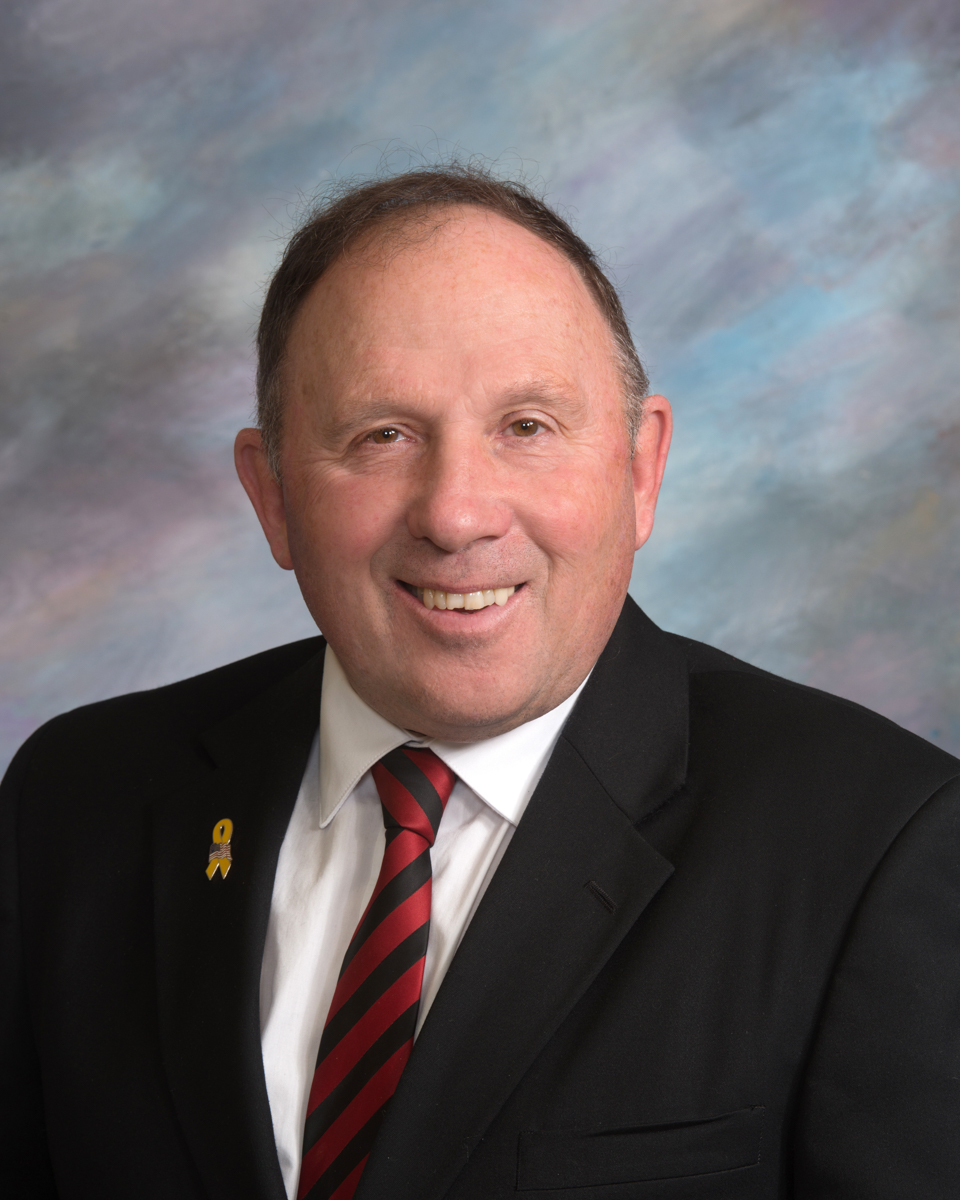
Rep. Tim Goodwin
Sponsored bills
Maddy summaryHB 1086 appropriates $2.7 million from the general fund to the South Dakota Department of Corrections for a grant to a nonprofit organization. The nonprofit must provide trauma-informed programming - including leadership development and skills training - to both offenders and correctional staff at three specific state prisons: South Dakota State Penitentiary, Mike Durfee State Prison, and South Dakota Women's Prison. To qualify, the nonprofit must currently operate such programming at a state facility and plan to serve all three prisons, as verified by the Department of Corrections. Unspent funds by June 30, 2031, will revert to the state treasury.
Maddy summaryThis bill proposes a constitutional amendment that would prohibit South Dakota governments from using eminent domain to transfer private property to private companies or non-governmental entities solely for economic development or increased tax revenue. It would require any property transfer to serve a clear public purpose, such as infrastructure or public services, rather than benefiting private interests. The amendment would apply to all state and local government actions involving property takings and must be approved by voters at the next general election. If adopted, it would change how governments can acquire property for development projects.
Maddy summarySB 93 prohibits state employees who approve, award, or administer state contracts from working for the organizations that received those contracts after leaving state service. For contracts under $1 million, this creates a one-year waiting period; for contracts over $1 million, it extends to two years. The bill allows exceptions if a governing body authorizes the arrangement through written disclosure and approval, ensuring the arrangement is fair and in the public interest. This applies to employees handling contracts within their official duties, excluding unpaid or per diem roles.
Maddy summarySB 116 appropriates $13.33 million for the design and construction of an indoor athletic facility at Dakota State University's Beacom PREMIER Complex in Madison. It directly affects Dakota State University's athletic programs and campus infrastructure. The bill authorizes the Board of Regents to use the funds for the project, including related services like utilities and landscaping, and allows adjustments for inflation (capped at 125% of the original estimate). It also permits accepting additional funds from federal sources or donations into a dedicated project fund, while declaring an emergency to expedite the funding. The facility will support athletic practice and competition, with no state liability for related expenses.
Maddy summaryThis bill appropriates $5.2 million from the state general fund to construct a trades center at Lake Area Technical College, providing new classrooms, labs, and student services for technical training programs. The college must secure matching funds from non-state sources (gifts, grants, etc.) equal to the state appropriation before the funds are released. The legislature declared an emergency to expedite the project, which will not use bonds for completion and requires approval of expenditures by the Department of Education and state auditor. The center directly affects students and staff at Lake Area Technical College by expanding hands-on training facilities.
Maddy summarySB 156 modifies South Dakota's animal cruelty law by adding a new classification for the most severe cases. It makes it a Class 4 felony to commit cruelty "in an especially depraved, heinous, sadistic, or wicked manner," elevating penalties for extreme acts. This directly affects individuals convicted of particularly brutal animal cruelty, moving such cases from lower-level offenses to felony charges. The bill specifically amends Section 40-1-2.4 of South Dakota law to establish this higher penalty tier.
Maddy summarySB 115 removes a specific rule that previously prohibited hunting mourning doves on highways or public rights-of-way in South Dakota. The bill amends existing law to allow hunting mourning doves (previously excluded) in areas where small game hunting is otherwise permitted on highways and public rights-of-way. This change directly affects hunters who wish to pursue mourning doves near roads or public pathways that were previously restricted. The bill does not alter other hunting rules, safety zones, or penalties related to firearm discharge near dwellings or schools.
Maddy summaryHB 1227 increases the annual registration fee for owners of electric motor vehicles in South Dakota from $50 to $51 (likely a typo for $50, as "fifty one hundred" is inconsistent with standard fee amounts). The fee applies when renewing vehicle registration and must be paid alongside standard license fees, excluding electric motorcycles covered under separate law. All collected fees are deposited into the state highway fund. The bill specifically defines "electric motor vehicle" as noncommercial, battery-rechargeable vehicles meeting federal safety standards.
Maddy summaryHB 1201 authorizes South Dakota booster clubs (like school or community groups) to operate bingo games, lotteries, and pull-tab devices for fundraising. The bill adds booster clubs to the list of organizations allowed to host these activities under existing rules, requiring them to follow specific safeguards: prizes cannot exceed $2,000 per play, they must provide 30 days' written notice to local governments before events, and no one can be paid more than minimum wage (or $60/hour) for organizing sessions. It also clarifies that booster clubs can use mechanical pull-tab devices under the same conditions as other eligible groups. This changes current law to explicitly permit these fundraising methods for booster clubs while maintaining oversight and financial restrictions.