

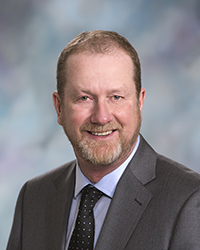
Photo of Marty Overweg
R South Dakota House · District 21 On the 2026 ballot

Rep. Marty Overweg

Compare
Total votes
2,829
all sessions
Attendance
99%
22 missed
Higher than 80% of chamber peers
With party
84%
of cast votes
Near the chamber average
Bipartisan score
10%
some cross-party votes
Near the chamber average
Sponsored
225
bills & resolutions
Near the chamber average
Committees
6
assignments
225 bills and resolutions

Sponsored bills

Total
225
Primary
225
Co-sponsor
0
This page
225
matching current filters
Primary SB 113
Signed into law · South Dakota Senate · Lead sponsor
increase the penalty for preventing practice of religion.

Maddy summaryThis bill amends South Dakota law (§ 22-19B-4) to upgrade penalties for preventing someone from practicing their religion through threats or violence. Currently a Class 1 misdemeanor, the offense would become a Class 6 felony under this bill. It directly affects individuals who use intimidation or force to stop others from engaging in legally protected religious activities. The key change is reclassifying the penalty level in the statute, increasing the legal consequences for such conduct.

Signed into law Mar 10, 2026 0 co-sponsors
Primary HB 1106
Signed into law · South Dakota House · Lead sponsor
revise the terms of county extension board members.

Maddy summaryHB 1106 clarifies the term structure for county extension board members in South Dakota. It revises Section 13-54-11 to specify that board members serve staggered terms expiring annually on January 10th, replacing inconsistent phrasing about "one-to-three years." This change directly affects county extension boards and their appointment process, ensuring clear annual expiration dates for terms. The bill does not alter board composition requirements (such as farmer representation or county commissioner membership) or substantive responsibilities.

Signed into law Mar 10, 2026 0 co-sponsors
Primary HJR 5001
In committee · South Dakota House · Lead sponsor
proposing and submitting to the voters at the next general election an amendment to the Constitution of the State of South Dakota, requiring a declaration of necessity and clarifying public use of private property taken or damaged by eminent domain.

Maddy summaryThis bill proposes a constitutional amendment that would prohibit South Dakota governments from using eminent domain to transfer private property to private companies or non-governmental entities solely for economic development or increased tax revenue. It would require any property transfer to serve a clear public purpose, such as infrastructure or public services, rather than benefiting private interests. The amendment would apply to all state and local government actions involving property takings and must be approved by voters at the next general election. If adopted, it would change how governments can acquire property for development projects.

In committee Mar 2, 2026 0 co-sponsors
Primary SB 93
Passed · South Dakota Senate · Lead sponsor
prohibit certain state officers or employees from being employed by an organization that was the recipient of a contract awarded on behalf of a state agency for a period of time.

Maddy summarySB 93 prohibits state employees who approve, award, or administer state contracts from working for the organizations that received those contracts after leaving state service. For contracts under $1 million, this creates a one-year waiting period; for contracts over $1 million, it extends to two years. The bill allows exceptions if a governing body authorizes the arrangement through written disclosure and approval, ensuring the arrangement is fair and in the public interest. This applies to employees handling contracts within their official duties, excluding unpaid or per diem roles.

Passed Mar 2, 2026 0 co-sponsors
Primary HB 1105
Passed · South Dakota House · Lead sponsor
restrict contracts and declarations that prohibit the use of commercial or residential property for any healthcare service in medically underserved areas or communities, or in areas with a medically underserved population under federal law.

Maddy summaryHB 1105 prevents property owners in specific areas from using contracts or declarations to block healthcare services on commercial property. It applies to municipalities/townships under 3,000 people (per federal census) or areas officially designated as medically underserved by South Dakota’s Department of Health. The bill invalidates any contract or declaration that restricts the use of commercial property for healthcare services like clinics, diagnoses, or treatment in these areas. This directly affects property owners and developers who previously could impose such restrictions, while enabling healthcare providers to operate in underserved communities.

Passed Feb 25, 2026 0 co-sponsors
Primary HB 1080
Signed into law · South Dakota House · Lead sponsor
allow a business owner who is a veteran to display military specialty plates on a noncommercial vehicle registered to the veteran's business and to limit personal liability to the business owner and veteran.

Maddy summaryHB 1080 allows veteran business owners to display military specialty plates on noncommercial vehicles (like personal cars or vans) registered to their business, provided the veteran is listed as an additional owner on the vehicle's title. It also limits the veteran's personal liability for damages from accidents involving these business vehicles. The bill requires the veteran to meet standard military plate eligibility and vehicle registration rules, with a $10 additional fee for the specialty plates. This directly affects veteran business owners who operate noncommercial vehicles under their business registration.

Signed into law Feb 23, 2026 0 co-sponsors
Primary HB 1230
Failed · South Dakota House · Lead sponsor
modify requirements for payment of the employer's investment in South Dakota's future fee.

Maddy summaryHB 1230 modifies the requirements for South Dakota employers to pay an "investment in South Dakota's future fee" (a separate charge from unemployment insurance contributions). It establishes a new opt-in/opt-out system: employers can choose not to pay the fee by submitting a simple form (fitting on one page), and those who opt out face no penalties. Employers who opt in pay a fee rate based on their unemployment fund balance (ranging from 0.00% to 0.53%), with rates adjusted annually according to specific schedule tables. The fee proceeds go to a dedicated fund, not the main unemployment trust, and employers cannot deduct the fee from employee wages.

Failed Feb 23, 2026 0 co-sponsors
Primary HB 1222
In committee · South Dakota House · Lead sponsor
prohibit members of the Board of Economic Development from having any interest in moneys from or approved by the Board of Economic Development.

Maddy summaryHB 1222 prohibits members of South Dakota's Board of Economic Development from holding any financial interest (such as ownership or board membership) in entities that receive funding, grants, or public money approved by the Board. This directly affects Board members and businesses or organizations seeking economic development funds. The key provision bans conflicts of interest by ensuring Board members cannot benefit financially from the organizations they help fund. The bill aims to prevent self-dealing in economic development funding decisions.

In committee Feb 19, 2026 0 co-sponsors
Primary SB 195
Passed · South Dakota Senate · Lead sponsor
repeal the expiration of a reduction in certain gross receipts and use tax rates.

Maddy summarySB 195 repeals the scheduled expiration of reduced gross receipts and use tax rates established in 2023. It prevents these tax rate reductions from reverting to prior rates after June 30, 2027. The bill directly affects businesses in South Dakota that pay these specific taxes, ensuring the lower rates remain in effect without requiring new legislation. This is a procedural change to maintain existing tax policy, not a new tax rate adjustment.

Passed Feb 18, 2026 0 co-sponsors
Primary HB 1064
Signed into law · South Dakota House · Lead sponsor
provide for the sale of producer-raised meat and meat food products directly to consumers pending legalization under federal law.

Maddy summaryHB 1064 allows South Dakota livestock producers to sell meat they raised and processed directly to end consumers in the state, pending federal legalization of such sales. The bill requires meat to be raised, slaughtered, and processed entirely within South Dakota, sold only to final consumers (not resold), and labeled with a warning that it’s uninspected and cannot be redistributed. It becomes effective only after the attorney general certifies that federal law permits such sales, either through new federal legislation or a court ruling declaring the current federal prohibition unconstitutional. This bill does not change current federal restrictions but prepares South Dakota for future direct-to-consumer sales once federal barriers are lifted.

Signed into law Feb 17, 2026 0 co-sponsors
Showing 11 to 20 of 225 bills