

Maddy summarySB 917 amends Pennsylvania state laws to provide special fishing and hunting license benefits for law enforcement officers. The bill allows eligible officers, including state police, corrections officers, and various local and campus police personnel, to purchase an annual resident fishing license for just $1 and a resident hunting license for $1. To qualify, these individuals must provide proof of their employment as an officer within the Commonwealth. The legislation also authorizes the state commission to create specific regulations to manage how these discounted licenses are issued and verified.
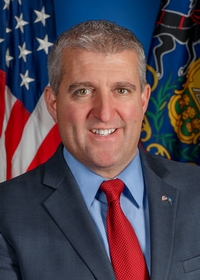
Sen. Frank Farry
Sponsored bills
Maddy summaryThis resolution designates September 20, 2024, as POW/MIA Recognition Day in Pennsylvania to honor soldiers who are prisoners of war or missing in action. The bill does not change any laws or require new actions from government agencies; instead, it serves as a symbolic gesture to acknowledge the sacrifices of these service members and their families. By setting aside a specific date for recognition, the measure aims to keep the memory of those unaccounted for from past conflicts alive within the state.
Maddy summaryThis bill updates Pennsylvania's Fiscal Code to clarify how individuals can claim abandoned or unclaimed property held by the state. It allows any person with an interest in such property to file a formal claim using a specific form provided by the State Treasurer. Additionally, the law permits the State Treasurer to automatically distribute property or its sale proceeds to a person if that person is identified as the sole owner and the item's value is under $500, even without a filed claim. The changes apply to the state government and affect anyone holding unclaimed assets or seeking to recover them.
Maddy summaryThis law updates Pennsylvania's Public School Code to clarify how schools must support students who are children of National Guard or Reserve members. It ensures that these students receive the same educational protections as those covered under the Interstate Compact on Educational Opportunity for Military Children, regardless of whether their parent is stationed in another state or within the Commonwealth. The bill defines key terms like "Compact student" and limits the new rules to actions taken by public schools located in Pennsylvania. By aligning state regulations with the national compact, the legislation provides a consistent framework for supporting military-connected children in public education.
Maddy summaryThis bill updates Pennsylvania vehicle laws to clarify rules for car modifications and safety equipment. It specifically allows vehicle owners to remove and reinstall doors while requiring that any modified vehicle still have side mirrors attached for visibility. Additionally, the law mandates that vehicles with removed doors must be inspected with those doors reattached to ensure they meet safety standards. The legislation also expands seat belt requirements to include passengers in the back seats of certain vehicles used for specific unlawful activities.
Maddy summaryThis bill updates Pennsylvania's Human Services Code to ensure that medical assistance covers payments for custom orthotics and prosthetics. It requires the state department to set reimbursement rates for these items at a level no lower than the current federal Medicare fee schedule. Additionally, the law mandates that all specific codes for these custom devices be included in the state's medical assistance program. The changes are designed to align state coverage with federal standards for durable medical equipment.
Maddy summaryThis bill establishes the Pennsylvania Fresh Food Financing Initiative to provide financial grants for improving access to fresh food in underserved communities. The program, administered by the Department of Agriculture, offers funding for capital projects such as building grocery stores, supporting farmers' markets, and developing innovative food delivery technologies. To qualify, applicants must primarily sell staple foods to consumers and serve areas identified as having low grocery access, with a priority given to projects that increase opportunities for small and diverse businesses. Grants are subject to specific conditions, including a requirement for regional anchor supermarkets to match public funds with private investment and a limit on the portion of funding that can be used for administrative costs.
Maddy summaryThis bill updates Pennsylvania's DNA collection laws to require that individuals arrested for specific serious crimes, such as homicide and certain sex offenses, provide a DNA sample at the time of booking. It mandates that these samples be submitted to the State Police within 48 hours and prohibits the release of the arrested person until the collection is complete. The legislation also clarifies the rules for expunging DNA records, requiring a 30-day notice to prosecutors before a court can order the removal of a profile from the state database. Additionally, the bill sets different effective dates for various new provisions, with some changes taking effect immediately while others are delayed by up to 18 months.
Maddy summaryThis bill establishes a new paid family and medical leave program in Pennsylvania, allowing eligible employees to take time off work with wage replacement for specific personal and family reasons. The program is administered by the Department of Labor and Industry, which will manage the Family and Medical Leave Fund financed by employer contributions, while also offering an option for employers to use private insurance plans instead. Eligible workers can receive benefits for various needs, including caring for a sick family member, bonding with a new child, or addressing violence against vulnerable adults, with protections ensuring their jobs remain secure during leave. The legislation includes provisions for self-employed individuals to opt into the program, sets rules for benefit amounts and duration, and creates an advisory board to oversee the initiative.
Maddy summaryThis law allows police officers in Pennsylvania to choose whether to buy back pension credit for their previous time working with a police department, rather than requiring them to do so. It specifically changes state statutes to give officers the option to apply for this service credit under the municipal pension system. The change applies to those seeking to purchase credit for prior service as part of their retirement benefits calculation.