

Maddy summaryThis resolution (SR 49) symbolically recognizes March 21, 2025, as "World Down Syndrome Day" in Pennsylvania. It does not create new laws or policies but formally acknowledges the contributions of individuals with Down syndrome and their families within the Commonwealth. The resolution highlights the global significance of Down syndrome awareness and the achievements of people living with the condition, as outlined in the resolution's preamble. It has no direct impact on legislation, funding, or services for affected individuals.
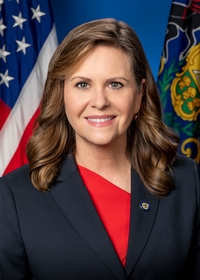
Sen. Camera Bartolotta
Sponsored bills
Maddy summarySB 405 amends Pennsylvania's Controlled Substance, Drug, Device and Cosmetic Act by updating the legal definition of "drug" to explicitly include substances intended as components of other drugs. It adds a new subsection (v) clarifying that "drug" covers substances used in the production of other specified drugs, while also defining "vaccine or vaccine material" as FDA-authorized substances for disease immunity. This is a technical definitional update to the existing law, not a new policy or regulation, and does not directly affect specific individuals or industries. The bill refines how the law classifies certain substances under current drug regulations.
Maddy summarySB 459 establishes Pennsylvania's Statewide Imagination Library Program, providing free monthly age-appropriate books to children under five years old in the state. The program is funded through a dedicated state account (using state funds, gifts, and federal dollars) and requires local partners to match funding dollar-for-dollar, with waivers possible for financial hardship. The Department of Education administers the program, coordinating with a nonprofit partner to manage book distribution, local program development, and public awareness. This directly affects eligible children and local community organizations participating in the initiative.
Maddy summarySB 423 creates $1 annual fishing and hunting licenses for volunteer firefighters, volunteer special fire police officers, and volunteer emergency medical service technicians in Pennsylvania. It requires applicants to provide documentation proving 12 months of active, good-standing service in one of these roles. The bill amends existing statutes to establish these specific license exemptions, replacing standard fees with a flat $1 cost for qualifying residents. This directly affects volunteers in these emergency response roles who would otherwise pay higher standard license fees.
Maddy summarySB 387 modifies Pennsylvania sentencing for murder offenses. It sets a minimum 25-year prison term for adults convicted of second-degree murder, murder of an unborn child, or murder of a law enforcement officer. For minors under 18 convicted of these crimes, it establishes minimum terms: 20 years for those aged 15+ at the time of offense, and 15 years for those under 15. The bill also restricts parole eligibility, requiring the Board of Probation and Parole to wait at least 20 years for offenders aged 15+ and 15 years for younger minors before considering parole, prioritizing public safety and victim safety.
Maddy summarySB 401 creates a $1,000 tax credit for Pennsylvania employers who hire, have an employee enlist, or have an employee reenlist in the Pennsylvania National Guard. The credit applies against taxes under Articles III or IV of the Tax Reform Code and can be carried over for up to three years if not fully used in the first year. The total annual credit amount is capped at $5 million, with unused credits allocated proportionally if the cap is exceeded. This credit applies to tax years beginning after December 31, 2025, and requires employers to claim it in their first eligible tax year.
Maddy summarySB 393, the Senior Citizens' Property Tax Freeze Act, allows Pennsylvania residents aged 65+ who live on their property for at least five years and earn under $65,000 annually to freeze their real property tax increases. To qualify, applicants must submit a notarized form proving eligibility and submit annual income proof. The exemption ends if the property is sold or transferred (except to another eligible senior), and the state will reimburse local governments for lost tax revenue. The law applies starting January 1, 2026, and replaces conflicting existing laws. This directly affects qualifying seniors owning residential property in Pennsylvania.
Maddy summarySB 363 creates Pennsylvania's Low-Income Household Water Assistance Program, which will help eligible residents facing water or wastewater service disconnection due to unpaid bills. The program, to be established by the Department of Human Services by July 1, 2026, provides grants to cover overdue water/wastewater bills or restore terminated services for low-income households that own/rent homes, are responsible for utility payments, and meet income guidelines. Water and wastewater providers can apply for grants on behalf of qualifying customers, with funds restricted to preventing disconnection, paying arrears, or restoring service. The program requires annual public reporting to the Governor and legislative committees on program participation and spending.
Maddy summarySB 332 amends Pennsylvania's Election Code to change the date of the general primary election in presidential election years. Currently, the primary is held on the third Tuesday of March in such years, but this bill would move it to the fourth Tuesday of April. This change applies to general primaries starting in 2028 and affects how voters select candidates for statewide offices and the presidency. The bill directly impacts election scheduling for voters, candidates, and officials by altering the timing of primary elections.
Maddy summarySB 359 amends Pennsylvania's State Highway Law to require the state to maintain all state highways within boroughs and incorporated towns (including smaller municipalities), funding these improvements from the Commonwealth. It specifically adds a new requirement for the state to construct and maintain drainage systems under roads in towns with populations of 2,500 or fewer, based on the latest federal census. The bill mandates these maintenance and drainage obligations at state expense, applying to both rural highways and those within smaller incorporated communities. The law takes effect 60 days after enactment.