

Maddy summarySB 1125 requires Pennsylvania school entities (including districts, charter schools, and career schools) to guarantee all students, parents, guardians, and school staff access to school property regardless of immigration status, starting with the 2025-2026 school year. Schools must adopt written policies promoting inclusivity within 90 days, designating a school official to handle related matters, and publish these policies in all languages spoken by students at home at least 30 days before a public meeting. Policies must be approved by a public resolution with 45 days notice and reviewed at least quarterly, with updates made through the same public process. This law directly affects school operations, ensuring consistent access and procedural transparency for all school community members.
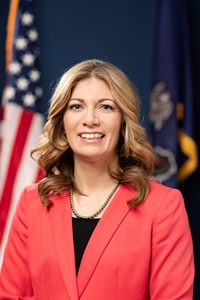
Sen. Katie Muth
Sponsored bills
Maddy summarySB 1114 restructures Pennsylvania's electric utility industry to allow large commercial and industrial electricity consumers direct access to competitive electricity generation markets. It requires utilities to unbundle electricity rates and provide open access to their transmission and distribution systems, enabling new market participants like energy aggregators and brokers to sell electricity directly to customers. The bill creates a "competitive transition charge" applied to all customers' bills to recover utilities' past investments in generation that may not be recoverable in a competitive market. This change shifts the industry from regulated bundled service to a model where customers can choose electricity suppliers while maintaining grid reliability.
Maddy summarySB 1112, the "Contraceptive Access for All Act," requires most health insurance plans in Pennsylvania - including Medicaid managed care plans and private health insurance - to cover all FDA-approved contraceptives without cost-sharing (like deductibles or copays). It specifically mandates coverage for prescription contraceptives, emergency contraception (like levonorgestrel), and over-the-counter oral contraceptives, and prohibits insurers from requiring prior authorization or step therapy for these items. The law applies to standard health insurance policies but excludes limited policies like dental, vision, or workers' compensation plans. It directly affects health insurers and managed care plans by requiring them to provide this coverage at no additional cost to enrollees.
Maddy summarySB 1102 creates a reimbursement program for Pennsylvania entities affected by a specific budget impasse period (July 1-November 12, 2025). It provides grants to eligible school districts, counties, human services providers, and other Commonwealth-funded organizations that received 2024-2025 fiscal year funding directly from the state. Eligible entities may receive reimbursement for documented financing costs or lost interest earnings directly tied to the budget delay. The Office of the Budget administers the program, with applications due within 90 days of the bill’s effective date, using funds from a newly established restricted account.
Maddy summaryThis bill (SB 1089) allows individuals experiencing homelessness to use public spaces for basic needs like sleeping, eating, and storing belongings, provided they aren’t blocking walkways or streets. It requires municipalities to first offer "adequate alternative indoor space" (free, accessible, disability-friendly, and pet-friendly) before restricting such use in public areas. The bill defines "public space" broadly to include parks, sidewalks, plazas, and transit areas, while specifying that alternative housing in another municipality is only accessible if free transportation is provided. It directly affects homeless individuals and local governments responsible for enforcing public space rules. The law creates a legal defense for individuals using public space when adequate alternatives haven’t been offered.
Maddy summaryThe context provided does not include specific details about SB 1080's provisions, amendments, or intended effects. While the bill title references amendments to the Fiscal Code regarding the "Budget Stabilization Reserve Fund," no concrete policy changes, affected parties, or mechanisms are described in the given information. Without additional details on what the amendment alters or how it would operate, a substantive summary cannot be created. This appears to be a procedural fiscal code amendment, but the necessary specifics for a factual summary are missing from the context.
Maddy summarySB 1071 creates a new criminal offense for Pennsylvania law enforcement officers who conceal misconduct related to their duties. It amends statutes to define "criminal concealment" as intentionally hiding evidence or obstructing investigations into officer misconduct. The bill also requires municipal police officers to wear clearly visible badges during all training sessions. These changes directly affect police officers in Pennsylvania's municipal departments and aim to increase transparency in law enforcement conduct.
Maddy summarySB 1045 amends the Equal Pay Law to require employers to disclose salary ranges for all open positions in job postings. This directly affects employers who hire new employees, mandating transparency about potential compensation before interviews. The key provision requires listing the full salary range (not just a minimum) when advertising job openings. The bill aims to reduce wage discrimination by giving job seekers clear information about pay before applying.
Maddy summaryThis bill establishes a uniform $1.65 monthly surcharge for all 911 emergency communication services or prepaid wireless devices, paid by subscribers or consumers. Starting February 1, 2026, the surcharge increases to $2.20 and will adjust annually based on the Consumer Price Index (CPI-U), using June-to-June comparisons. The adjustment rounds to the nearest cent and only increases if the CPI rises; if the CPI declines, the surcharge remains unchanged. The Pennsylvania Department of Health must publish annual adjustments in the Pennsylvania Bulletin. The surcharge is collected separately from existing provider fees for 911 services.
Maddy summaryPennsylvania's SB 583 would authorize the state to join the Social Work Licensure Compact, enabling licensed social workers to practice across participating states without obtaining separate licenses in each. This directly affects social workers seeking to provide services in multiple states, including military families and those addressing workforce shortages. The bill establishes a framework for mutual recognition of licenses, reducing duplicate application requirements and disciplinary information sharing between states. Key provisions include allowing "Multistate Authorization to Practice" and requiring states to hold social workers accountable for adhering to the laws of the state where services are delivered. The compact aims to increase access to social work services while maintaining state regulatory authority over licensure.