

Maddy summaryThis bill designates August 31, 2024, as "Overdose Awareness Day" throughout Pennsylvania to raise public awareness about drug overdoses and reduce the stigma associated with them. It asks the governor to issue a proclamation and order flags to be flown at half-staff on that date, encouraging officials and residents to participate in related activities. The measure aims to honor those affected by overdose deaths and injuries while promoting a message that addiction is a preventable issue and that individuals are valued. As a symbolic resolution, it does not create new laws or funding but serves to highlight the ongoing impact of the drug crisis in the state.
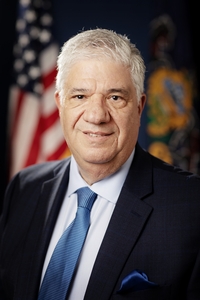
Sen. Wayne Fontana
Sponsored bills
Maddy summaryThis bill amends Pennsylvania's Construction Workplace Misclassification Act to strengthen protections for workers on public work projects by clarifying definitions and increasing penalties for employers who incorrectly classify employees. It raises the maximum prison sentence for first-time violations to three years and second offenses to five years, while also escalating repeat offenses from misdemeanors to felonies. Additionally, the legislation mandates that administrative penalties be assessed rather than optional, and it expands the scope of prohibited retaliation to cover actions taken under the new provisions.
Maddy summaryThis Senate resolution designates May 14, 2024, as "IgA Nephropathy Awareness Day" in Pennsylvania to highlight a rare autoimmune disease that affects the kidneys. The bill aims to raise public awareness about IgA nephropathy, which can lead to serious complications like kidney failure, and to support patients and their families. Additionally, the resolution formally recognizes the IgA Nephropathy Foundation for its work in advancing research and care for those affected by the condition.
Maddy summaryThis bill requires Pennsylvania prisons and county jails to provide free voice communication services to all inmates, ensuring access levels match those available as of January 1, 2023. The law mandates a specific ratio of operable phones to inmates in housing units and recreational yards while prohibiting any fees for making or receiving calls. To fund these services, the state will appropriate $16.5 million annually, with 70% going to the Department of Corrections and 30% distributed to counties based on their inmate populations. Additionally, the legislation clarifies that these communication tools cannot replace in-person visitation programs and must not limit existing face-to-face contact.
Maddy summaryThis resolution designates May 2024 as Celiac Awareness Month in Pennsylvania to highlight the challenges faced by individuals with celiac disease, an autoimmune condition triggered by gluten. The bill cites statistics showing that the disease affects over 129,000 Pennsylvanians and notes that many cases go undiagnosed due to a lack of awareness and funding for research. By officially recognizing this month, the Senate aims to encourage early diagnosis, reduce stigma, and draw attention to the need for better food labeling and increased medical research. The measure does not change any laws or policies but serves to educate the public and medical community about the condition.
Maddy summaryThis Senate resolution designates June 2024 as "Gun Violence Awareness Month" within Pennsylvania to highlight the state's high rates of firearm-related deaths and injuries. The bill serves as a formal acknowledgment of the public health crisis caused by gun violence, noting statistics such as a firearm death occurring every seven hours in the Commonwealth. It does not alter any laws or create new programs but rather establishes an official period for awareness and commemoration of those affected by gun violence.
Maddy summaryThis bill authorizes electric distribution companies in Pennsylvania to create local solar programs that allow customers to purchase electricity generated by nearby solar facilities. Under the new rules, third-party developers must build and maintain these solar projects, which are then sold to residential and small business customers through a competitive selection process. The legislation specifically ensures that low-income customers can participate in these renewable energy programs without losing their existing financial assistance benefits. Additionally, the bill mandates that utility commissions oversee these programs and prohibits companies from charging sign-up fees or passing on costs for unused solar energy to ratepayers.
Maddy summaryThis resolution designates June 4, 2024, as "National Guard and Veterans Day" in Pennsylvania to honor the state's military history and current service members. The measure recognizes the Pennsylvania National Guard's lineage dating back to 1755 and highlights its extensive contributions to domestic emergencies, international conflicts, and community support. By officially setting aside this date, the bill aims to acknowledge the service of approximately 21,000 Guard members and the Commonwealth's large veteran population.
Maddy summaryThis bill creates the Pennsylvania Climate Emissions Reduction Program, a state-run cap-and-invest system designed to limit carbon dioxide emissions from power plants while generating revenue for the state. The program will require electricity generators with a capacity of 25 megawatts or more to purchase emission allowances at auctions, with proceeds directed into specific funds for energy transformation, workforce development, and low-income support. Key provisions include strict oversight by the Department of Environmental Protection, an independent audit of each auction to prevent market manipulation, and a ban on Pennsylvania's participation in other regional carbon markets once this program is active. Additionally, the legislation mandates that the state review the emission budget to ensure it balances environmental goals with impacts on jobs, consumer costs, and vulnerable communities.
Maddy summarySB 1190 amends Pennsylvania's Alternative Energy Portfolio Standards Act to update the law's name and refine its definitions of renewable energy sources. The bill expands the list of qualifying energy types to include advanced nuclear reactors, fuel cells, and specific forms of waste coal and coal mine methane, while also clarifying rules for low-impact hydropower and biogas. It introduces new provisions for zero emission credits, establishes force majeure clauses to handle unforeseen events, and outlines interagency responsibilities for enforcing health and safety standards. Electric utilities and alternative energy systems will be directly affected by these changes, which aim to modernize compliance requirements and broaden the scope of eligible energy generation.