

Maddy summarySB 38 amends Pennsylvania's Human Services Code to adopt the federal False Claims Act's framework, creating new provisions for holding entities accountable for submitting false claims to the state. It directly affects contractors, grantees, and healthcare providers receiving state funds who knowingly submit false information related to payments or property. Key mechanisms include triple damages for the Commonwealth, civil penalties, and "qui tam" lawsuits allowing private citizens to file claims on behalf of the state. The bill defines "false claims" broadly to cover any knowingly submitted false requests for money or property tied to state programs, with penalties applying to violations like concealing false information or failing to report errors.
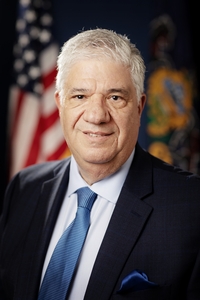
Sen. Wayne Fontana
Sponsored bills
Maddy summarySB 27 freezes the approval process for new cyber charter schools in Pennsylvania. It prohibits the state education department from reviewing or acting on any new applications for these schools from July 1, 2025, through June 30, 2038, regardless of when the application was submitted. This directly affects potential new cyber charter school operators and the department’s application review process. Existing cyber charter schools are not impacted by this moratorium.
Maddy summarySB 401 creates a $1,000 tax credit for Pennsylvania employers who hire, have an employee enlist, or have an employee reenlist in the Pennsylvania National Guard. The credit applies against taxes under Articles III or IV of the Tax Reform Code and can be carried over for up to three years if not fully used in the first year. The total annual credit amount is capped at $5 million, with unused credits allocated proportionally if the cap is exceeded. This credit applies to tax years beginning after December 31, 2025, and requires employers to claim it in their first eligible tax year.
Maddy summarySB 393, the Senior Citizens' Property Tax Freeze Act, allows Pennsylvania residents aged 65+ who live on their property for at least five years and earn under $65,000 annually to freeze their real property tax increases. To qualify, applicants must submit a notarized form proving eligibility and submit annual income proof. The exemption ends if the property is sold or transferred (except to another eligible senior), and the state will reimburse local governments for lost tax revenue. The law applies starting January 1, 2026, and replaces conflicting existing laws. This directly affects qualifying seniors owning residential property in Pennsylvania.
Maddy summarySB 363 creates Pennsylvania's Low-Income Household Water Assistance Program, which will help eligible residents facing water or wastewater service disconnection due to unpaid bills. The program, to be established by the Department of Human Services by July 1, 2026, provides grants to cover overdue water/wastewater bills or restore terminated services for low-income households that own/rent homes, are responsible for utility payments, and meet income guidelines. Water and wastewater providers can apply for grants on behalf of qualifying customers, with funds restricted to preventing disconnection, paying arrears, or restoring service. The program requires annual public reporting to the Governor and legislative committees on program participation and spending.
Maddy summaryThis resolution designates February 17-23, 2025, as "THON Week" in Pennsylvania to honor Penn State student volunteers involved in the IFC/Panhellenic Dance Marathon. It recognizes their work supporting pediatric cancer research and patient care through the Four Diamonds Fund at Penn State Hershey Children's Hospital. The resolution does not create new laws or alter funding; it is a ceremonial acknowledgment of the event's mission and impact. THON, a student-run philanthropy, has raised over $236 million since 1977 for childhood cancer support.
Maddy summarySB 361 requires public employers in Pennsylvania to provide employee representatives with specific public employee information, including names, contact details, job titles, and salary data. This applies to all public employees (excluding elected officials, management, and certain religious staff) and must be shared electronically every 120 days or within 21 days for new hires. Employee organizations may only use this information for representation purposes, such as collective bargaining, and cannot sell or share it otherwise. The bill aims to improve transparency in labor relations while giving employee groups access to necessary data for their roles.
Maddy summarySB 337 amends Pennsylvania's sales tax code to exclude certain firearm safety devices from taxation. Specifically, it removes sales and use tax from items like gun safes, trigger locks, cable locks, and other devices that require a key or combination to operate a firearm. This change directly affects retailers and manufacturers selling these safety devices, as they will no longer collect state sales tax on these items. The bill adds a new exclusion under the Tax Reform Code, making these devices tax-exempt at the point of sale. The policy change is purely a tax code adjustment with no new restrictions on firearm ownership or use.
Maddy summarySB 351 mandates that health insurance policies in Pennsylvania providing pregnancy-related benefits must cover infertility treatment expenses, including IVF, embryo transfer, and artificial insemination. It applies to policies delivered, issued, or renewed in the state, requiring coverage for diagnosis and treatment while allowing limited restrictions like waiting periods (aligned with medical guidelines) or copayments not exceeding those for pregnancy benefits. The bill explicitly excludes coverage for infertility resulting from elective sterilization reversal and allows religious organizations to opt out of covering these procedures. This policy change directly affects insured individuals seeking fertility care and insurers offering pregnancy-related coverage in Pennsylvania.
Maddy summarySB 326 updates Pennsylvania's Controlled Substance Act to automatically align the state's scheduling of substances with federal changes. It requires the state health secretary to add federally controlled substances to Pennsylvania's schedule within 30 days of federal action, unless objections are filed within that period. If objections are raised, the secretary must hold a hearing and issue a final order before scheduling takes effect. This affects the Pennsylvania Department of Health and regulated entities like pharmacies, healthcare providers, and businesses handling controlled substances.