

Maddy summaryThis bill requires most Pennsylvania employers to provide paid sick leave to employees, directly affecting workers and their families who need time for medical care, family health needs, or public health emergencies. Employees earn one hour of paid sick leave for every 30 hours worked (max 56 hours/year), with rules on accrual, carryover, and usage. Employers with existing equivalent paid leave policies (covering the same purposes and conditions) are exempt. The bill mandates employers to provide written notice of leave policies and prohibits retaliation against employees using sick leave, with pay calculated at the employee's regular rate or minimum wage.
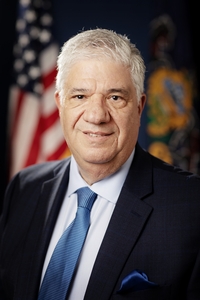
Sen. Wayne Fontana
Sponsored bills
Maddy summarySB 798 creates a new misdemeanor offense for knowingly possessing a firearm or dangerous weapon in a municipal building when a local ordinance bans such items. It directly affects individuals entering municipal buildings (like town halls or courthouses) and requires municipalities to post clear notices and provide free, no-cost firearm check facilities within 30 days of adopting a ban. The bill specifies penalties: third-degree misdemeanors for basic possession, first-degree for possession with criminal intent, and summary offenses for certain licensed carriers who fail to check firearms. Exceptions include law enforcement, municipal officials, veterans groups on ceremonial duty, and attorneys with authorized exhibits.
Maddy summaryPennsylvania's SB 785 establishes new antitrust rules to promote fair competition, primarily affecting health care providers, insurers, and health systems. The bill creates a legal right for both businesses and consumers (including indirect purchasers like patients) to sue for antitrust violations and requires health care entities to notify the state before merging or acquiring other health care businesses. It prohibits monopolistic practices, mandates divestiture of assets if mergers harm competition, and imposes fines of at least $100,000 per violation. The law aims to prevent anti-competitive behavior in health care markets while allowing private lawsuits and state enforcement.
Maddy summarySB 667 designates Hershey's Kisses as Pennsylvania's official state candy. The bill formally names the confection as a symbolic recognition of the Hershey Company's economic and cultural ties to the state, including its manufacturing presence and tourism impact. This is a ceremonial designation with no legal or regulatory effects on residents, businesses, or state operations. It takes effect immediately upon passage and remains in force as long as Hershey's corporate headquarters stays in Pennsylvania.
Maddy summarySB 769 requires firearm owners in Pennsylvania to store guns safely when not in use, directly affecting all gun owners who store firearms outside of immediate personal carry. The bill mandates storage using a lockable device, a built-in firearm lock, or a securely locked container. Violations are minor offenses for first-time violations, misdemeanors for repeat offenses, and felonies if the unsecured firearm is used in a crime causing injury or death. The bill is pending in the Judiciary Committee and has not yet been voted on.
Maddy summaryPennsylvania's SB 768 requires firearm owners living with someone who cannot legally possess a firearm (such as a convicted felon or someone under a restraining order) to store their guns securely. This means using a lockable device, built-in firearm lock, or locked container - except when the gun is carried on the person or within immediate reach. Violating this rule is a minor offense for a first violation, a misdemeanor for repeat offenses, and a felony if the improperly stored gun is used in a crime causing injury or death. The law directly affects households with gun owners and prohibited individuals, aiming to prevent unauthorized access. It takes effect 60 days after passage.
Maddy summarySB 758, the "Mechanical Insulation Act," prevents Pennsylvania's Public Utility Commission from rejecting energy efficiency plans submitted by electric distribution companies solely because they include mechanical insulation. The bill requires that such insulation be proven cost-effective using a specific "total resource cost test" approved by the Commission. This directly affects electric companies developing energy conservation plans and the Commission's review process. The law takes effect 60 days after enactment.
Maddy summarySB 767 defines "discount points" as fees paid by consumers that directly reduce their mortgage interest rate or time-price differential. It permits mortgage lenders to charge these points alongside interest, origination fees, and delinquency charges. The bill repeals outdated definitions of "discount points" and related provisions from Pennsylvania’s 1974 Loan Interest and Protection Law to align with the new clarity. This directly affects mortgage lenders (by clarifying permissible fees) and consumers (by standardizing fee disclosures).
Maddy summaryThis Pennsylvania bill (SB 770) requires firearm owners to store guns securely on their premises if minors might access them without permission. It makes insecure storage a violation, with penalties ranging from a minor violation (first offense) to a felony (if the firearm is used in a crime causing death or injury). Key defenses include proving the gun was locked securely, the minor accessed it via unlawful entry, or the minor was under adult supervision during lawful activities like hunting. Retailers must post clear notices about these storage rules and penalties.
Maddy summarySB 180 replaces Pennsylvania's existing school lunch and breakfast reimbursement system with a Universal School Meal Program, requiring all public schools to provide meals to any student who requests one, regardless of their ability to pay or outstanding meal debt. The bill prohibits schools from stigmatizing students (e.g., via wristbands), denying activities or diplomas for unpaid meals, using collections agencies, or imposing penalties like interest or suspensions for meal debt. It also mandates schools to offer assistance with meal program applications to families in debt and directs communications about unpaid meals to parents/guardians instead of students. The program is funded through a new Universal School Meal Fund and an interfund transfer, eliminating the previous reimbursement structure.