

Maddy summarySB 830 establishes Pennsylvania's Child-Care Workforce Commission within the Department of Human Services to collect and analyze data about the state's child-care workforce. The Commission will track workforce demographics (including education, pay, race, gender, and location), compile an annual public report, and maintain a dedicated website for transparency. This bill directly affects child-care centers, family child-care homes, group child-care homes, and their employees across Pennsylvania, requiring them to provide data for the Commission's analysis. The Commission's findings will inform recommendations to improve workforce conditions, with membership including providers, employees, educators, and parents representing diverse geographic and sector perspectives.
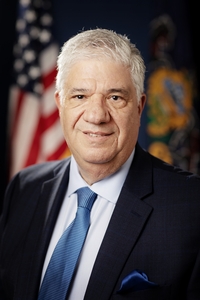
Sen. Wayne Fontana
Sponsored bills
Maddy summarySB 83 increases allowable fees constables can charge for services in Pennsylvania, affecting both civil and criminal cases. Key changes include raising civil service fees (e.g., from $13 to $20 for serving documents) and criminal transport fees (e.g., from $17 to $25 per defendant), while maintaining exemptions for indigent defendants in criminal cases. The bill also specifies that counties must cover fees for indigent cases and clarifies reimbursement rates for travel expenses. These adjustments apply to all constables and deputy constables performing court-related duties under Pennsylvania law.
Maddy summarySB 181 amends Pennsylvania's Election Code to clarify how leftover campaign funds must be handled when a candidate or political committee ends its financial activity. It requires that residual funds be either used for election-related expenses, returned proportionally to contributors, or donated to a qualified 501(c)(3) nonprofit organization (with restrictions preventing donations to nonprofits connected to the candidate or their family). Candidates must submit a final report by January 31 each year. This directly affects candidates and political committees managing campaign finances. The bill provides specific rules for fund disposition without changing broader election procedures.
Maddy summarySB 831 modifies Pennsylvania's tax exemption for disabled veterans by expanding a property value reduction program. It provides tiered tax relief: veterans with a 10%+ service-connected disability (verified by the VA) receive $7,500 to $15,000 off their home's taxable value, depending on disability severity (10-29% to 70%+). This applies to veterans who own their primary residence solely, with a spouse, or as tenants by the entirety but do not qualify for the full exemption under existing law. The bill directly affects Pennsylvania veterans with military service-related disabilities who pay real estate taxes on their primary home.
Maddy summarySB 308 establishes a financial incentive program for Pennsylvania National Guard members serving in medical or health specialty roles. It provides monthly stipends ranging from $500 to $1,000 based on the officer's required education level (e.g., $1,000 for physicians/residents, $500 for public health officers), paid for up to 48 months or the first 36 months of service. The program covers specific roles including physicians, physician assistants, behavioral health officers, public health officers, nurses, and chaplains who meet credentialing requirements. Eligibility requires being a "member in good standing" and meeting federal and state licensing standards for their specialty. The bill also includes provisions for adjusting stipend amounts, recouping payments if requirements aren't met, and administrative funding.
Maddy summarySB 91 amends Pennsylvania's law providing tuition waivers for children of public safety personnel who die in the line of duty. It updates definitions to include rescue squad and ambulance service members as firefighters and clarifies residency requirements for out-of-state police officers. The bill adjusts the retroactive date for the educational benefit to January 1, 2004, making it available for children of those killed since that date, and prohibits institutions from reimbursing tuition or fees paid between 2004 and the bill's effective date. The legislation repeals the previous retroactivity section and removes historical findings from the law.
Maddy summarySB 138 creates a standardized volunteer service credit program for firefighters, emergency medical services (EMS) volunteers, and HAZMAT team members in Pennsylvania. It requires local governments to establish programs measuring volunteer contributions - like emergency response calls, training hours, and administrative support - to determine eligibility for tax credits. Volunteers must be certified through a multi-step process involving their organization’s leadership and local government review. The bill also mandates detailed service logs and sets specific requirements for HAZMAT team members, such as maintaining certifications and attending four annual drills. This program directly affects municipal volunteers seeking tax credits for their service.
Maddy summarySB 457 creates a loan program to provide financial assistance to Pennsylvania fire companies and EMS organizations for equipment, facility improvements, and related costs. The bill authorizes loans up to $750,000 for facility modernization or new construction, $750,000 for aerial firefighting apparatus, $200,000 for ambulances, and $75,000 for protective gear, with applicants required to contribute 20% of costs. Loans include a 2% interest rate, repayment terms up to 30 years, and require compliance with NFPA standards, including prohibitions on PFAS in protective equipment. The loan limits will automatically adjust annually based on inflation starting January 2027. This bill directly affects volunteer and community-based fire and EMS organizations seeking funding for operational needs.
Maddy summarySB 814 exempts certain emergency preparedness items from Pennsylvania's sales tax during two specific 7-day periods in 2026 (March 2-9 and September 7-14). It directly affects individual consumers purchasing nonbusiness items like portable generators under $3,000, storm protection devices under $300, and emergency supplies (e.g., battery-powered lights, radios, fire extinguishers, or ice chests under $75). The bill defines "emergency preparedness items" precisely and specifies that tax exemption applies only to purchases made during the designated dates, even if delivery occurs later. This policy change provides temporary cost relief for residents preparing for potential emergencies.
Maddy summarySB 200 prohibits the possession, sale, or transfer of assault weapons and large capacity magazines in Pennsylvania, requiring current owners to either obtain a certificate from the Pennsylvania State Police within 180 days or surrender the weapons. To get a certificate, owners must pass background checks, provide weapon details, and meet secure storage requirements (e.g., locked containers or devices preventing discharge). The bill also establishes a Firearms and Ammunition Buyback Program and a related fund, though specific implementation details are not provided in the text. This directly affects individuals who currently own prohibited firearms, imposing new legal obligations for possession or surrender.