

Maddy summarySB 739 creates new criminal offenses for manufacturing, distributing, selling, transferring, using, or possessing "illicit devices" for motor vehicles. These devices include physical keys adaptable to multiple vehicles or electronic tools that can unlock, start, or emulate vehicle key fobs. The law specifically targets devices that work across multiple vehicles, with penalties ranging from misdemeanors for first offenses to felonies for repeat violations. Legitimate businesses like dealers, locksmiths, rental agencies, manufacturers, and law enforcement are exempt from these restrictions when operating in their normal course of business.
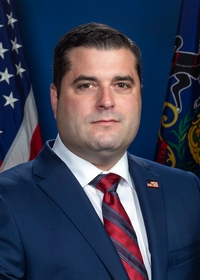
Sen. Devlin Robinson
Sponsored bills
Maddy summarySB 898 amends Pennsylvania's Waterfront Development Tax Credit program under the Tax Reform Code. It establishes 60-day timelines for the Department of Revenue to approve or renew waterfront development organizations' applications and projects. The bill increases the maximum tax credit from 75% to 90% of a business's annual contribution and raises the annual cap on total tax credits from $5 million to $10 million. These changes directly affect waterfront development organizations and businesses making qualifying contributions to eligible projects.
Maddy summarySB 129 creates 15-member advisory councils for each Pennsylvania veterans' home to provide input on resident care, operations, and compliance. Each council includes 10 veterans appointed by the Governor from local nominations, 3 members (including a family member) from residents, 2 legislators, and 1 member selected by residents. Councils must meet quarterly, submit annual reports assessing care quality, and make recommendations to the state Department of Military and Veterans Affairs. The bill directly affects all Pennsylvania veterans' homes and their residents by establishing formal channels for community input into facility management.
Maddy summarySB 880 amends Pennsylvania's public assistance laws to improve security for recipients' benefit access devices (like EBT cards). It requires recipients to report stolen devices immediately and mandates new security measures, including replacing magnetic-strip cards with chip technology, adding transaction alerts via text/email, and creating a mobile app feature to lock/unlock cards. The bill also establishes streamlined reporting procedures for theft and targets outreach to educate recipients on preventing fraud. These changes directly affect public assistance recipients who use electronic benefit cards to access food, cash, or other support. The law aims to reduce financial harm from card theft and skimming during normal transactions.
Maddy summarySB 344 creates a new 2026 special payment for retired municipal police officers and firefighters who began receiving retirement benefits before January 1, 2021. Retirees will receive monthly payments ranging from $75 (5-10 years retired) to $300 (20+ years retired) based on their retirement duration as of January 1, 2026. Municipalities must initially pay these adjustments but will later receive reimbursement from the state, provided they submit required certification by April 1 each year. The bill updates an existing 1988 law to add this new payment tier while clarifying state reimbursement rules for past adjustments.
Maddy summarySB 879 makes it unlawful in Pennsylvania to release helium-filled balloons (non-biodegradable or non-photodegradable) that could harm wildlife, livestock, or pets, directly affecting event organizers, businesses, and individuals who release such balloons. Exceptions include educational/research releases by institutions, hot air balloons recovered after launch, religious ceremonies with permits, and biodegradable balloons. Violators face a $5 civil penalty per balloon paid into the Game Fund, and the state must post notices online and install weather-resistant signs at state park/forest entrances. The law aims to protect wildlife from balloon hazards while allowing specific permitted uses.
Maddy summaryThis resolution (SR 129) honors the late Pennsylvania State Representative Matthew R. Gergely and expresses condolences to his family following his death. It formally recognizes his life, career in McKeesport (including roles as City Administrator and Chief Revenue Officer), and service as a state representative for the 35th district. The resolution, adopted on June 23, 2025, directs the Senate to convey these condolences to his wife, children, and other surviving family members. It does not create any new policy or affect any laws.
Maddy summarySB 436 amends Pennsylvania's child protective services laws to specifically address cases involving military families. It adds definitions for "military family" (including service members, spouses, and children) and requires reports of suspected child abuse to note if they involve military families. The bill mandates that when a report concerns a military family, the state must notify both the Pennsylvania Family Advocacy Program and the military installation's representative. These changes update reporting procedures, database entries, and information-sharing rules to better coordinate with military child protection services.
Maddy summarySB 700 requires Pennsylvania public schools to adopt research-backed reading curricula aligned with the science of reading, beginning with the 2026-2027 school year. It mandates schools to use approved reading screeners to identify early literacy struggles, develop intervention plans for struggling students, and notify parents about their child’s reading progress. The bill creates a state list of approved curricula and screeners, overseen by a 20-member Reading Leadership Council including teachers and specialists, and requires schools to report adoption and screening data. Schools must also provide free, required professional development for educators on evidence-based reading instruction and intervention methods. This directly affects all K-3 public school students, their teachers, and parents through updated curriculum, screening, and intervention requirements.
Maddy summarySB 870 amends Pennsylvania's military education programs to clarify eligibility and repayment rules for National Guard members and their families. It updates the definition of "approved program of education" to include more training options and refines eligibility criteria, such as requiring six years of service for full-time grants and adding specific rules for members discharged due to service-connected disabilities. The bill also revises recoupment (repayment) procedures, allowing proportional repayment if service obligations aren't met and expanding forgiveness for certain circumstances like medical discharge. These changes directly affect Pennsylvania National Guard members and their families using the Educational Assistance Program and Military Family Education Program. The bill focuses on streamlining program administration without altering benefit amounts or funding.