

Maddy summarySB 918 sets mandatory minimum prison terms for Pennsylvania residents convicted of illegal firearm possession. First-time offenders face at least 11 months in prison, repeat offenders get a minimum of 5 years for a second conviction, and those with two prior violations face a 15-year minimum. The law requires courts to verify prior convictions before applying these sentences and bars parole until the minimum term is served. It directly affects individuals convicted under Pennsylvania's firearm possession law (18 Pa.C.S. § 6105), particularly those with prior offenses.
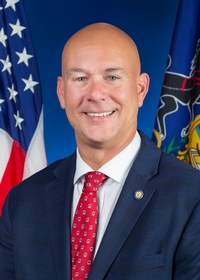
Sen. Pat Stefano
Sponsored bills
Maddy summaryThis Pennsylvania bill amends the state's riot law by defining when group actions become a third-degree felony. It targets participants who act with intent to commit crimes, block government actions, or use weapons (including firearms), and organizers who coordinate, control, or fund riots involving two or more people. Organizers causing death face first-degree felony charges instead of third-degree. The law directly affects individuals involved in organized group disturbances meeting these criteria. It takes effect 60 days after enactment.
Maddy summarySB 917 requires Pennsylvania courts to impose higher sentences for drivers convicted of causing fatal accidents while driving under the influence of multiple drugs or a combination of alcohol and one or more drugs. The bill directs the Pennsylvania Commission on Sentencing to create a specific sentencing enhancement when a driver's blood or breath test shows multiple controlled substances (as defined by law) or alcohol plus at least one controlled substance. This change directly affects drivers found responsible for vehicular homicides involving these substance combinations, increasing their penalties. The law takes effect 60 days after enactment.
Maddy summarySB 956 creates a new first-degree felony offense called "child torture" in Pennsylvania law for individuals who intentionally commit two or more specific abusive acts against a child under 18. The law defines child torture as causing serious injury, mental anguish in an especially depraved way, unreasonable confinement, forced positioning, or intentional failure to provide care. Conviction does not require expert testimony on mental anguish or proof of pain, though financial inability may be a defense for the care provision. This bill directly affects perpetrators of severe, repeated child abuse by establishing a distinct, serious criminal charge.
Maddy summaryThis resolution (SR 119) is a non-binding request from the Pennsylvania Senate urging Congress to support the Whole Milk for Healthy Kids Act of 2025 and amend federal law. It specifically seeks to change current requirements under the Healthy, Hunger-Free Kids Act of 2010, which currently restricts school milk options to fat-free or low-fat varieties. The resolution asks Congress to allow whole milk and 2% reduced-fat milk (flavored or unflavored) in Pennsylvania's elementary and secondary schools, and directs federal agencies to update dietary guidelines accordingly. This would permit schools to offer these milk types without risking federal funding, but the resolution itself does not alter any existing law or standards.
Maddy summarySB 958 expands eligibility for wine and spirits auction permits under Pennsylvania's Liquor Code, allowing specific qualified nonprofits to host fundraising events. The bill permits hospitals, museums, cancer research organizations, educational institutions, and other designated nonprofits to apply for a permit costing $30 per day, valid for up to four days annually. These permits enable eligible groups to auction wine and spirits without requiring a full liquor license, supporting their fundraising efforts. The bill amends existing liquor regulations to create this new, limited-use authorization for charitable purposes.
Maddy summarySB 960 amends Pennsylvania's Liquor Code to clarify rules for hotels, restaurants, and clubs holding liquor licenses. It allows these businesses to sell malt or brewed beverages off-premises in quantities up to 192 fluid ounces per sale, while prohibiting clubs from selling such beverages for off-premises consumption between 2 a.m. and 7 a.m. The bill also restricts certain officials - including police officers, sheriffs, and judges - with arrest or sentencing authority from owning liquor licenses. These changes directly affect licensed establishments and ensure consistent sales hour regulations across different venue types.
Maddy summarySB 951 modifies Pennsylvania's community college funding formula to prioritize enrollment in first responder training programs. It adds a new allocation method that counts students in credit first responder programs at 1.5 times their enrollment and noncredit programs at full value, distributing additional funds based on weighted enrollment across all colleges. This directly affects community colleges offering these programs and their students, as funding levels will depend on how many enroll in first responder training (both credit and noncredit courses). The bill changes how existing state funds are distributed rather than creating new funding, with the new formula applying starting in the 2025-2026 fiscal year.
Maddy summarySB 478 establishes Pennsylvania's Office of Employee Ownership within the Department of Community and Economic Development to support employee-owned businesses. It creates an Employee Ownership Advisory Board and a Main Street Employee Ownership Grant Program to provide technical assistance, financial aid, and education to businesses meeting specific employee ownership criteria (like worker cooperatives, employee stock ownership plans, or broad profit-sharing programs). The Office will track employee-owned businesses statewide, identify barriers to their growth, and submit annual reports to legislative committees. This bill directly affects businesses seeking to convert to or maintain employee ownership structures across Pennsylvania.
Maddy summarySB 245 establishes Pennsylvania's Regulatory Sandbox Program, allowing businesses to temporarily test innovative products and services - such as those using blockchain technology - in regulated sectors like finance and insurance without full compliance with certain state laws. The program is administered by the new Regulatory Relief Office (within the Governor's Office), which reviews applications and works with agencies to waive or suspend relevant regulations for approved participants. An advisory committee, including business representatives and legislators, provides input and can override agency rejections of applications. This directly affects businesses developing new offerings who seek a controlled environment to demonstrate innovations before full market rollout.