

Maddy summarySB 1281 updates Pennsylvania's Medical Practice Act to formally include definitions and licensure requirements for several allied health professions, including respiratory therapists, perfusionists, genetic counselors, and prosthetists. The bill also establishes specific rules for medical imaging professionals, radiation therapists, and radiologist assistants, while removing previous education and training mandates related to radiologic procedures. A key provision across these new categories is the requirement that applicants demonstrate good moral character, with a specific instruction for the licensing board to conduct individualized assessments of criminal convictions. By adding these roles to the state's regulatory framework, the legislation ensures that these healthcare workers operate under standardized licensing and qualification standards.
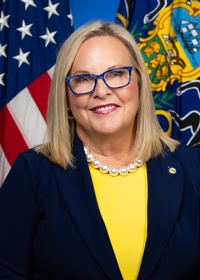
Sen. Judy Ward
Sponsored bills
Maddy summaryThis bill establishes a compensation program for Pennsylvania residents who served in the military during the Global War on Terrorism, covering active duty, service-connected hospital stays, and specific campaign medals. Eligible veterans receive between $500 and $1,000 for their service, with an additional $5,000 awarded to those who died or were declared prisoners of war due to their service. To fund these payments, the legislation creates two new bond funds and requires voter approval before the state can issue debt to cover the costs. The Department of Military and Veterans Affairs is tasked with administering applications and determining eligibility, while also prohibiting anyone from charging fees to help veterans apply for these benefits.
Maddy summaryThis bill amends Pennsylvania's Minimum Wage Act to exempt minor league baseball players from minimum wage and overtime requirements if they are paid under a collective bargaining agreement. It also clarifies an employer's duty to maintain accurate records of employee hours and wages, which must be kept for three years and made available for inspection. Additionally, the law requires employers to post a summary of the act and allows authorized representatives to question employees about their pay and hours, though these record-keeping and inquiry rules do not apply to the exempted baseball players. The changes become effective 60 days after the bill is enacted.
Maddy summaryThis Senate resolution commemorates the 77th anniversary of the United States Air Force and the Air National Guard. It highlights the history of these branches, noting their establishment in 1947 and their service in various conflicts and disaster relief efforts. The bill serves as a formal acknowledgment of their contributions and does not alter any laws or policies.
Maddy summaryThis bill amends Pennsylvania's Liquor Code to allow specific types of alcohol licensees to sell malt or brewed beverages using registers in connected businesses within the same building. It permits restaurant and retail dispenser licensees to utilize up to eleven thousand square feet of connected space for off-premises sales of beer and malt beverages, provided they notify the state board and follow strict rules on signage, staffing, and data privacy. Additionally, the legislation expands wine sales permits by allowing sales in connected areas of a business and requiring the use of electronic ID scanning for customers under thirty-five, while also clarifying that sales must occur on licensed premises or in the same building. These changes aim to modernize regulations for businesses with multiple locations or internal connections, ensuring compliance with existing safety and training standards.
Maddy summaryThis Senate Resolution officially designates September 2024 as "National Recovery Month" throughout Pennsylvania to honor individuals overcoming substance use and mental health disorders. The measure cites state statistics on addiction and overdose deaths to highlight the importance of supporting recovery communities and service providers. By recognizing this national observance, the bill encourages Pennsylvanians to celebrate those in recovery and offer support to those struggling with addiction. As a symbolic gesture, the resolution does not create new laws or funding but serves to raise awareness and promote community engagement during the month.
Maddy summaryThis bill establishes the Pennsylvania Award for Student Success Scholarship Program, which provides financial assistance to help eligible students attend participating nonpublic schools. To qualify, a student must be a Pennsylvania resident living in a household with income below 250% of the federal poverty guidelines and reside within the attendance boundary of a school designated as low-achieving. The program creates scholarship accounts that parents can use to pay for tuition, school-related fees, and special education services at approved private schools. Additionally, the bill requires school districts with low-achieving schools to notify parents about the program and provide lists of designated schools.
Maddy summaryThis bill amends Pennsylvania's Public School Code to require schools to create written policies for managing student medications used for medical emergencies. It mandates that schools develop individualized medication plans upon request from parents or guardians, specifically for conditions not covered by standard asthma inhalers or epinephrine auto-injectors. The plan must include a doctor's statement detailing the medication, dosage, and potential reactions, along with a signed waiver that limits school liability. If a student is deemed capable, the policy allows them to self-administer the medicine after demonstrating competency, while schools must ensure the medication is securely stored and accessible to teachers if self-administration is not permitted.
Maddy summaryThis bill creates the Agriculture Innovation Grant Program and a new oversight board to support farms and agribusinesses in Pennsylvania. The program offers reimbursement grants to eligible farmers, processors, and service providers for projects that improve energy efficiency, water quality, production methods, biosecurity, or data management. To receive funding, applicants must submit a proposal and provide at least 30% of the project costs from non-state sources. A newly established board, composed of representatives from various agricultural, government, and legislative sectors, will evaluate and award these grants based on criteria such as project feasibility and sustainability.
Maddy summarySB 1271 makes it a crime for businesses in Pennsylvania to use names that falsely suggest they are connected to or endorsed by state or local governments. The law prohibits using words, symbols, or domain names that could confuse the public into thinking an entity is official, unless the government has given written permission for the name. If a business violates this rule, they could face a third-degree felony charge with a potential fine of up to $15,000 or a prison sentence of up to seven years. However, companies can avoid penalties if they clearly and prominently display a disclaimer on their materials stating they are not affiliated with any government agency. The bill also requires that any government authorization for such names be reported to the state legislature within 10 days.