

Maddy summarySB 977 would require Pennsylvania's utility commission to create rules allowing electric and natural gas suppliers to provide a single consolidated bill for both energy supply and delivery charges, directly affecting residential, commercial, and industrial customers. The bill mandates new requirements for suppliers, including $250,000 bonding and confirmation they will only offer this billing method with commission approval. It aims to increase competition by enabling suppliers to offer tailored pricing plans like time-of-use rates, addressing low adoption rates (only 18.9% of residential electric customers currently shop suppliers). The policy change would replace the current system of separate utility and supplier bills, streamlining billing for consumers who choose alternative providers.
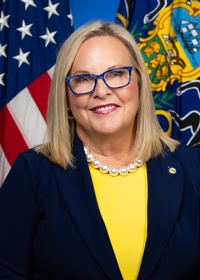
Sen. Judy Ward
Sponsored bills
Maddy summarySB 966 updates Pennsylvania's utility regulations for both natural gas and electric industries. It requires natural gas and electric distribution companies to fully account for all costs (like labor, billing, and infrastructure) and fairly allocate shared costs between regular customers and the "supplier of last resort" (a fallback provider). The bill also mandates consumer protections during supplier changes, requiring direct customer confirmation for switches and clear identification procedures. Additionally, it creates mandatory training and certification for natural gas supplier staff on consumer protection rules before they can work with customers. These changes aim to ensure cost transparency, fair pricing, and better service for utility customers.
Maddy summaryThis resolution directs Pennsylvania's Joint State Government Commission to study how four healthcare licensure compacts (medical, psychology, physical therapy, and nursing) affect the state. The study will analyze impacts on patient access to care, provider movement between states, licensing efficiency, and patient safety protections, including how complaints from other states are handled. It requires a report within six months with findings and recommendations for the General Assembly. The resolution focuses on evaluating existing compacts' effects on Pennsylvania and other states, not on advocating for policy changes.
Maddy summarySR 135 is a Senate resolution honoring Pennsylvania veterans on Veterans Day, November 11, 2025. It formally recognizes all Pennsylvania veterans who served during wartime and peacetime, acknowledging their contributions to national security. The resolution encourages communities across Pennsylvania to hold ceremonies on that date to honor approximately 700,000 current Pennsylvania residents who have served in the armed forces. As a commemorative resolution, it does not create new laws or policies but serves as a symbolic gesture of appreciation.
Maddy summaryThis resolution designates the week of August 17-23, 2025, as "Social Media Safety and Parental Awareness Week" in Pennsylvania. It aims to raise awareness about online child exploitation, citing statistics such as a 192% increase in online enticement cases (546,000 in 2024) and 1 in 5 teens experiencing sextortion. The resolution encourages educational programming and public awareness efforts to protect minors from social media risks as students return to school, without creating new laws or enforcement mechanisms. It is a non-binding symbolic gesture focused on community education, not a policy change.
Maddy summaryThis resolution (SR 119) is a non-binding request from the Pennsylvania Senate urging Congress to support the Whole Milk for Healthy Kids Act of 2025 and amend federal law. It specifically seeks to change current requirements under the Healthy, Hunger-Free Kids Act of 2010, which currently restricts school milk options to fat-free or low-fat varieties. The resolution asks Congress to allow whole milk and 2% reduced-fat milk (flavored or unflavored) in Pennsylvania's elementary and secondary schools, and directs federal agencies to update dietary guidelines accordingly. This would permit schools to offer these milk types without risking federal funding, but the resolution itself does not alter any existing law or standards.
Maddy summarySB 959 requires Pennsylvania insurance companies to use a standardized health insurance claim form developed by the Department of Insurance within 180 days. This uniform form must be used by all insurers, the state's public health programs, and healthcare providers within 120 days of its creation, though dental and vision claims may use the form at the insurer's discretion. The bill also mandates that insurers allow direct payment to dental providers when a patient authorizes it (a provision set to expire after 10 years) and requires a study on the impact of this payment rule. The Legislative Budget Committee must report on network participation changes within 36 months of the bill's effective date.
Maddy summarySB 958 expands eligibility for wine and spirits auction permits under Pennsylvania's Liquor Code, allowing specific qualified nonprofits to host fundraising events. The bill permits hospitals, museums, cancer research organizations, educational institutions, and other designated nonprofits to apply for a permit costing $30 per day, valid for up to four days annually. These permits enable eligible groups to auction wine and spirits without requiring a full liquor license, supporting their fundraising efforts. The bill amends existing liquor regulations to create this new, limited-use authorization for charitable purposes.
Maddy summarySB 960 amends Pennsylvania's Liquor Code to clarify rules for hotels, restaurants, and clubs holding liquor licenses. It allows these businesses to sell malt or brewed beverages off-premises in quantities up to 192 fluid ounces per sale, while prohibiting clubs from selling such beverages for off-premises consumption between 2 a.m. and 7 a.m. The bill also restricts certain officials - including police officers, sheriffs, and judges - with arrest or sentencing authority from owning liquor licenses. These changes directly affect licensed establishments and ensure consistent sales hour regulations across different venue types.
Maddy summarySB 942 sets professional certification standards for auditors in Pennsylvania's Department of the Auditor General. It requires employees conducting forensic audits to hold both Certified Public Accountant (CPA) and Certified Fraud Examiner (CFE) credentials, while fraud auditors must have a CFE. The bill mandates that new hires meet these qualifications immediately, allows current employees to continue existing audit work temporarily, and requires the department to support staff in obtaining necessary certifications through resources and financial incentives. These changes aim to ensure audits of state and federal funds meet professional standards and quality requirements.