

Maddy summarySB 956 creates a new first-degree felony offense called "child torture" in Pennsylvania law for individuals who intentionally commit two or more specific abusive acts against a child under 18. The law defines child torture as causing serious injury, mental anguish in an especially depraved way, unreasonable confinement, forced positioning, or intentional failure to provide care. Conviction does not require expert testimony on mental anguish or proof of pain, though financial inability may be a defense for the care provision. This bill directly affects perpetrators of severe, repeated child abuse by establishing a distinct, serious criminal charge.
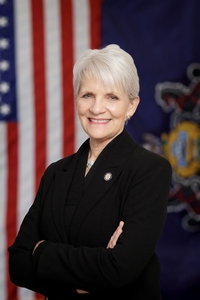
Sen. Carolyn Comitta
Sponsored bills
Maddy summarySB 945 bans the commercial trade of parts or products from 24 specific endangered or threatened species (including elephants, rhinos, sharks, and sea turtles) in Pennsylvania. It prohibits purchasing, selling, or possessing such items with intent to sell, affecting businesses and individuals involved in wildlife trafficking. Key exceptions include government law enforcement, antiques over 100 years old with documentation, musical instruments containing small amounts of protected parts, and educational permits. Violations face civil penalties ranging from $5,000 to $20,000 based on the item's value and whether it's a first or repeat offense. The law aims to combat illegal wildlife trade while allowing limited legal uses like scientific research.
Maddy summarySB 951 modifies Pennsylvania's community college funding formula to prioritize enrollment in first responder training programs. It adds a new allocation method that counts students in credit first responder programs at 1.5 times their enrollment and noncredit programs at full value, distributing additional funds based on weighted enrollment across all colleges. This directly affects community colleges offering these programs and their students, as funding levels will depend on how many enroll in first responder training (both credit and noncredit courses). The bill changes how existing state funds are distributed rather than creating new funding, with the new formula applying starting in the 2025-2026 fiscal year.
Maddy summarySB 935 (the "PrEP for Pennsylvania Act") mandates that all health insurance policies sold in Pennsylvania must cover the cost of preexposure prophylaxis (PrEP) HIV prevention medication. This directly affects insurance providers, who must include PrEP in standard coverage without moving it to a higher-cost specialty tier, and people who rely on insurance for HIV prevention. The law also prohibits requiring unnecessary specialist counseling to access PrEP. It takes effect 60 days after enactment.
Maddy summarySB 936, the "PEP for Pennsylvania Act," requires all health insurance policies sold in Pennsylvania to cover the cost of postexposure prophylaxis (PEP) HIV medication - FDA-approved drugs taken after potential HIV exposure to prevent infection. It mandates this coverage for all qualifying health insurance plans (excluding dental, vision, or limited benefit policies) starting 60 days after the law takes effect, and prohibits insurers from placing PEP medications in higher-cost specialty tiers solely for profit. The bill also prevents insurers from requiring unnecessary counseling from infectious disease specialists to access PEP, unless medically needed. This directly affects Pennsylvania residents with health insurance by ensuring access to critical HIV prevention medication without financial barriers.
Maddy summaryThis resolution (SR 130) condemns the antisemitic firebombing attack that occurred on June 1, 2025, in Boulder, Colorado, during a Run for Their Lives demonstration supporting Jewish hostages. It calls on Pennsylvania (referred to as "the Commonwealth") to address the rising trend of antisemitism, citing statistics showing Jewish people face 67% of religious hate crimes in the U.S. and a 344% increase in antisemitic incidents over five years. The resolution expresses solidarity with the Jewish community, thanks law enforcement for responding to hate incidents, and urges action to combat antisemitism statewide. As a symbolic resolution, it does not create new laws or funding but formally condemns the attack and advocates for community support.
Maddy summarySR 133 is a symbolic resolution designating July 21-25, 2025, as "Construction Opioid Awareness Week" in Pennsylvania. It directly encourages Pennsylvania's construction industry - including contractors, unions, and organizations like the Keystone Contractors Association - to promote awareness of opioid dangers and facilitate discussions during that week. The resolution references high overdose rates in construction (130.9 deaths per 100,000 workers in 2020) and urges existing efforts like educational toolkits, naloxone access, and "Drug Take Back" events. As a non-binding resolution, it does not create new laws or funding but formally recognizes the industry’s ongoing awareness initiatives.
Maddy summaryThis resolution urges Congress to establish a National Infrastructure Bank to address infrastructure funding gaps. It references Pennsylvania's specific challenges, including lead pipes in water systems and bridge maintenance needs, as justification for federal action. The resolution requests Congress create this bank but does not create new laws or funding. It was referred to the Transportation committee for consideration.
Maddy summarySB 500 repeals outdated tax credits for Pennsylvania petrochemical and fertilizer manufacturing projects and creates new tax credits for clean energy and advanced manufacturing sectors. It establishes tax credits for reliable energy investments, regional clean hydrogen hubs, semiconductor and biomedical manufacturing/research, geothermal energy, and sustainable aviation fuel. Businesses must meet specific eligibility criteria (like capital investment thresholds and job creation targets) to apply for these credits through the Department of Revenue, with annual funding limits and application deadlines outlined. The bill directly affects qualifying companies in these emerging industries seeking tax incentives for new investments.
Maddy summaryThis bill establishes a loan forgiveness program in Pennsylvania to help recruit and retain workers in mental health, intellectual disability, and addiction counseling fields. It directly affects full-time employees at county mental health agencies, private providers, and licensed addiction treatment facilities who have student loans and agree to work in these professions for at least four years. Under the program, eligible workers can receive up to $25,000 in loan forgiveness over four years, with a maximum of $6,250 forgiven each year, provided they remain employed in qualifying positions. The Pennsylvania Higher Education Assistance Agency is tasked with administering the program and determining compliance with employment requirements.