

Maddy summarySB 1103 requires Pennsylvania public libraries and school libraries to adopt a policy against removing books or materials due to partisan or doctrinal disapproval to qualify for state aid, either by adopting the American Library Association's Library Bill of Rights or creating a written policy. The bill prohibits public schools from removing required classroom materials or non-required materials (such as books for independent reading) for reasons including an author's race, gender identity, sexual orientation, political views, or content related to student educational needs. It specifically bans removals based on school board or complainant discomfort, personal morality, or religious views. The law takes effect 60 days after enactment.
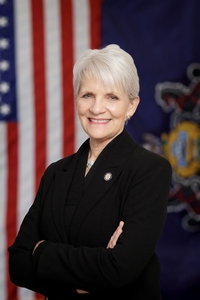
Sen. Carolyn Comitta
Sponsored bills
Maddy summaryThis is a ceremonial Senate resolution (SR 198), not a bill with policy changes. It celebrates the 30th anniversary of the Sustainable Forestry Initiative (SFI), a voluntary program promoting responsible forest management. The resolution commends the Pennsylvania SFI Implementation Committee (PA SIC) for its 30 years of work training loggers, supporting sustainable forestry practices, and fostering collaboration among landowners, industry, and conservation groups across Pennsylvania. It has no binding effect or new requirements - it solely honors the SFI's contributions to forest stewardship.
Maddy summaryThis resolution designates December 2, 2025, as "World Nuclear Energy Day" in Pennsylvania. It symbolically recognizes the historical significance of nuclear energy milestones, including the first controlled nuclear chain reaction (1942) and the first commercial nuclear power plant (1957). The resolution highlights Pennsylvania's role as a top nuclear energy producer (30% of state electricity, 15,900 jobs, $2 billion economic contribution) but does not create new laws or policies. It is a ceremonial gesture with no regulatory or financial impact.
Maddy summaryThis resolution designates the week of November 16-22, 2025, as "Hunger and Homelessness Awareness Week" in Pennsylvania. It formally recognizes this period through a state legislative resolution, urging public awareness of hunger and homelessness issues. The bill does not create new laws or funding but serves as a symbolic gesture to highlight these concerns within the state. It affects all Pennsylvanians by promoting community focus on these social issues during the designated week.
Maddy summarySB 88 amends Pennsylvania's Insurance Company Law to require health insurance plans sold in the state to cover specific breast imaging services without cost-sharing for policyholders. It mandates annual mammograms for women 40+ and physician-recommended mammograms for women under 40, plus MRI and other breast imaging for those at average or higher risk of breast cancer due to factors like family history, genetic mutations, or dense breast tissue. The law specifies coverage for screening, supplemental, and diagnostic exams but does not require coverage for mastectomies or override standard deductibles/copays beyond the minimum required services. This replaces prior requirements that allowed cost-sharing and excluded MRI coverage.
Maddy summaryThis bill (SB 1089) allows individuals experiencing homelessness to use public spaces for basic needs like sleeping, eating, and storing belongings, provided they aren’t blocking walkways or streets. It requires municipalities to first offer "adequate alternative indoor space" (free, accessible, disability-friendly, and pet-friendly) before restricting such use in public areas. The bill defines "public space" broadly to include parks, sidewalks, plazas, and transit areas, while specifying that alternative housing in another municipality is only accessible if free transportation is provided. It directly affects homeless individuals and local governments responsible for enforcing public space rules. The law creates a legal defense for individuals using public space when adequate alternatives haven’t been offered.
Maddy summarySB 715 extends the expiration date of Pennsylvania's Rare Disease Advisory Council from June 30, 2025, to June 30, 2028. This procedural bill directly affects the council, which advises state departments on rare disease issues, and the departments it collaborates with (Health, Insurance, Human Services, Education). The key provision simply changes the expiration date in the 2017 law without altering the council's structure or duties. This extension provides continued operation of the council for an additional three years.
Maddy summaryThe context provided does not include specific details about SB 1080's provisions, amendments, or intended effects. While the bill title references amendments to the Fiscal Code regarding the "Budget Stabilization Reserve Fund," no concrete policy changes, affected parties, or mechanisms are described in the given information. Without additional details on what the amendment alters or how it would operate, a substantive summary cannot be created. This appears to be a procedural fiscal code amendment, but the necessary specifics for a factual summary are missing from the context.
Maddy summarySB 1083 increases the required distance between oil and gas wells and certain structures in Pennsylvania. It raises the minimum distance for unconventional gas wells from 500 feet to 2,500 feet from buildings and from 1,000 feet to 2,500 feet from water wells and water supply points. The bill also prohibits drilling within 5,000 feet of any school or hospital. Well operators seeking to drill closer must apply for a variance with a detailed safety plan and additional measures, and the law takes effect 60 days after enactment.
Maddy summaryThis resolution designates November 2025 as "Good Samaritan Law Awareness Month" in Pennsylvania. It aims to raise public awareness about Good Samaritan laws, which protect individuals who assist others in emergency situations. The resolution does not create new legal requirements or directly affect specific groups - it is a symbolic designation to promote understanding of existing protections. The bill was referred to the Rules & Executive Nominations committee on November 5, 2025.