

Maddy summarySenate Bill 323 creates the Keystone National Finance Authority, a new public entity intended to promote economic development and job creation across Pennsylvania and the United States. This authority aims to provide additional financing for a wide range of projects, including industrial, commercial, and agricultural activities, as well as infrastructure, transportation, energy, and housing developments. It is designed to issue bonds and engage in conduit financing to fund these projects, supporting community revitalization and business opportunities. The authority is intended to serve as a public instrumentality of the Commonwealth, complementing existing agencies.
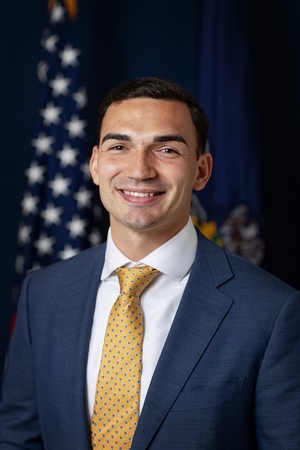
Sen. Nick Miller
Sponsored bills
Maddy summarySB 980 bans the manufacture, sale, and use of class B firefighting foam containing intentionally added PFAS chemicals after July 1, 2026 (for manufacturers/sellers) and January 1, 2027 (for users), with limited exceptions for federal requirements and exempt facilities like airports. It requires manufacturers of firefighting protective gear to label products containing PFAS and provide online information about PFAS content. The bill establishes civil penalties for violations (up to $5,000 for first offenses, $10,000 for repeat offenses) and creates new grant funding for fire companies to dispose of PFAS foam and purchase PFAS-free alternatives, with penalty revenue directed to these programs.
Maddy summarySB 44 creates a formal process for confirming someone is a victim of human trafficking in Pennsylvania through a "victim determination statement" issued by authorized entities like legal aid organizations or victim service providers. This statement confirms the victim’s status and details the trafficking period and related offenses, which can be used to address legal consequences stemming from their victimization. The bill also establishes a State Human Trafficking Resource Coordinator to coordinate statewide victim services and support. Victims with a valid statement can petition to restore driver’s licenses suspended due to offenses committed while trafficked, unless the department deems them a traffic safety risk.
Maddy summarySB 998 would create a grant program to fund expansions of nursing education programs at colleges and universities. It requires the Department of Community and Economic Development to administer grants for institutions aiming to increase nursing program capacity, directly affecting nursing schools and future nursing students. Key provisions include establishing grant criteria, application processes, and reporting requirements for funded programs. The bill is currently pending in the Appropriations committee after committee review.
Maddy summaryThis Senate Resolution honors the Curtis Institute of Music on its 100th anniversary. It recognizes the school's century-long impact on Philadelphia and the global music community, highlighting its history of providing free, high-quality education to talented students since 1928. The resolution formally acknowledges the institute's contributions to the arts and celebrates its legacy of producing world-renowned musicians.
Maddy summaryThis bill prohibits smoking in any vehicle transporting a child under 12 years old in Pennsylvania. It defines smoking as using any lighted device, such as a cigarette or pipe, and establishes a $100 fine for a first violation, increasing to $250 for repeat offenses. The law requires that a person be convicted of another traffic violation occurring at the same time to be penalized for smoking around a child. These rules will take effect 90 days after the bill is enacted.
Maddy summarySB 1268 amends Pennsylvania's Labor Relations Act to clarify definitions of employees and independent contractors while introducing new rules for union elections and employer conduct. The bill requires employers to post notices about employee rights both physically and electronically and mandates the provision of detailed voter lists to labor organizations following union elections. Additionally, it designates specific actions as unfair labor practices, such as forcing employees to participate in employer-led campaigns unrelated to their job duties. These changes aim to standardize how labor disputes are managed and ensure clearer communication between employers and workers regarding their collective bargaining rights.
Maddy summaryThis bill amends Pennsylvania's existing professional licensing law to formally include art therapists alongside social workers, marriage and family therapists, and professional counselors under state regulation. It establishes the State Board of Social Workers, Marriage and Family Therapists and Professional Counselors and Professional Art Therapists to oversee the field and defines specific qualifications, including the requirement for an accredited degree and supervised practice. The legislation also sets new standards for what constitutes art therapy services, outlines procedures for obtaining and renewing licenses, and creates penalties for practicing without a valid license or using protected titles without authorization.
Maddy summaryThis bill modifies Pennsylvania's Public Employee Relations Act to introduce interest arbitration for specific public sector groups facing collective bargaining impasses. It directly affects prison guards, mental hospital staff, court employees, and peace officers by requiring their labor disputes to be resolved by a binding panel of arbitrators after mediation fails. The law mandates that these arbitrators make final decisions on contract terms, except for provisions that would require new legislation to implement. The changes take effect 60 days after the bill is signed into law.
Maddy summaryThis bill updates Pennsylvania's Crane Operator Licensure Act to include well drilling under the same regulatory framework, creating a single State Board of Crane Operators and Well Drillers. It establishes new requirements for well driller licensure, including examinations, bonding, insurance, continuing education, and registration for drilling companies and rigs. The legislation also expands definitions to cover various types of wells and drilling activities, while maintaining existing provisions for crane operator certification and enforcement mechanisms.