

Maddy summaryThis bill prohibits Pennsylvania State Police from stopping, detaining, or questioning individuals based solely on immigration status, except when necessary for unrelated criminal investigations. It bans prolonging detention due to immigration status or conducting immigration checks without a prior criminal arrest. Police must share immigration detainer information with federal authorities only if discovered during lawful detention for unrelated matters. The law directly affects all individuals interacting with Pennsylvania State Police, limiting state involvement in federal immigration enforcement.
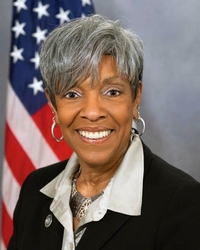
Rep. Carol Hill-Evans
Sponsored bills
Maddy summaryThis is a procedural resolution (not a law) directing Pennsylvania's Joint State Government Commission to study trauma-informed care training for law enforcement officers under Act 59 of 2020. The study must examine training content (including recognizing PTSD in officers and the public), frequency, provider qualifications, state comparisons, county-level participation data, and the training's impact on reducing violent incidents. The Commission must report findings and recommendations to the House of Representatives within one year. This resolution does not change existing law but seeks information to potentially improve training practices.
Maddy summaryHB 2199 requires Pennsylvania public schools to adopt or update anti-bullying policies specifically addressing gender-based bullying starting in the 2026-2027 school year. The policy must prohibit bullying based on a student's actual or perceived sex, sexual orientation, gender identity, or gender expression, and include specific protections for transgender and nonbinary students during gender transitions. Schools must incorporate the policy into student conduct codes, distribute it in handbooks and classrooms, post it prominently, and review it annually with students. The bill also mandates that schools report bullying prevention efforts to the Department of Education annually. This directly affects all Pennsylvania public school students, particularly LGBTQ+ youth, by requiring schools to address gender-based bullying through defined policies and support systems.
Maddy summaryHR 389 is a symbolic resolution designating February 2026 as "Senior Independence Month" in Pennsylvania. It does not create new laws or programs but formally recognizes older adults' contributions and promotes community engagement through existing initiatives. The resolution urges all Pennsylvanians to honor seniors' achievements and support programs that foster independence, health, and social connection. This is a commemorative measure with no direct policy changes or financial impact.
Maddy summaryThis resolution designates the week of March 15-21, 2026, as "Sunshine Week" in Pennsylvania. It symbolically recognizes the importance of open government and public access to information, aligning with an annual observance started in 2005 by news organizations and open-government groups. The resolution urges all Pennsylvania residents to participate in raising awareness about transparency in government, without creating new laws or policies. It is a non-binding gesture supporting existing efforts to promote civic engagement around open records and meetings.
Maddy summaryThis resolution designates March 8, 2026, as "Charter Day" and Pennsylvania's 345th birthday, commemorating the 1681 charter granted to William Penn by King Charles II. It urges Pennsylvania residents, schools, and historical organizations to participate in events hosted by the Pennsylvania Historical and Museum Commission and related institutions. The resolution is non-binding and aligns with the Commission's existing annual observance of this date. It does not create new laws or affect policy, but formally recognizes a historical milestone.
Maddy summaryThis resolution designates February 2026 as "Black History Month" in Pennsylvania, symbolically recognizing the century-long observance of African American contributions to the Commonwealth and nation. It directly affects all Pennsylvania residents by formally honoring the historical achievements, resilience, and sacrifices of African Americans, marking the 100th anniversary of the movement founded by Dr. Carter Godwin Woodson. The resolution includes historical context about the origins of Black History Month and Pennsylvania's connections to Black labor and civil rights history, but it has no binding policy effects.
Maddy summaryHB 2123 amends Pennsylvania's adoption laws to require separate legal representation for placing parents (those voluntarily giving up a child for adoption) in adoption proceedings, with strict rules preventing attorneys from representing both placing parents and prospective adoptive parents. The bill mandates that home studies include at least six hours of training on transracial adoption, attachment, and trauma-informed parenting for adoption agencies. It also establishes new regulations for adoption intermediary services (acting as a link between placing and prospective adoptive parents) and advertising, prohibiting payments to placing parents for placement and creating an Adoption Intermediary Services Fund managed by the Department of Human Services. These changes directly affect placing parents, prospective adoptive parents, adoption agencies, and intermediary service providers.
Maddy summaryHB 2169 amends Pennsylvania's Fiscal Code to update terminology in funding provisions for special education schools. It replaces references to "approved private school" with "approved special education school" in Section 1923(5), which governs how funds from the Public School Code (Section 2509.8) are allocated. The bill directly affects approved special education schools with day tuition under $32,000, requiring funding to be no less than 175% of the 2015-2016 allocation. This is a technical correction to align statutory language with current educational terminology, with no change to the underlying funding mechanism or eligibility criteria.
Maddy summaryHR 392 is a ceremonial House Resolution designating the week of March 8-14, 2026, as "Multiple Sclerosis Awareness Week" in Pennsylvania. It does not create new laws or policies but formally recognizes the issue and encourages Pennsylvanians to support efforts against multiple sclerosis. The resolution cites that over 24,000 people in Pennsylvania are affected by the disease and acknowledges the work of the National Multiple Sclerosis Society. This is a symbolic gesture with no direct impact on funding, healthcare, or legislation.