

Maddy summaryHB 886 requires Pennsylvania correctional institutions to provide prerelease briefings to inmates who are veterans, specifically informing them about available veterans' benefits. This bill directly affects incarcerated veterans transitioning back into civilian life by ensuring they receive information about benefits they may qualify for. The key provision mandates that these briefings be part of the general administration process for correctional facilities under Title 61 of the Pennsylvania Consolidated Statutes. The bill focuses on improving access to benefits information as part of reentry support, without altering eligibility or benefit amounts.
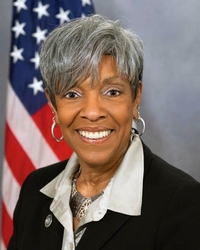
Rep. Carol Hill-Evans
Sponsored bills
Maddy summaryHB 1556 amends Pennsylvania's Tax Reform Code of 1971 to add new tax credits under the PA EDGE program specifically for "advanced clean manufacturing projects." This bill directly affects businesses constructing or expanding facilities that produce clean energy technology, such as solar panels or battery components. The key change expands the existing PA EDGE tax credit program to include these advanced clean manufacturing projects, providing financial incentives for qualifying investments. The bill does not alter other existing PA EDGE provisions or create new tax credit categories beyond this specific addition.
Maddy summaryHB 1936 amends Pennsylvania's juvenile justice laws to change procedures for handling cases involving minors. It specifies when courts must hold hearings before releasing or committing a juvenile, alters where juveniles can be placed for treatment or supervision, and adds requirements for reviewing dispositions (how cases are resolved) after commitment. The bill directly affects juveniles charged with offenses, their families, and juvenile court judges and probation officers who manage these cases. Key changes include setting clearer timelines for hearings, limiting where juveniles can be committed (e.g., away from home), and mandating periodic reviews of their case plans. These provisions aim to standardize court processes while prioritizing youth safety and appropriate supervision.
Maddy summaryHB 1909 updates Pennsylvania's criminal code by clarifying and adjusting definitions and penalties for several existing offenses. It specifically addresses simple assault, reckless endangerment, terroristic threats, harassment, stalking, unlawful restraint, false imprisonment, indecent assault, and disorderly conduct. The bill aims to refine how these crimes are defined and prosecuted under current law. It directly affects individuals charged with these specific offenses in Pennsylvania courts. The changes focus on improving legal clarity without creating new criminal categories.
Maddy summaryHB 2216 creates new court procedures in Pennsylvania for juvenile courts to issue "predicate orders" required for immigrant youth to apply for federal Special Immigrant Juvenile Status. It directly affects immigrant youth under 21 who have experienced abuse, abandonment, or neglect and need these court orders to seek U.S. immigration protections. Key provisions include establishing a lower burden of proof (preponderance of evidence), presuming it is not in the juvenile’s best interest to return to their home country, and allowing courts to issue orders without parental notice if abandonment occurred for six months. The bill adds specific court procedures to Pennsylvania’s juvenile law to streamline this process, ensuring youth can access federal immigration pathways.
Maddy summaryHB 2217 requires Pennsylvania public schools to provide specific minimum recess and lunch periods for students. It mandates at least 30 minutes of recess daily for full-day kindergarten through fifth grade, 15 minutes for half-day kindergarten, and 30 consecutive minutes of lunch for all full-day kindergarten through twelfth grade. The bill prohibits withholding lunch for discipline or make-up work, ensures students can opt out of cafeteria lunch for religious reasons, and prevents schools from reducing non-tested subject instruction time to provide recess without balancing with tested subjects. This applies to all school entities (including districts, charter schools, and cyber charters) and takes effect July 1, 2027.
Maddy summaryHB 2212 requires Pennsylvania health insurance companies and other health care payers (including health maintenance organizations and self-insured employers) to reimburse out-of-network medical facilities that meet specific criteria, such as having a four-star patient satisfaction rating, offering faster service than nearby in-network facilities, or being partially owned by physicians who are in-network with the payer. The bill mandates that payers use a "baseball-style arbitration" process for payment disputes, where an independent third party selects either the payer's or facility's proposed payment amount without modification. It defines key terms like "highest in-network rate" to standardize how payers determine fair reimbursement for services. This law directly affects health care benefit plans regulated under Pennsylvania insurance law, aiming to reduce discrimination against qualifying out-of-network providers.
Maddy summaryHB 2213 establishes a regulatory framework for "skill video gaming" in Pennsylvania, directly affecting businesses that operate or distribute gaming systems. The bill requires licenses from the Department of Revenue for operators, distributors, and establishments, imposes fees, and mandates a central reporting system to track transactions like "coin in/out" and jackpots. Key provisions include banning access for people under 18, prohibiting "miniature casinos," requiring security measures for players, and creating criminal penalties for operating unlicensed systems or distributing to minors. It aims to eliminate illegal gambling devices disguised as skill-based games while leveraging the State Lottery's existing experience in retail gaming oversight.
Maddy summaryHB 2215 requires AI chatbot providers to verify user age using reliable methods like government-issued ID, not just birth dates, to prevent minors from accessing AI companions designed for emotional interaction. The bill prohibits creating or distributing AI chatbots that risk encouraging minors to engage in or share sexually explicit content or violent behavior, with penalties of up to $100,000 per violation. It defines "AI companion" as chatbots simulating friendship or therapy and mandates that age verification must reliably block minors without relying on IP addresses or other technical indicators. This law applies to any entity making AI chatbots available in the U.S., focusing on protecting minors from harmful content through concrete verification requirements.
Maddy summaryHB 1934 amends the Commonwealth Attorneys Act by updating specific definitions used in the law. This change directly affects Commonwealth Attorneys, who are county-level prosecutors in Pennsylvania. The bill clarifies terminology within the existing legal framework without altering substantive duties or powers. As a definitional amendment, it focuses on improving precision in statutory language.