

Maddy summaryHB 632 amends Pennsylvania's prostitution laws to increase penalties for individuals who knowingly engage in prostitution while aware they have HIV or AIDS. Specifically, it upgrades certain offenses to a third-degree felony (previously a misdemeanor) when the person knew their HIV-positive status at the time of the offense. The bill also creates a resentencing process for people previously convicted under the same provision but now eligible for misdemeanor sentencing if they've completed their sentences and meet specific criteria. This directly affects individuals convicted of prostitution-related offenses who knew their HIV status under the prior law.
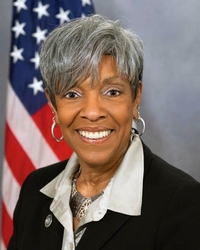
Rep. Carol Hill-Evans
Sponsored bills
Maddy summaryHR 329 is a non-binding resolution designating October 2025 as "Arts and Culture Month" in Pennsylvania. It does not create new laws, allocate funding, or directly affect any individuals or organizations. The resolution serves solely to recognize and promote arts and cultural activities during that month through official state acknowledgment. As a procedural resolution, it has no legal effect beyond the symbolic gesture of recognition.
Maddy summaryHR 348 is a resolution designating November 2025 as "Native American Heritage Month" in Pennsylvania. It formally recognizes and honors the history, culture, and contributions of Native American communities within the state. The resolution does not create new laws or funding but serves as a symbolic acknowledgment by the Pennsylvania legislature. It directly affects Pennsylvania residents through this official state-level observance.
Maddy summaryHB 1315 (Pennsylvania House Bill 1315) amends Pennsylvania's name change procedures under Title 54 of the Consolidated Statutes. It requires individuals seeking a name change to file a petition in court detailing their reason, current and past residences, and proof of notice publication (unless exempt). The bill specifically creates two automatic exemptions: courts must waive public notice and seal records if the change relates to gender identity (Section 701(a.1)(3)(iv)) or if notice would endanger the petitioner or their child (Section 701(a.1)(3)(iii)). These sealed records remain confidential unless unsealed by court order for "good cause" or at the petitioner's request. The changes apply to petitions filed after the law's effective date.
Maddy summaryThis Pennsylvania House Resolution designates May 4, 2026, as "Youth Advocacy Day" to recognize the role young people play in advocating for issues affecting their lives. The resolution acknowledges youth involvement in various social movements, including environmental, civil rights, and public safety initiatives, and affirms their right to participate in civic engagement. It does not create new laws or funding but serves as a symbolic designation to highlight youth advocacy efforts within the state.
Maddy summaryThis bill establishes a fee program for certain nonemergency medical services provided to inmates in Pennsylvania prisons, with fees capped at $1 per service when requested by the inmate. It requires the Department of Corrections to create regulations specifying which medical services incur fees, their amounts, and payment procedures while exempting medical emergencies, chronic care, and preexisting conditions from fees. The legislation also mandates that inmates pay for medical services related to injuries they caused to themselves or other inmates. The Department of Corrections must update existing rules to align with these changes within 180 days of the bill's effective date, which is set to occur 60 days after enactment.
Maddy summaryThis bill updates Pennsylvania's Dam Safety and Encroachments Act by adding a formal definition for "wetland" and establishing specific rules for where wetland replacement projects must be located. The legislation directly affects developers, environmental regulators, and landowners involved in projects that impact wetlands, requiring them to follow a prioritized siting hierarchy. Under the new provisions, replacement wetlands must be placed immediately adjacent to the affected area whenever possible, with subsequent options including locations along the same watercourse, within the same watershed, or near higher-order streams if closer sites are unavailable. The bill also mandates that regulatory agencies reject replacement proposals in different watersheds unless all suitable local options have been exhausted, and requires documentation explaining why alternative sites were not feasible.
Maddy summaryThis bill amends Pennsylvania's tax code to establish a new licensing requirement for tobacco retailers, mandating that applicants meet specific criteria to obtain or renew their retail licenses. The law introduces a distance restriction effective January 1, 2027, prohibiting tobacco retailers from operating within 1,000 feet of any school property line, while also requiring applicants to demonstrate adequate premises for revenue protection, maintain accurate tax reporting, and have no history of tax violations. The measure directly affects tobacco retailers and applicants seeking to sell tobacco products in Pennsylvania, adding compliance steps to the existing licensing process.
Maddy summaryThis bill amends Pennsylvania's obstruction of governmental operations laws to create a specific exception for healthcare facilities. It allows nonviolent obstruction of law enforcement entry at hospitals and emergency departments unless officers have probable cause and a judicial warrant for a specific individual. The law defines key terms like "health care facility," "emergency department," and "judicial warrant" to clarify when this protection applies. The changes would take effect 60 days after enactment and apply to all law enforcement officers within the state.
Maddy summaryHB 554 would authorize Pennsylvania to join the Social Work Licensure Compact, a multi-state agreement that allows social workers licensed in one member state to practice in others without additional exams. The bill provides Pennsylvania with the legal framework to adopt the compact's standard terms, directly affecting licensed social workers seeking to practice across state lines. Key provisions include aligning Pennsylvania's licensing requirements with the compact's uniform standards, simplifying the process for social workers to obtain reciprocal licenses in participating states. This change would streamline professional mobility for social workers while maintaining consistent regulatory oversight.