

Maddy summaryThis bill updates Pennsylvania's Public School Code to require that every school building attended by students be assigned at least one school nurse, reducing the maximum number of students per nurse from 1,500 to 750. It also adjusts state reimbursement rates for school health services, increasing the per-student funding amount for the 2026-2027 school year and beyond. Additionally, the bill mandates that the Department of Health use up to $3 million in grants to provide feminine hygiene products to students at no cost to school entities, with grant amounts proportional to student enrollment. These changes directly affect school districts, the Department of Health, and students across Pennsylvania's public school system.
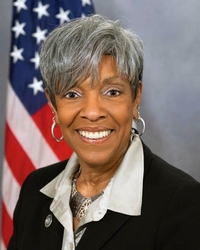
Rep. Carol Hill-Evans
Sponsored bills
Maddy summaryThis bill amends Pennsylvania's Health Maintenance Organization Act to require health plans to cover basic services when referrals come from direct primary care providers who are not part of the plan's network. It defines direct primary care providers as licensed doctors or advanced practitioners who offer direct care through personal agreements with patients. The rule must be established within one year of the bill's effective date and applies to all health maintenance organizations operating in the state.
Maddy summaryHB 2187 shortens the required interval for criminal background checks for Pennsylvania state employees and contractors who access Federal tax information, changing the frequency from every ten years to every five years. This amendment applies to personnel working in state agencies handling sensitive tax data, such as the Department of Revenue or tax-related programs. The bill updates Section 226(e) of the 1929 Administrative Code to mandate these more frequent checks without altering the initial clearance process. The law takes effect 60 days after enactment.
Maddy summaryThis Pennsylvania House resolution designates March 21, 2026, as "Rosie the Riveter Day" to honor women who worked in factories during World War II, particularly those in Pennsylvania. It specifically recognizes the contributions of women who filled critical manufacturing roles - like building ships, aircraft, and weapons - as Pennsylvania became known as "The Arsenal of America." The resolution coincides with the 100th birthday of Mae Krier, a WWII worker and advocate for the Congressional Gold Medal honoring all "Rosie the Riveters." As a commemorative resolution, it has no legal effect but serves to publicly acknowledge this historical workforce.
Maddy summaryThis resolution designates March 2026 as "National Social Work Month" in Pennsylvania. It symbolically recognizes the contributions of social workers who support vulnerable populations, address mental health needs, and advocate for policies like minimum wage and poverty reduction. The resolution has no binding effect - it encourages Pennsylvanians to join the National Association of Social Workers in celebrating the profession during that month. It does not create new policies, allocate funding, or directly affect any specific group.
Maddy summaryHB 336 amends Pennsylvania's 1907 law designating the state flag by adding specific folding instructions for official display. The bill details a five-step procedure to fold the flag, including forming a triangle to display the Commonwealth crest and creating a mirror image fold. It directly affects state officials, the National Guard, and entities handling the flag for ceremonies or display. This procedural update does not change the flag's design or usage rights but standardizes its presentation. The bill was introduced in 2025 and takes immediate effect.
Maddy summaryHB 300 amends Pennsylvania's Human Relations Act to add explicit protections for religious exercise alongside existing anti-discrimination rules. It directly affects employers, housing providers, and businesses offering public accommodations by prohibiting discrimination based on religion in employment, housing, and public services. The bill updates the law to include religious freedom as a protected category under anti-discrimination provisions. It also clarifies the Pennsylvania Human Relations Commission's authority to enforce these protections. The amendment does not create new enforcement mechanisms but integrates religious exercise protections into the existing framework of the 1955 Act.
Maddy summaryThis bill amends Pennsylvania's Construction Code Act to create an Accessibility Advisory Board that will review and recommend changes to accessibility standards for buildings. The 11-member board includes people with disabilities, industry representatives, and public members who will evaluate new accessibility code sections based on public health, economic impact, and technical feasibility. The board will conduct a formal review process starting with the 2024 ICC codes, including public comment periods and hearings before making recommendations. Additionally, the bill establishes a dedicated funding account for the board's administrative operations and updates definitions related to accessibility codes within the state's construction regulations.
Maddy summaryThis resolution honors the lives of three Pennsylvania law enforcement officers - Detective Sergeant Cody Michael Becker, Detective Isaiah Emenheiser, and Detective Mark Edward Baker - who died in the line of duty on September 17, 2025. The bill formally extends condolences to their families and recognizes their individual contributions to public service, including Becker's heroism in saving a family from a house fire, Emenheiser's leadership and lifesaving awards, and Baker's pioneering work in forensic investigations. As a noncontroversial resolution, it does not create new laws or funding but serves as a legislative acknowledgment of their sacrifice and dedication to their communities.
Maddy summaryHB 2161 requires public utilities in Pennsylvania to offer municipalities a written agreement before removing trees owned by cities or townships for service needs. If accepted, the utility must plant replacement trees within two years, using a specific method: measuring the removed tree’s size at breast height, halving that value, and planting that many two-inch replacement trees. Municipalities can also choose to accept a fee equal to the tree’s assessed value from a certified arborist instead of requiring new planting. This bill directly affects public utilities (like power or gas companies) and local governments that own trees along utility infrastructure.