

Maddy summaryHB 57 establishes mandatory minimum prison sentences and fines for individuals convicted of trafficking fentanyl or fentanyl derivatives in Pennsylvania. It directly affects people convicted under specific sections of the Controlled Substance Act involving fentanyl, with penalties based on the weight of the substance: 2 years (less than 1g) to 96 months (100g+), plus fines ranging from $5,000 to $50,000. Repeat offenders face enhanced sentences (e.g., 36 months instead of 24 months for less than 1g). The bill requires courts to apply these mandatory penalties at sentencing, with the Commonwealth able to appeal if courts fail to impose them.
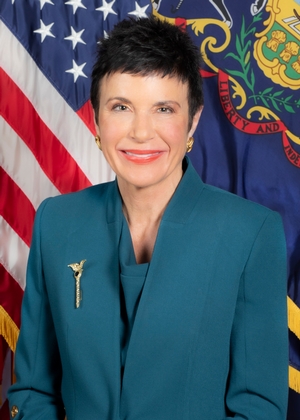
Rep. Marla Brown
Sponsored bills
Maddy summaryHB 63 amends Pennsylvania's Public School Code to adjust school safety training requirements for cyber charter schools. It allows these schools to waive in-person training or provide an alternative training option for employees who exclusively work remotely and are not physically located in Pennsylvania. The change specifically updates Section 1310-B of the Code to create this exception for remote-only staff. This policy adjustment applies only to cyber charter school employees and does not affect traditional school staff or training mandates for in-person school settings. The bill takes effect 60 days after enactment.
Maddy summaryHB 58 amends Pennsylvania's Cosmetology Law to simplify the process for licensed salons to relocate. It requires salons to submit a layout sketch of the new location and designate a person in charge, but the board must approve these applications immediately if the salon has no prior violations. Bureau inspectors must then verify the new location meets facility requirements within 10 days of approval. This directly affects existing cosmetology salons seeking to move locations without needing new licenses. The bill takes effect 60 days after enactment.
Maddy summaryHB 110 amends Pennsylvania's 1970 law to allow minors aged 18 or older to consent independently to mental health treatment without parental permission, raising the age from 14. It also clarifies that minors aged 18+ control their mental health treatment records, while parents or legal guardians retain full access to all medical, dental, and health records for minors under 18. The bill includes provisions for minors to revoke consent for treatment and requires court review if a minor objects to continued inpatient care. These changes directly affect minors seeking mental health services and their parents, streamlining consent processes while balancing minor autonomy with parental access.
Maddy summaryHB 94 amends Pennsylvania's Public School Code to allow parents or guardians of school-aged children to opt their child out of school-imposed face covering or mask requirements. This applies when masks are required due to health department mandates (like those under the Disease Prevention and Control Law) or school board policies. Schools must provide a simple online opt-out form without requiring an excuse and must prohibit discrimination against students who opt out, including exclusion from activities or locations. The bill directly affects parents, guardians, and schools in Pennsylvania, changing how mask mandates are implemented in educational settings.
Maddy summaryHB 54 amends Pennsylvania's Religious Freedom Protection Act to clarify what constitutes a "substantially burden" on religious exercise and restricts when government exceptions may apply. It adds specific definitions, including that a "substantially burden" occurs when government actions significantly constrain religious conduct, curtail expression, deny fundamental religious activities, compel violations of faith, prevent physical gatherings for worship, or authorize penalties for religious practice. The bill explicitly prohibits agencies from using emergency powers under the Governor's authority (Article IV, Section 20 of the Constitution) or the Disease Prevention Law as exceptions to religious freedom protections. This directly affects Pennsylvania residents seeking to exercise their religion without government interference, particularly during emergencies. The changes take effect 60 days after enactment.
Maddy summaryThis bill amends Pennsylvania's human trafficking laws to explicitly criminalize the act of helping undocumented immigrants enter or stay in the state in violation of federal law. It defines the offense as encouraging or inducing an undocumented immigrant to remain by concealing, harboring, or shielding them from detection. The legislation establishes this as a third-degree felony, but upgrades it to a more serious second-degree felony if the actions endanger the immigrant's life, involve a minor, or subject them to labor or sexual servitude.
Maddy summaryThis Pennsylvania bill requires individuals who become sponsors for unaccompanied alien children to undergo background checks before they can legally represent those children in legal proceedings. The law mandates that sponsors submit background check information to the Department of Human Services within 30 days of taking on the role and prohibits any sponsor from representing a child if they have not completed this check or would have been denied employment due to criminal history. By adding a new chapter to the state's domestic relations statutes, the legislation aims to ensure that adults advocating for these minors have been vetted for safety concerns prior to interacting with them in official settings.
Maddy summaryThis bill, known as the Grant Recipient Employee Verification Act, requires businesses in Pennsylvania that receive state grants to verify the work authorization status of their employees using the federal E-Verify system. It prohibits these employers from knowingly hiring individuals who are not legally allowed to work in the United States and mandates that they keep records of these verifications for the duration of employment or three years, whichever is longer. The Department of Labor and Industry will be tasked with investigating complaints about violations, which includes the power to inspect business records and interview employees. Employers who fail to comply with these new verification requirements face potential penalties, while individuals filing false complaints could face criminal charges.
Maddy summaryThis bill requires hotels and motels in Pennsylvania with at least 150 guest rooms to verify the work authorization status of their employees using the federal E-Verify system. Under the new rules, these employers are prohibited from knowingly hiring individuals who lack the legal right to work in the United States and must keep records of these verifications for the duration of employment or three years, whichever is longer. The Department of Labor and Industry will be tasked with creating a complaint form for reporting violations and will gain the authority to inspect business records and interview staff to ensure compliance. Penalties for knowingly employing unauthorized workers or providing false information on complaint forms are also established within the legislation.