

Maddy summaryHB 214 amends Pennsylvania's realty transfer tax code to exclude first-time home buyers from paying the state transfer tax on purchases of single-family residences. It defines "first-time home buyer" as someone who has never owned any single-family home (including manufactured homes or condos) in Pennsylvania or another state, resides in the property, and is domiciled there. The exclusion applies only when all individuals named on the deed qualify as first-time buyers. Local governments (like cities or townships) cannot apply this exclusion to their separate real estate transfer taxes, which remain applicable. The bill takes effect 60 days after enactment.
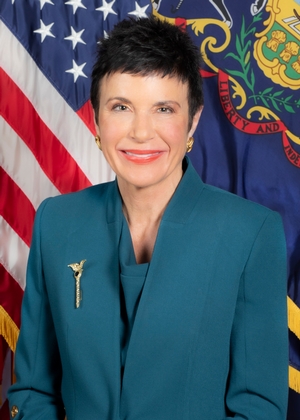
Rep. Marla Brown
Sponsored bills
Maddy summaryHB 164 requires health care facilities in Pennsylvania to handle fetal remains (from a fetal death) through cremation or burial per existing vital records rules, without needing a name on permits. Parents must cover costs if they choose a disposal location outside the facility’s usual practice, but facilities must provide disposition services if parents don’t claim remains. The bill ensures parent information remains confidential and clarifies that facilities aren’t required to issue stillbirth certificates. It does not change the definition of fetal death or mandate cremation/burial unless requested by the parent.
Maddy summaryHR 10 is a resolution directing Pennsylvania's Joint State Government Commission to study how Home and Community-Based Services (HCBS) waivers can be improved to better serve individuals with disabilities. It directly affects over 2 million Pennsylvanians with disabilities who rely on HCBS waivers administered by the Office of Long-Term Living (OLTL) and Office of Developmental Programs (ODP), including those excluded from eligibility despite meeting federal disability criteria. The study will examine five key areas: whether waivers meet medical needs, compare payment rates across programs, analyze service menus, address barriers to community living, and investigate low employment rates (16% in integrated settings) for waiver participants. The goal is to identify concrete changes to improve access, affordability, and outcomes for people using these programs.
Maddy summaryHB 152 amends Pennsylvania's Tax Reform Code to exclude housing allowances provided by churches or religious organizations to ordained, commissioned, or licensed clergy from personal income tax. This applies to individuals who conduct religious worship, perform sacerdotal duties, and administer sacraments under their church's tenets, regardless of whether the housing is on church-owned property. The change affects clergy members receiving such housing allowances, making those amounts non-taxable for income tax purposes. The exclusion takes effect for taxable years beginning after December 31, 2023.
Maddy summaryHB 59 amends Pennsylvania's Cosmetology Law to create new "Inspector, State Board of Cosmetology" positions. These inspectors must be licensed cosmetologists with at least five years of active practice and are appointed by the board. The bill grants inspectors authority to enter cosmetology businesses (salons, schools, etc.) for inspections, complaint investigations, and other board-directed matters. This directly affects cosmetology professionals, salons, and schools by adding a new oversight role to enforce licensing and safety regulations.
Maddy summaryHB 56 amends Pennsylvania's terroristic threats law (Title 18, §2706) to increase penalties for certain threats. It reclassifies specific terroristic threats as felonies of the third degree instead of misdemeanors if they cause diversion from normal operations (e.g., in buildings or public transit) or target protected locations like schools, churches, government buildings, or community centers. The bill directly affects individuals who make threats against these specific places or disrupt public activities. The key change is upgrading the offense severity for threats against vulnerable locations or causing operational disruptions, without altering the basic definition of terroristic threats.
Maddy summaryHB 55 exempts certain small businesses from startup fees when opening a new business in Pennsylvania. It provides full fee exemptions for woman-owned businesses, service-disabled veteran-owned businesses, minority-owned businesses, disadvantaged businesses, and microbusinesses (with five or fewer employees). Other small businesses (up to 100 employees with under $10 million annual revenue) receive a 50% fee reduction. The law applies to new business applications filed on or after July 1, 2025, and requires applicants to provide documentation of eligibility.
Maddy summaryHB 62, the Social Media Anti-Censorship Act, requires social media platforms with over 50 million active U.S. users to publish clear acceptable use policies explaining content restrictions and appeal processes. If a platform removes content for policy violations, it must immediately notify the user and provide a 14-day appeal option. The bill also mandates biannual transparency reports detailing content moderation decisions. This law directly affects major social media platforms operating in Pennsylvania, aiming to increase transparency in content removal practices.
Maddy summaryHB 73 updates Pennsylvania's emergency medical services laws by changing certification renewal requirements for EMRs (Emergency Medical Responders) and EMTs (Emergency Medical Technicians) to every three years through exams or continuing education, with recertification options within six years of expiration. It also modifies EMS vehicle operator rules, making certification permanent but requiring three-year registration (with continuing education) for most operators, excluding those exclusively working for certain qualified providers. These changes directly affect EMS personnel who must meet these updated standards to maintain their ability to work in Pennsylvania.
Maddy summaryHB 61 amends Pennsylvania's Cosmetology Law by updating the official definition of "esthetics" in Section 1. The revised definition specifies that esthetics includes facial massage, applying cosmetic products, removing facial hair (via tweezers, blades, depilatories, or wax), and dyeing eyelashes or eyebrows. This change directly affects licensed estheticians and cosmetology professionals who perform these services, clarifying the scope of their regulated practice under state law. The bill takes effect 60 days after enactment.