

Maddy summaryHB 246 prohibits Pennsylvania public and state-related institutions of higher education from requiring students to complete diversity training or diversity courses to graduate or earn credit. It specifically bans programs based on theories that systemic racism, sexism, or oppression are inherent in U.S. institutions, as defined in the bill. The law applies to community colleges, rural regional colleges, state universities, state-related institutions, and Thaddeus Stevens College. It does not ban all diversity-related content but targets courses or training explicitly founded on the specified theories. The bill takes effect 60 days after enactment.
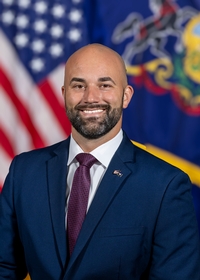
Rep. David Rowe
Sponsored bills
Maddy summaryHB 217 amends Pennsylvania's tax code to require businesses to deduct start-up costs (like initial expenses for new ventures) entirely in the year incurred, rather than spreading deductions over multiple years as permitted under federal rules. This change affects new businesses and entrepreneurs with start-up expenses by altering how they calculate state personal income tax. The bill also allows business net losses to offset other income in the same tax year. These provisions apply to tax years beginning after December 31, 2025.
Maddy summaryHB 224 requires Pennsylvania's Department of Education to create an online comparison tool for higher education institutions. The tool must allow users to search colleges by major and compare high-priority occupations in Pennsylvania, including county-level data on required education, wages, and job demand. Pennsylvania colleges must annually submit relevant data (via existing federal reports) to the Department by January 1st to update the tool. This bill directly affects public and private colleges in Pennsylvania and students seeking education-to-career pathways.
Maddy summaryThis bill updates Pennsylvania's court cost structure for criminal and civil cases, including specific fees for summary convictions, misdemeanors, felonies, and civil matters like landlord-tenant disputes. It exempts traffic citations (cases under vehicle laws) from an additional fee provision that would otherwise apply. The changes affect defendants who pay court costs and the state treasury, which collects these fees. The bill clarifies that traffic violations will no longer be subject to the "additional fees" outlined in Section 3733(a.1).
Maddy summaryHB 236 amends Pennsylvania's obscenity law to explicitly exempt public libraries, school/university libraries, and state or municipal archives from the offense of displaying obscene materials. The bill updates Section 5903(j) of Title 18 to clarify that recognized historical societies, museums, public libraries, and educational institution libraries are not subject to these restrictions. This change directly affects libraries and archives operating under educational or governmental supervision by removing ambiguity about their legal protections. The amendment does not create new offenses but ensures these institutions can legally display materials as part of their public service.
Maddy summaryHB 218 would allow Pennsylvania taxpayers to deduct mortgage insurance premiums from their personal income tax. The deduction applies to premiums paid for residential mortgage insurance, including coverage against loan default or nonpayment on home loans. Taxpayers can claim this deduction on their annual tax return, but it cannot reduce taxable income below zero. This change would take effect for tax years beginning after December 31, 2025.
Maddy summaryHB 214 amends Pennsylvania's realty transfer tax code to exclude first-time home buyers from paying the state transfer tax on purchases of single-family residences. It defines "first-time home buyer" as someone who has never owned any single-family home (including manufactured homes or condos) in Pennsylvania or another state, resides in the property, and is domiciled there. The exclusion applies only when all individuals named on the deed qualify as first-time buyers. Local governments (like cities or townships) cannot apply this exclusion to their separate real estate transfer taxes, which remain applicable. The bill takes effect 60 days after enactment.
Maddy summaryHB 256 exempts transfers of funds from qualified tuition programs (like 529 college savings plans) from Pennsylvania's inheritance tax when moved to the designated beneficiary or their parent/guardian if the beneficiary is under 18. It uses federal definitions from the Internal Revenue Code (Section 529) to define "qualified tuition program" and "designated beneficiary." The change applies to estates of people who died after November 6, 2023. This policy directly affects families using these education savings programs by removing an inheritance tax burden on transferred funds.
Maddy summaryHB 128 adds an explicit exemption for emergency service personnel (such as firefighters and EMTs) from jury duty in Pennsylvania's judicial code. The bill amends Section 4503(a)(9) of Title 42 to allow these workers to request excusal from jury service. This change directly affects emergency service personnel who seek to avoid jury duty due to job responsibilities. The exemption requires personnel to formally request excusal but does not automatically exempt them. The bill takes effect 60 days after enactment.
Maddy summaryHB 182 designates Bridge Key 8377 on Pennsylvania Route 53 over Bear Rock Run in Lilly Borough, Cambria County, as the Corporal James D. Sloan Memorial Bridge. The bill requires the Pennsylvania Department of Transportation to install and maintain signs on the bridge, based on the General Assembly's findings that Corporal James D. Sloan, a Marine Corps veteran who died by suicide in 1971 due to post-traumatic stress disorder after serving in the Vietnam War, received multiple military medals including the Purple Heart and Combat Action Medal. This is a naming resolution with no direct policy changes or affected populations beyond the bridge signage.