

Maddy summaryHB 238 amends Pennsylvania's vehicle code to establish requirements for obtaining REAL ID-compliant driver's licenses. It directly affects Pennsylvania residents applying for or renewing driver's licenses by mandating specific identity and residency documentation during the application process. The bill formalizes the state's process for verifying these documents to meet federal REAL ID standards, ensuring licenses are accepted for federal purposes like air travel and accessing government facilities. This policy change updates existing licensing procedures without altering federal requirements.
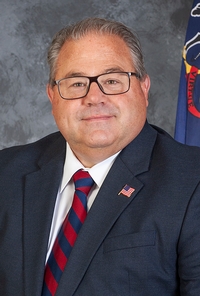
Rep. Mike Armanini
Sponsored bills
Maddy summaryHB 2141 amends Pennsylvania's Fiscal Code to adjust how funds from oil and gas leases and forest land use are distributed. It changes the Oil and Gas Lease Fund to include specific rental payments from Commonwealth-owned land (excluding game/fish lands) and updates the allocation of fees from federal/State forest land use. The key provision requires a $3 annual per-acre charge on forest land, split as $1.20 from the Department of Conservation and Natural Resources and $1.80 from gaming revenue, to be distributed to counties, school districts, and townships where the land is located. This directly affects local governments receiving these payments from Commonwealth-owned forest properties.
Maddy summaryHB 170 modifies Pennsylvania's vehicle registration and inspection rules for farm vehicles. It creates three new weight-based categories (AA, BB, CC) for exempt farm vehicles, each with specific travel limits: Type AA (under 10,000 lbs) may travel up to 50 miles, Type BB (10,001-17,000 lbs) up to 25 miles, and Type CC (over 17,000 lbs) up to 10 miles between farms or related business locations. The bill also establishes corresponding biennial fees ($24-$100) based on vehicle weight and requires a valid inspection certificate for operation. This directly affects farmers using vehicles over 17,000 lbs, who must now display inspections but face fewer travel restrictions than non-exempt vehicles.
Maddy summaryHB 1380 amends Pennsylvania’s Conservation and Natural Resources Act to require the Chief Forest Fire Warden to submit an annual report by March 1 each year. The report must include wildfire activity locations, prevention actions, prescribed burn data (including information shared by other entities), firefighter manpower by district, and wildfire equipment inventories. This report is submitted to specific legislative committees in both the Senate and House of Representatives. The bill focuses on improving transparency and data collection for wildfire management, without altering forest management practices. It takes effect 60 days after enactment.
Maddy summaryHB 1379 creates a dedicated "Forest Fire Warden Fund" within the Pennsylvania state treasury to reimburse local forest fire wardens for approved activities. The bill establishes that funds from this new account will cover expenses related to controlled burns, fire investigations, public safety events, training, and mutual aid requests made to emergency management agencies. It directly affects local forest fire wardens and the Department of Conservation and Natural Resources by providing a clear funding mechanism for their operational costs. This procedural change streamlines reimbursement processes under the existing Conservation and Natural Resources Act without altering forest management policies.
Maddy summaryHB 2081 designates Bridge Key 11669 (over Mosquito Creek on Quehanna Highway in Karthaus Township, Clearfield County) as the "Gerald Reiter and Leon Hahn Memorial Bridge." The bill honors two U.S. Marine Corps veterans: PFC Gerald Reiter, who died in Vietnam in 1967, and Sgt. Leon Hahn, who died from injuries sustained in Vietnam in 1968. The Pennsylvania Department of Transportation must install and maintain directional signs naming the bridge. This is a commemorative resolution with no policy changes or direct impact on constituents beyond the memorial designation.
Maddy summaryHB 2075 amends Pennsylvania's prison and parole laws to clarify who must undergo reentry supervision after release from prison. It specifies that reentry supervision does not apply to individuals sentenced to death, life imprisonment, those ineligible for parole, or people subject to mandatory probation for certain sexual offenses. This change affects the Pennsylvania Board of Probation and Parole by narrowing the scope of its oversight to specific offenders. The bill aims to define reentry supervision requirements more precisely for eligible individuals.
Maddy summaryHB 1894 amends Pennsylvania's Human Services Code to update the LIFE Program, which supports aging residents. The bill specifically addresses provisions related to the "aged" (seniors) and includes a repeal provision, though the exact nature of the repeal is not detailed in the provided context. It directly affects seniors enrolled in or eligible for the LIFE Program under Pennsylvania's human services system. The bill passed final passage on November 17, 2025, and was referred to the Aging & Youth committee for further consideration. (Note: Specific mechanisms or policy changes beyond the title's reference to "further providing for LIFE Program" are not described in the provided context.)
Maddy summaryHB 1528 establishes the Grand-family Assistance Program to provide financial support to grandparents and other relatives raising grandchildren. It creates a dedicated fund to make regular payments to local area agencies on aging, which will administer the program and assist eligible families. The bill requires the Department of Aging to manage the program and oversee fund distribution, ensuring direct support reaches affected relatives caring for children. This policy change directly affects grandfamilies and local aging services agencies through structured financial aid and administrative responsibilities.
Maddy summaryHB 2058 would amend Pennsylvania's Controlled Substance, Drug, Device and Cosmetic Act to establish a regulatory framework for kratom. This bill would directly affect businesses selling kratom products and consumers who use it by subjecting kratom to new state regulations. Key provisions would include setting product safety standards, labeling requirements, and distribution rules for kratom under the existing drug regulation system. The bill aims to bring kratom under the state's formal regulatory structure without banning its use.