

Maddy summaryHR 211 is a resolution designating the week of October 5-11, 2025, as "National Midwifery Week" in Pennsylvania. It does not create new laws or policies but formally recognizes midwifery as a healthcare profession. The resolution directly affects Pennsylvanians by raising awareness of midwifery services, though it has no binding effect on state action or funding. This procedural bill aims to honor midwives' contributions to maternal and infant health through official acknowledgment.
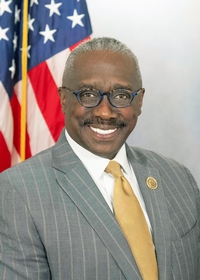
Rep. Dan Williams
Sponsored bills
Maddy summaryHB 1676 establishes Pennsylvania's Nursing Shortage Assistance Program, which provides state grants to "qualified nursing servicers" to help nursing students repay loans after graduation. The program requires partner hospitals to match state funds 1:1 for loan repayment and commit to hiring graduates, with grants only covering tuition expenses (not administrative costs). Nursing students working at participating hospitals may receive up to $10,000 annually or $30,000 total in loan repayment assistance. The Department of Labor and Industry administers the program, sets application rules, and reports annually on its effectiveness to the legislature.
Maddy summaryHB 2100 prohibits mental health chatbot suppliers from selling or sharing Pennsylvania users' personal health data or chat inputs with third parties. It directly affects companies providing AI therapy tools that simulate confidential conversations with users in Pennsylvania. The law requires suppliers to protect user data, with limited exceptions for user consent or sharing with health providers. This creates new data privacy rules for AI mental health tools used by therapists in the state.
Maddy summaryHB 2086 repeals two existing provisions: Section 704 (which established advisory councils for Pennsylvania's veterans' homes) and Section 1705 (which created a "veterans' home hall of fame"). The bill replaces these with a new State Veterans' Home Board to oversee state veterans' homes. This change directly affects Pennsylvania's veterans' homes by shifting governance from appointed advisory councils to the new board, while removing the commemorative hall of fame program. The bill focuses on structural changes to administration rather than altering resident care policies or admission criteria.
Maddy summaryHB 2073 amends Pennsylvania's vehicle laws to increase penalties for commercial drivers who disobey traffic-control devices like stop signs or traffic lights. A commercial driver faces a lifetime disqualification from operating commercial vehicles for a third or subsequent violation. For each violation, the driver must pay a $1,000 fine for a first offense or $5,000 for subsequent offenses, and their employer must pay an additional $1,000 (first offense) or $5,000 (subsequent offenses). Fines collected under this law will partially fund the Public Transportation Trust Fund.
Maddy summaryThis resolution condemns any threats of political violence against elected officials, specifically referencing recent public statements interpreted as threatening lawmakers who uphold constitutional duties. It reaffirms that military personnel must refuse unlawful orders under the Uniform Code of Military Justice (UCMJ), citing Articles 90-92 and the Nuremberg Principles. The resolution has no legal effect but symbolically urges compliance with the UCMJ and rejects intimidation tactics targeting representatives. It directs copies to the President, Defense Secretary, and Pennsylvania's congressional delegation. As a symbolic statement, it does not alter laws or directly affect any group beyond expressing legislative concern.
Maddy summaryHB 439 amends Pennsylvania's Human Relations Act to explicitly define "race" as including hair texture and protective hairstyles (such as locs, braids, or afros), and "religious creed" as including head coverings or hairstyles tied to religious practice. Employers cannot prohibit these features unless they prove the rule is necessary for health/safety, non-discriminatory, job-specific, and applied equally. The law does not prevent employers from enforcing general safety rules or anti-harassment policies that apply fairly across all employees. This directly affects employers and employees in Pennsylvania workplaces by clarifying protections against discrimination related to appearance.
Maddy summaryHB 1894 amends Pennsylvania's Human Services Code to update the LIFE Program, which supports aging residents. The bill specifically addresses provisions related to the "aged" (seniors) and includes a repeal provision, though the exact nature of the repeal is not detailed in the provided context. It directly affects seniors enrolled in or eligible for the LIFE Program under Pennsylvania's human services system. The bill passed final passage on November 17, 2025, and was referred to the Aging & Youth committee for further consideration. (Note: Specific mechanisms or policy changes beyond the title's reference to "further providing for LIFE Program" are not described in the provided context.)
Maddy summaryHB 923 amends the State Lottery Law to redirect lottery revenue toward providing pharmaceutical assistance for elderly residents. It directly affects seniors who qualify for prescription drug aid under state programs by modifying eligibility determination procedures. The key provision updates how income and asset thresholds are calculated to determine who qualifies for this assistance. The bill became law on November 24, 2025, after approval by both legislative chambers and the governor.
Maddy summaryHB 1176 amends Pennsylvania's intestate succession laws (when someone dies without a will) to adjust how assets are distributed to non-spouse relatives, such as children or parents. It specifically modifies the shares allocated to these individuals beyond the surviving spouse's portion. The bill also updates procedures for payments to family members and funeral directors during estate administration. These changes directly affect Pennsylvania residents who die without a will and their non-spouse heirs. The law became effective upon the Governor's approval on November 24, 2025 (Act No. 50 of 2025).