

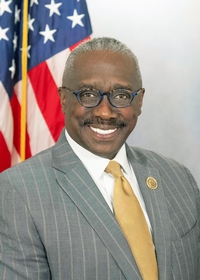
Photo of Dan Williams
D Pennsylvania House · District 74 On the 2026 ballot

Rep. Dan Williams

Compare
Total votes
6,263
all sessions
Attendance
99%
66 missed
Near the chamber average
With party
98%
of cast votes
Higher than 91% of chamber peers
Bipartisan score
1%
crosses aisle rarely
Lower than 87% of chamber peers
Sponsored
1,827
bills & resolutions
Higher than 93% of chamber peers
Committees
1
assignment
1,827 bills and resolutions

Sponsored bills

Total
1,827
Primary
38
Co-sponsor
1,789
This page
1,827
matching current filters
Co-sponsor HB 2284
In committee · Pennsylvania House · Co-sponsor
An Act amending Title 44 (Law and Justice) of the Pennsylvania Consolidated Statutes, imposing a fee for service on municipalities for municipal patrol services provided by the Pennsylvania State Police and providing for State Police patrol services agreements, for allocation of money, for fees for intermunicipal police response and for penalties.

Maddy summaryThis bill establishes a fee system for Pennsylvania municipalities that receive patrol services from the State Police, requiring towns without their own full-time police forces to pay for those services. The legislation creates new definitions for different types of patrol services and sets fee amounts based on the difference between 2021-2022 and current Motor License Fund appropriations to the State Police. Small municipalities with limited local police hours and those that have existing patrol agreements with the State Police are exempt from paying fees. The bill also requires the State Police to submit annual reports on these services and includes provisions for penalties and intermunicipal police response coordination.

In committee Mar 12, 2026 1 co-sponsor
Co-sponsor HB 2263
In committee · Pennsylvania House · Co-sponsor
An Act amending the act of June 3, 1937 (P.L.1333, No.320), known as the Pennsylvania Election Code, establishing the Election Fellowship Pilot Program.

Maddy summaryThis bill establishes a three-year pilot program to train Pennsylvania residents in election administration. It would allow the Department of State to randomly select two counties from each of the eight county classes to participate, where eligible individuals aged 18 or older could work in county election offices from August through December. The program would be funded through state appropriations, with counties able to provide additional compensation to participants. At the end of the pilot, the Department of State must submit a report to state officials evaluating whether to expand the program statewide.

In committee Mar 5, 2026 1 co-sponsor
Co-sponsor HB 2260
In committee · Pennsylvania House · Co-sponsor
An Act amending Title 18 (Crimes and Offenses) of the Pennsylvania Consolidated Statutes, in obstructing governmental operations, providing for civil immigration arrests made on Commonwealth property; and imposing a penalty.

Maddy summaryThis bill requires law enforcement officers to have a valid judicial warrant before making civil immigration arrests on Pennsylvania state property, which includes state buildings and grounds in Dauphin, Philadelphia, Pittsburgh, and Scranton counties. The legislation mandates that officers must show the warrant to any state employee who asks to see it during such arrests. Violations of these requirements could result in a $10,000 civil penalty for each offense, which would be paid to the Commonwealth and enforced by the Attorney General. The bill does not prevent the investigation or enforcement of criminal immigration laws, and it clarifies that sovereign immunity protections do not apply to lawsuits brought under this new provision.

In committee Mar 3, 2026 1 co-sponsor
Co-sponsor HB 2259
In committee · Pennsylvania House · Co-sponsor
An Act amending Title 42 (Judiciary and Judicial Procedure) of the Pennsylvania Consolidated Statutes, providing for actions not permissible in a courthouse; and imposing penalties.

Maddy summaryThis bill establishes rules for law enforcement actions on courthouse grounds in Pennsylvania, primarily restricting civil arrests related to immigration enforcement without a judicial warrant. It directly affects law enforcement officers, courthouse staff, and individuals seeking access to court proceedings. The key provisions prohibit detaining or arresting people on courthouse property for immigration violations unless the officer holds a valid judicial warrant and must show documentation to any court employee who asks. The law also defines who qualifies as a "court companion" to protect individuals accompanying parties to court and includes penalties of up to $10,000 for violations while providing immunity to courthouse employees acting in good faith.

In committee Mar 3, 2026 1 co-sponsor
Co-sponsor HB 2261
In committee · Pennsylvania House · Co-sponsor
An Act amending Title 44 (Law and Justice) of the Pennsylvania Consolidated Statutes, in law enforcement background investigations and employment information, providing for additional employment history for certain Federal immigration enforcement applicants.

Maddy summaryThis Pennsylvania bill requires law enforcement agencies to conduct additional background checks on applicants who previously worked for U.S. Immigration and Customs Enforcement. The law mandates that these applicants submit detailed employment history forms, including contact information for all supervisors and written statements about any deadly force investigations or disciplinary actions. If an applicant discloses negative information, the hiring agency must request full records from the former employer, and a state commission will review the case to determine fitness for employment. The bill also establishes confidentiality protections for the information gathered and prohibits hiring applicants who fail to provide the required disclosures.

In committee Mar 3, 2026 1 co-sponsor
Co-sponsor HB 469
Passed · Pennsylvania House · Co-sponsor
An Act amending the act of August 5, 1977 (P.L.181, No.47), entitled "An act providing for the acceptance by the Governor of jurisdiction relinquished by the United States to the Commonwealth over lands within the Commonwealth's boundaries," further providing for general provisions and for procedure relating to concurrent jurisdiction over military installations.

Maddy summaryThis bill updates Pennsylvania's process for accepting shared control of military lands from the U.S. government. It requires military installations to provide detailed written requests (including boundary descriptions and scope of jurisdiction) before the Governor can accept jurisdiction transfers, followed by a 30-day public notice period. The Governor must document accepted requests with the state secretary, and local agencies can then create coordination agreements with federal partners. This directly affects Pennsylvania's military installations, state agencies, and local governments managing lands with concurrent federal jurisdiction.

Passed Feb 27, 2026 1 co-sponsor
Co-sponsor HB 2251
In committee · Pennsylvania House · Co-sponsor
An Act amending Title 53 (Municipalities Generally) of the Pennsylvania Consolidated Statutes, in employees, further providing for reimbursement of expenses.

Maddy summaryHB 2251 amends Pennsylvania law to update reimbursement rules for municipal police training costs. It requires the state commission to reimburse municipalities for 60% of police officers' regular salaries during approved training and for the full cost of tuition, living, and travel expenses. Municipalities must provide documentation and undergo annual audits to qualify for reimbursement. Additionally, the law mandates that at least 25% of state funds for this purpose be allocated to townships and boroughs with populations under 20,000 residents.

In committee Feb 26, 2026 1 co-sponsor
Co-sponsor HB 1935
Passed · Pennsylvania House · Co-sponsor
An Act amending Title 18 (Crimes and Offenses) of the Pennsylvania Consolidated Statutes, in assault, further providing for the offense of terroristic threats.

Maddy summaryHB 1935 requires individuals convicted of terroristic threats to pay restitution for costs incurred during evacuations, including emergency response, transportation, and employee wages for first responders. It also mandates a sentencing enhancement for threats targeting schools or institutions of higher education, which the Pennsylvania Commission on Sentencing must consider. The bill defines "school entity" to include public, charter, private, and cyber charter schools, and "institution of higher education" to cover specific universities like Penn State, Pitt, Temple, and others. These changes directly affect offenders who make terroristic threats in educational settings, holding them financially accountable for the costs their actions trigger.

Passed Feb 13, 2026 1 co-sponsor
Co-sponsor HB 1556
Passed · Pennsylvania House · Co-sponsor
An Act amending the act of March 4, 1971 (P.L.6, No.2), known as the Tax Reform Code of 1971, in Pennsylvania Economic Development for a Growing Economy (PA EDGE) tax credits, providing for an advanced clean manufacturing project and further providing for definitions.

Maddy summaryHB 1556 amends Pennsylvania's Tax Reform Code of 1971 to add new tax credits under the PA EDGE program specifically for "advanced clean manufacturing projects." This bill directly affects businesses constructing or expanding facilities that produce clean energy technology, such as solar panels or battery components. The key change expands the existing PA EDGE tax credit program to include these advanced clean manufacturing projects, providing financial incentives for qualifying investments. The bill does not alter other existing PA EDGE provisions or create new tax credit categories beyond this specific addition.

Passed Feb 13, 2026 1 co-sponsor
Co-sponsor HB 1936
Passed · Pennsylvania House · Co-sponsor
An Act amending Title 42 (Judiciary and Judicial Procedure) of the Pennsylvania Consolidated Statutes, in juvenile matters, further providing for release or holding of hearing, for disposition of delinquent child and for limitation on and change in place of commitment and disposition review hearing.

Maddy summaryHB 1936 amends Pennsylvania's juvenile justice laws to change procedures for handling cases involving minors. It specifies when courts must hold hearings before releasing or committing a juvenile, alters where juveniles can be placed for treatment or supervision, and adds requirements for reviewing dispositions (how cases are resolved) after commitment. The bill directly affects juveniles charged with offenses, their families, and juvenile court judges and probation officers who manage these cases. Key changes include setting clearer timelines for hearings, limiting where juveniles can be committed (e.g., away from home), and mandating periodic reviews of their case plans. These provisions aim to standardize court processes while prioritizing youth safety and appropriate supervision.

Passed Feb 13, 2026 1 co-sponsor
Showing 231 to 240 of 1,827 bills
Previous 1 … 23 24 25 … 183 Next