

Maddy summaryHB 728 establishes Pennsylvania's Identification Upon Reentry Program, requiring prisons to provide newly released inmates with essential identification documents (like state ID cards) before their release. This directly affects individuals transitioning from incarceration back into the community, who often face barriers to accessing services without valid ID. The key provision mandates that correctional facilities coordinate with state agencies to issue these documents during the reentry process, replacing the current inconsistent practice. This policy change aims to streamline access to housing, employment, and government services for returning citizens.
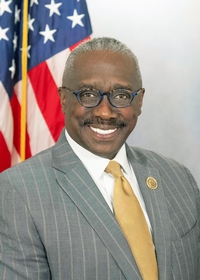
Rep. Dan Williams
Sponsored bills
Maddy summaryThis Pennsylvania bill updates the Public School Code to strictly limit the use of artificial intelligence in charter and cyber charter schools. It defines artificial intelligence as machine-based systems that make predictions or decisions and prohibits these schools from using AI to replace human teachers for direct instruction. The law requires local school boards and the state Department of Education to reject applications from schools relying on such models and allows for the nonrenewal or immediate termination of charters that adopt them. Additionally, the bill clarifies the powers and duties of the State Board of Education regarding charter school oversight.
Maddy summaryThis bill prohibits law enforcement officers from detaining or arresting individuals for civil immigration violations on the property of houses of worship. The only exception allows for arrests if the officer is acting in an official capacity and holds a valid judicial warrant. Additionally, the legislation bars state and local agencies from using taxpayer funds to conduct immigration enforcement and imposes a $10,000 civil penalty for any violations of these rules.
Maddy summaryThis bill amends Pennsylvania's Human Relations Act to strengthen protections against discrimination in housing and commercial property transactions. It directly affects landlords, sellers, lenders, and financial institutions by explicitly prohibiting them from refusing services or making decisions based on a person's source of income, such as public assistance or child support. The legislation also clarifies that discrimination is illegal when it involves a person's use of guide or support animals due to blindness, deafness, or physical disabilities. Additionally, the bill bans the publication of advertisements that express preferences or limitations based on these protected characteristics.
Maddy summaryThis bill requires Pennsylvania health care facilities, including emergency departments and urgent care centers, to adopt standardized protocols for identifying and assisting patients who may be victims of human trafficking. The Department of Health is tasked with creating these guidelines within 180 days, which will include trauma-informed screening questions, private interview procedures, and specific steps for referring individuals to support services even if they do not wish to involve law enforcement. To ensure staff are prepared, the law mandates that all clinical and patient-facing employees complete initial training upon hiring and undergo continuing education every two years. Additionally, facilities must annually report de-identified data on screenings and referrals to the Department of Health, which will then submit a summary report to the General Assembly.
Maddy summaryHB 562 amends Pennsylvania's 1883 law governing federal lands to explicitly include juvenile cases under the state's retained "concurrent jurisdiction." This means Pennsylvania courts will maintain authority over juvenile matters occurring on federal lands (like post offices) that were previously ceded to the U.S. government. The bill updates the 1883 statute to clarify that the state retains this specific jurisdiction, ensuring juvenile cases are handled under Pennsylvania law rather than solely federal authority. As a procedural amendment to existing law, it does not create new policy but formalizes current practice.
Maddy summaryThis bill would create a state-funded paid family and medical leave program for eligible workers needing time off for health issues, childbirth, or family care. It establishes a dedicated state fund to cover leave costs, creates an advisory board to guide implementation, and assigns oversight to the Department of Labor. The program would directly affect employees in the state who qualify for these leave types, requiring employers to provide the benefits. The bill also specifies penalties for businesses failing to comply with the new requirements.
Maddy summaryHB 1834 requires commercial data centers in Pennsylvania to pay fees to the state. These fees fund a new Data Center LIHEAP Enhancement Fund, which boosts assistance for low-income households struggling with energy costs. The bill also mandates that data centers meet specific renewable energy targets and allows them to recover certain operational costs through regulated rates. The Pennsylvania Public Utility Commission (PUC) and Department of Human Services are tasked with implementing these requirements and managing the fund.
Maddy summaryThis bill is a House Resolution that designates May 8, 2026, as Child Care Provider Appreciation Day in Pennsylvania to honor the work of child care providers. The resolution does not create new laws or change any policies; it is a symbolic gesture to recognize and thank caregivers, teachers, nannies, and daycare workers who support children and families. The bill is sponsored by multiple representatives and referred to the Committee on Children and Youth for consideration. It aligns with a national tradition of celebrating child care workers annually in May.
Maddy summaryThis Pennsylvania bill requires the Department of Labor and Industry to investigate warehouse distribution centers that report an annual employee injury rate 30% or higher than the state average. The law defines warehouse distribution centers using specific industry classification codes and gives the department authority to enter facilities, review records, interview workers, and consolidate complaints during investigations. Employers found with injury rates at or above the threshold face escalating civil penalties, starting at $6,250 for the first violation and increasing to $25,000 for subsequent violations. The bill also mandates that employers notify their employees when an investigation is underway and allows the Attorney General's office to pursue civil or criminal actions for violations.