

Maddy summaryHB 1675 would amend Pennsylvania's vehicle registration rules to allow current active-duty members of the U.S. armed forces to obtain special license plates. The bill specifically adds provisions for these military personnel to receive dedicated plates under the state's vehicle registration system. This change directly affects eligible service members who wish to display military-affiliated plates on their vehicles. The bill is procedural, focusing on administrative registration details rather than substantive policy changes.
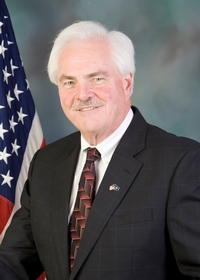
Rep. Lee James
Sponsored bills
Maddy summaryHB 593 amends Pennsylvania's vehicle laws to clarify procedures for handling abandoned vehicles and cargo. It requires authorities to provide specific notice to vehicle owners and lienholders before disposing of unclaimed vehicles, and authorizes disposal of vehicles not claimed within a set timeframe. The bill also establishes standardized processing rules for vehicles deemed nonrepairable or salvage, ensuring consistent handling. These changes directly affect vehicle owners, lienholders, and local authorities managing abandoned property. The law aims to streamline disposal while ensuring proper notification and documentation.
Maddy summaryThis resolution designates June 8, 2025, as "Lieutenant Colonel George Hardy Day" in Pennsylvania to honor his military service and community leadership. It specifically recognizes Lieutenant Colonel George Hardy, a Tuskegee Airmen veteran who flew 21 combat missions in WWII, later served in the Korean and Vietnam Wars, and received the Distinguished Flying Cross and Congressional Gold Medal. The resolution commemorates his 100th birthday and his post-military work mentoring pilots and supporting community organizations. As a ceremonial resolution, it has no policy impact beyond this symbolic recognition.
Maddy summaryHB 350 updates Pennsylvania's laws on inheritance, parentage, and court procedures. It establishes the Uniform Parentage Act, creating new rules for establishing parent-child relationships through assisted reproduction, surrogacy agreements, and genetic testing, while repealing outdated paternity acknowledgment provisions. The bill modifies hearing requirements for adoption and parental rights termination, requiring specific notice to putative fathers and clarifying when parental rights may be terminated without their presence. It also adds protections for executors who fail to notify estates about assisted reproduction births that could affect inheritance. These changes directly affect families navigating adoption, surrogacy, inheritance disputes, and court cases involving parentage.
Maddy summaryHB 1282 requires cities and towns to notify property owners when the Federal Emergency Management Agency (FEMA) updates special flood hazard area maps. This directly affects homeowners and property owners in areas where flood risk maps change. Municipalities must send written notice to affected property owners within 30 days of a FEMA map update. The law aims to ensure residents understand potential changes to flood insurance requirements and property risk levels. It does not alter FEMA's map-making process or flood insurance mandates.
Maddy summaryHB 1498 creates a new legal process for dividing "heirs property" in Pennsylvania - real estate owned by multiple family members through inheritance without clear ownership agreements. It directly affects families holding such property (often rural or minority-owned land), requiring courts to apply specific rules when dividing it, including a right of first refusal for relatives if a cotenant receives an outside purchase offer. Key mechanisms include mandatory settlement conferences before court decisions, defined valuation procedures, and prioritizing family members over outsiders for buying shares. The law replaces older rules for partitioning property and applies automatically to eligible cases unless all owners agree otherwise.
Maddy summaryHB 1632 requires Pennsylvania teachers to complete a new human trafficking awareness training as part of their continuing education requirements starting in the 2025-2026 school year. The training, developed by the Department of Education with input from the Attorney General's office and human trafficking organizations, covers federal/state laws, victim identification methods, risk factors, and reporting resources like the state hotline. It must be at least one hour long, available online, and counts toward teachers' existing professional development credits. The bill directly affects all professional educators in Pennsylvania who need continuing education under current certification rules.
Maddy summaryHB 704 creates a new Neurodegenerative Disease Research Program and a dedicated funding mechanism within the Department of Health to support research on conditions like Alzheimer's and Parkinson's. The bill directs the Department of Health to manage the program and administer the Neurodegenerative Disease Research Program Fund, which will provide grants for scientific studies. This legislation directly affects researchers, medical institutions, and patients seeking treatments for neurodegenerative diseases by establishing a formal structure for funding and coordinating research efforts. The bill passed the legislature in June 2025 and is now pending final action by the Governor.
Maddy summaryThis resolution designates June 16-22, 2025, as "Pollinator Week" in Pennsylvania. It does not create new laws or policies but formally recognizes the importance of pollinators like bees and butterflies. The resolution aims to raise public awareness about pollinator conservation efforts within the state. It directly affects Pennsylvania residents by highlighting this annual observance through state communications and community activities.
Maddy summaryHB 1619 establishes a new regulatory program within the Department of Revenue to oversee "skill gaming" (games where skill determines outcomes, not chance). It requires businesses offering such games to obtain licenses, comply with specific zoning rules for where they can operate, and follow new operational standards. The bill imposes both criminal penalties for serious violations and civil penalties for lesser breaches. This directly affects skill gaming businesses, local governments managing zoning, and the Department of Revenue, which gains authority to issue licenses and enforce rules.