

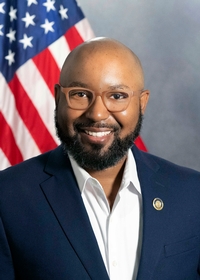
Maddy summaryHB 2169 amends Pennsylvania's Fiscal Code to update terminology in funding provisions for special education schools. It replaces references to "approved private school" with "approved special education school" in Section 1923(5), which governs how funds from the Public School Code (Section 2509.8) are allocated. The bill directly affects approved special education schools with day tuition under $32,000, requiring funding to be no less than 175% of the 2015-2016 allocation. This is a technical correction to align statutory language with current educational terminology, with no change to the underlying funding mechanism or eligibility criteria.
Rep. Greg Scott
Sponsored bills
Maddy summaryHB 2167 is a purely editorial amendment to Pennsylvania's Public School Code of 1949. It updates references from "approved private school" to "approved special education school" in multiple sections (including Section 1376) that govern funding for students with disabilities. The bill makes no changes to funding formulas, payment amounts, or eligibility rules - only correcting outdated terminology to specifically reference special education schools. This adjustment ensures the law accurately reflects the type of institutions providing specialized education services.
Maddy summaryThis bill prohibits payment card networks (like Visa or Mastercard) from charging fees based on the full transaction amount that includes Pennsylvania's sales tax. It specifically bans interchange fees that calculate charges using the total amount (including tax) and prevents networks from raising fees to circumvent this rule. Merchants who accept credit/debit cards and payment networks are directly affected, as they can no longer impose these tax-inclusive fees. Violations of these provisions could result in penalties under the new law.
Maddy summaryHB 1759 establishes rules for disposing of waste tires, trash, and debris in Pennsylvania, directly affecting municipalities, businesses handling tires, and individuals who dump waste improperly. It allows local governments to impose fines up to $5,000 for "short dumping" (illegally emptying trash from vehicles) and $500 per tire for improper tire disposal, while requiring businesses to keep electronic records of tire disposals for five years and provide proof of proper recycling. Municipalities must use collected fines to fund recycling programs, clean up environmental damage from improper disposal, and enforce the law. The bill takes effect 120 days after enactment.
Maddy summaryHB 2192 establishes the Commonwealth Housing Council to coordinate housing policies across Pennsylvania state agencies and local governments. The council will include 15 members: state agency secretaries, legislative appointees, mayors of major cities, county executives, and housing experts appointed by the Governor and legislative leaders. It requires the council to meet quarterly and coordinate housing strategies to improve policy implementation. This bill creates a new coordination body without altering existing housing laws or funding.
Maddy summaryHR 328 is a procedural resolution designating October 5-11, 2025, as "Fire Prevention Week" in Pennsylvania. It does not create new laws or allocate funds; it solely recognizes this week for public awareness about fire safety. The resolution directly affects Pennsylvania residents by highlighting fire prevention efforts during the designated dates. This is a symbolic gesture with no concrete policy changes, as confirmed by its referral to the Veterans Affairs & Emergency Preparedness committee.
Maddy summaryHB 2185 requires Pennsylvania municipalities with populations over 5,000 (or high-density areas) to allow duplex, triplex, and quadplex housing as a permitted use by right where single-family homes are allowed, without requiring additional approvals. It prohibits municipalities from applying stricter zoning, subdivision, or design rules to these multi-unit housing types than to single-family homes. Developers must demonstrate that existing infrastructure (water, sewer, roads, and emergency services) can support new developments before permits are issued. The requirements apply differently based on municipality size: duplexes for 5,000+ residents, duplexes/triplexes for 10,000+, and all three housing types for 20,000+ residents.
Maddy summaryHB 2023 amends Pennsylvania's Landlord and Tenant Act of 1951 to update eviction procedures. It directly affects tenants facing eviction and landlords seeking to regain property by requiring courts to hold hearings before eviction judgments, setting specific deadlines for issuing writs of possession, and clarifying how tenants must pay rent during the legal process. The bill adds new procedural requirements for each step in eviction cases, including detailed rules for rent payments to prevent or resolve disputes. These changes aim to standardize and clarify the eviction process without altering core tenant or landlord rights. The bill is currently referred to the Housing & Community Development committee.
Maddy summaryHB 2172 simplifies transferring a decedent's primary residence in small estates by allowing a "small estate primary residence affidavit" process. It directly affects surviving spouses, descendants, or ascendants of someone who died owning a primary residence valued at $150,000 or less, without requiring full probate. The bill establishes a county-based process where a sworn affidavit (with income verification below 120% of federal poverty guidelines to waive fees) can transfer the home, bypassing court-appointed administrators. The law expires seven years after implementation and includes a requirement for the Local Government Commission to study its effectiveness after five years.
Maddy summaryThis bill amends Pennsylvania's Human Relations Act to allow individuals who have been subject to or witnessed civil rights violations by U.S. Immigration and Customs Enforcement (ICE) agents or cooperating federal/state/local law enforcement during immigration enforcement to file complaints with the Pennsylvania Human Relations Commission. The Commission can then refer these complaints to the state Attorney General or the relevant county district attorney. It directly affects Pennsylvanians experiencing or witnessing such violations within the state. The change expands the Commission's authority to address immigration-related enforcement issues under state law.